








The Paradigm Shift in Indian Luxury Jewellery
For generations, the Indian jewellery market has been defined by the dual pillars of gold and diamonds. Gold, functioning as both a cultural necessity and a liquid asset, has historically commanded the lion’s share of consumer expenditure. Similarly, natural diamonds have long been the hallmark of status and bridal elegance. However, a significant transformation is currently underway. Wealthy Indian consumers, driven by a desire for differentiation and exclusivity, are increasingly diversifying their portfolios with coloured gemstones. This trend is not merely a fleeting fashion; it is a structural shift in the luxury goods sector, marked by a 40 percent surge in sales for coloured gemstone jewellery during the recent festive season.
The rise of these stones—spanning from rare Paraiba tourmalines to high-grade emeralds, sapphires, and spinels—signals a transition in the Indian consumer’s mindset. Jewellery is no longer viewed strictly as a store of value or a traditional bridal requirement; it is increasingly becoming a vehicle for self-expression and individual identity. As the Indian economy continues to produce a growing cohort of high-net-worth individuals (HNIs) and affluent professionals, the demand for “distinctive luxury” has provided a massive tailwind for the coloured gemstone segment.
Market Dynamics and the Rise of Coloured Gemstones
The adoption of coloured gemstones in India is manifesting through two distinct consumption patterns. The first, which has seen the most widespread penetration, involves the use of these stones as secondary or accent elements in traditional diamond-studded jewellery. This allows consumers to maintain the familiarity and prestige of diamonds while incorporating a splash of personal colour.
The second pattern is far more ambitious: the “centre-stage” approach, where a high-value coloured gemstone—be it an unheated sapphire or a rare emerald—becomes the primary focus of the design. While this segment remains niche, it is expanding rapidly in major urban hubs including Delhi, Jaipur, Ahmedabad, and Hyderabad. Retailers like Kalyan Jewellers have reported that studded jewellery, which incorporates these gemstones, is accounting for a larger portion of their quarterly sales, signalling that these pieces are moving from the periphery of the market to the centre of the conversation.
Supply Constraints and Valuation Appreciation
The surge in demand for coloured gemstones is occurring against a backdrop of constrained global supply. Unlike gold, which is traded in a highly liquid and uniform global market, high-quality, natural, and untreated gemstones are finite, geographically concentrated, and increasingly difficult to source. This inherent scarcity is a primary driver of the rapid price appreciation seen over the last twenty-four months.
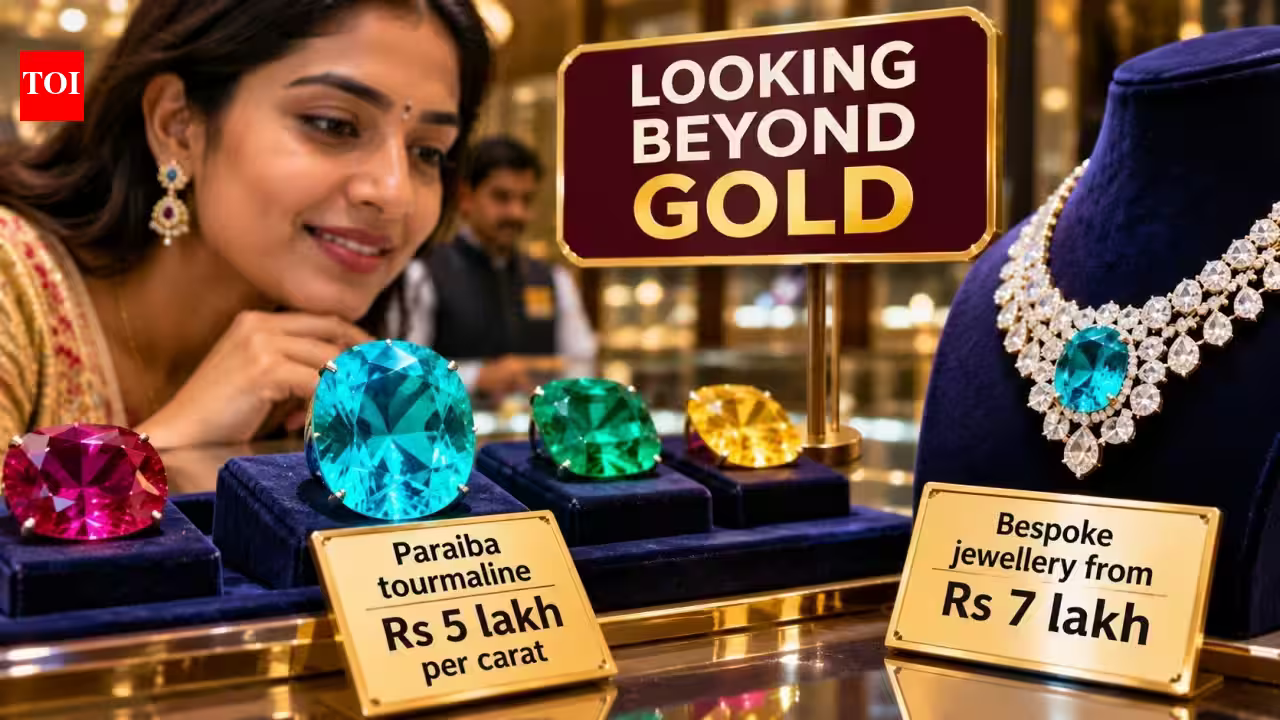
Certain rubies, emeralds, and sapphires have seen their market prices climb three to four times in the last two years alone. For collectors and high-net-worth buyers, this price surge is not a deterrent but rather a validation of the asset’s rarity. Furthermore, the market is placing an immense premium on “natural” status. Stones that have not undergone heat treatment or clarity enhancement are fetching record prices at international auctions, and this trend is trickling down to the domestic Indian market. With prices for rare specimens like Paraiba tourmalines reaching upwards of Rs 5 lakh per carat, the coloured gemstone segment is firmly establishing itself as a high-stakes investment class for the discerning Indian collector.
The Role of Jaipur as a Global Gemstone Hub
India’s role in this market is multi-faceted. It is not only one of the largest consumers of fine jewellery but also a primary global centre for the cutting and polishing of coloured gemstones, particularly through the traditional industry in Jaipur. The expertise found in these local hubs allows for the conversion of rough stones into finished luxury pieces that cater to both domestic and international markets.
This local proficiency enables Indian jewellers to respond quickly to changing consumer tastes. Whether it is the demand for vibrant spinels or deep-hued tanzanites, the ecosystem in India is evolving to curate bespoke pieces that meet international quality standards. The increased reliance on Indian craftsmanship for high-end coloured stone jewellery has allowed local brands to provide a level of customisation that mass-market jewellery cannot replicate. This ability to offer bespoke service is essential for a demographic that demands exclusivity, with entry-level luxury pieces starting at Rs 7 lakh and custom high-jewellery collections often reaching multi-crore valuations.
Consumer Profiles and Future Outlook
The demographic profile of the buyer in this market is broadening. While older generations remain focused on the traditional weight and purity of gold, younger affluent consumers, along with CXOs and corporate leaders, are showing a distinct preference for stones that provide a unique aesthetic signature. These buyers are looking for pieces that tell a story—pieces that are one-of-a-kind and reflect a level of character that mass-produced jewellery lacks.
Looking ahead, the outlook for the coloured gemstone market in India remains bullish. As the nation’s wealth continues to grow, the propensity to spend on luxury goods that offer both aesthetic pleasure and potential long-term value will increase. For organised retail jewellers, the strategy for the coming years involves balancing the traditional, high-volume diamond and gold segments with the high-margin, exclusive coloured stone category. By positioning these gemstones as essential components of a sophisticated lifestyle, the Indian jewellery industry is effectively tapping into a new layer of demand that prioritises personal identity over standard commodity value.
The shift is clear: the Indian luxury jewellery market is outgrowing its traditional constraints. As consumers become more sophisticated and globally connected, the appreciation for the individuality of coloured stones will likely continue to reshape the domestic retail landscape, moving the sector toward a more design-led and collector-focused future.
Disclaimer: This content is auto-generated for informational purposes only.
Source: Read Original News