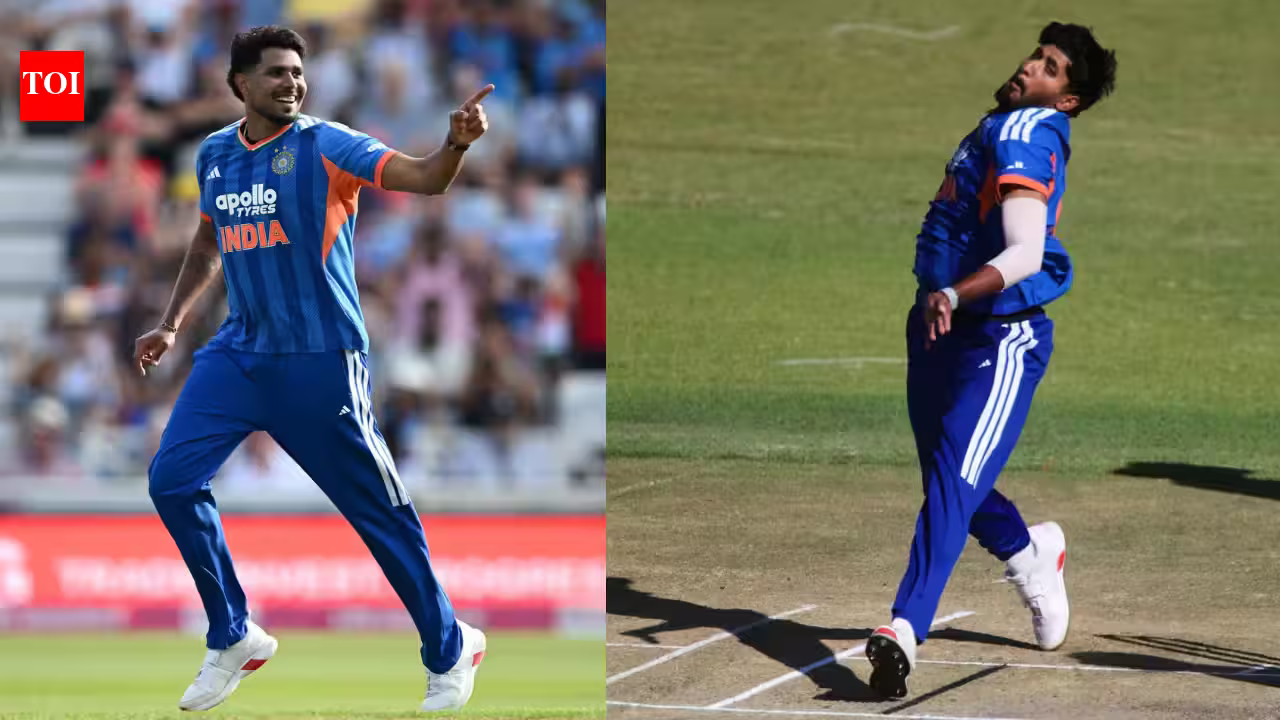








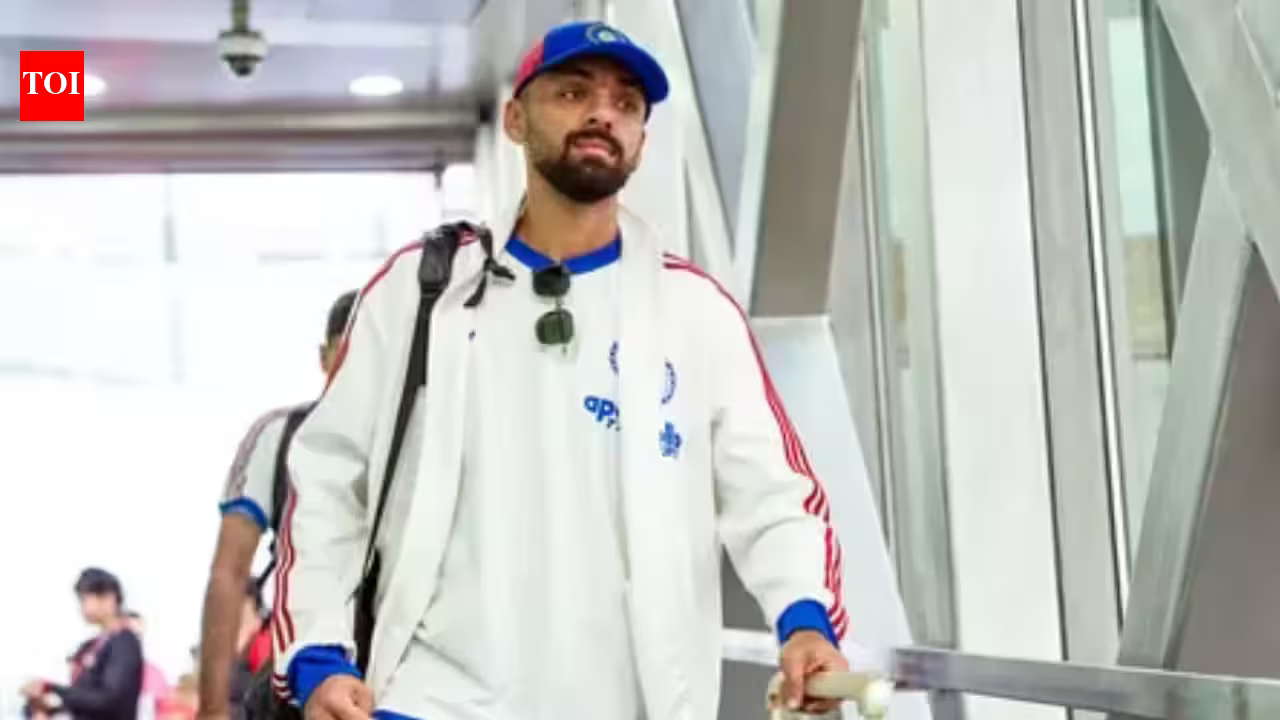
NEW DELHI: For a cricketer who made his international debut at the age of 29, time has always been a relative concept. Yet, as Varun Chakravarthy reaches his 35th year, his perspective on his career path remains remarkably defiant. Coming off a whirlwind season—highlighted by a T20 World Cup title on home soil where he finished as India’s joint-highest wicket-taker with 14 scalps, and an arduous IPL campaign navigated through the pain of hairline fractures—the mystery spinner is far from looking at the exit ramp.
“At this stage of my career, I still feel I’m in my first half of my career because I started cricket very late,” Chakravarthy said in an exclusive interaction with TimesofIndia.com. “So, I still feel there’s a long way to go.”
This outlook serves as the bedrock of Chakravarthy’s unconventional rise. In a sport where players often obsess over legacy and five-year cycles, the Tamil Nadu-born spinner focuses on the granular—the next delivery, the next adjustment, the next marginal gain.
Learning a New Kind of Injury
For most of his career, physical setbacks for Chakravarthy were defined by impact: a collision here, an accident there. This past summer, however, presented an unfamiliar foe in the form of a Grade 2 left hamstring injury sustained during the England T20I series. It was his first true muscle injury, forcing the veteran into weeks of rehabilitation at the BCCI Centre of Excellence in Bengaluru.
“This is actually my first ever muscle injury,” Chakravarthy admitted. “The expertise at the CoE helped me gain my confidence. Every person working there helped me.”
For a bowler whose craft is predicated on subtle variations of pace and finger movement, rehabilitation is about more than just medical clearance; it is about rebuilding the subconscious trust between the body and the brain. Chakravarthy used the downtime not as a period of stagnation, but as a window to refine his technical foundation.
“When you’re away, you can start sharpening your skills,” he explained. “You can upskill yourself, which you don’t get much time to do when you’re playing continuously.” Now fully recovered, he prepares to rejoin the fray for a crucial stretch that includes T20Is against Afghanistan, a historic international against Japan, and the Asian Games in Aichi-Nagoya.
Why Shoes Matter More Than Mystery
While fans often dissect his grip, his wrist position, and his release points, Chakravarthy insists that the most vital tool in a spinner’s kit begins at the ground level. His focus on footwear is clinical, stemming from a deep understanding of the mechanics of spin bowling.
“For a bowler, shoes are the biggest equipment they can have,” he noted. “Batters have many other pieces of equipment, but for a bowler, it’s the shoes only.”
Chakravarthy, who recently formalized a partnership with ASICS after years of personal testing, speaks with the precision of an engineer—a nod to his professional background before he took up the game seriously. He emphasizes the importance of the pivot. “As a spinner, your feet start changing shape because you have to pivot more after landing. So, broad shoes in the toe area are very important,” he said.
By pairing that structural support with a sturdy heel counter and lightweight material, Chakravarthy has found a way to sustain his demanding, high-rotation bowling style. It is this analytical, process-driven mindset that has allowed him to remain one of the most effective and difficult-to-read bowlers in the international T20 circuit.
The Curiosity Beyond the Pitch
As he prepares for the upcoming Asian Games, which commence on September 19, Chakravarthy is looking forward to more than just the competition. The multi-sport nature of the event offers him a rare glimpse into the lives of elite athletes from different disciplines—a prospect he finds genuinely thrilling.
“It’s my first time in Japan,” he said. “I’m very much looking forward to meeting other athletes from different sports. I want to see how a 100-metre athlete prepares himself, how a badminton professional prepares himself or herself.”
In a calendar year dominated by the relentless grind of international cricket, the Asian Games act as a rare bridge to a wider sporting culture. Chakravarthy hopes this experience will bolster his adaptability, especially as India prepares for the unfamiliar surfaces of the Korogi Sports Park. For a man who refuses to view his career as nearing its conclusion, every new experience is simply more fuel for his evolution.
As he heads to Aichi-Nagoya, the message is clear: Chakravarthy is not just returning to defend his status as a premier spinner—he is looking to refine his craft, absorb new sporting philosophies, and prove that his “first half” was merely the prologue to what he hopes will be an enduring second act.
Disclaimer: This content is auto-generated for informational purposes only.
Source: Read Original News