


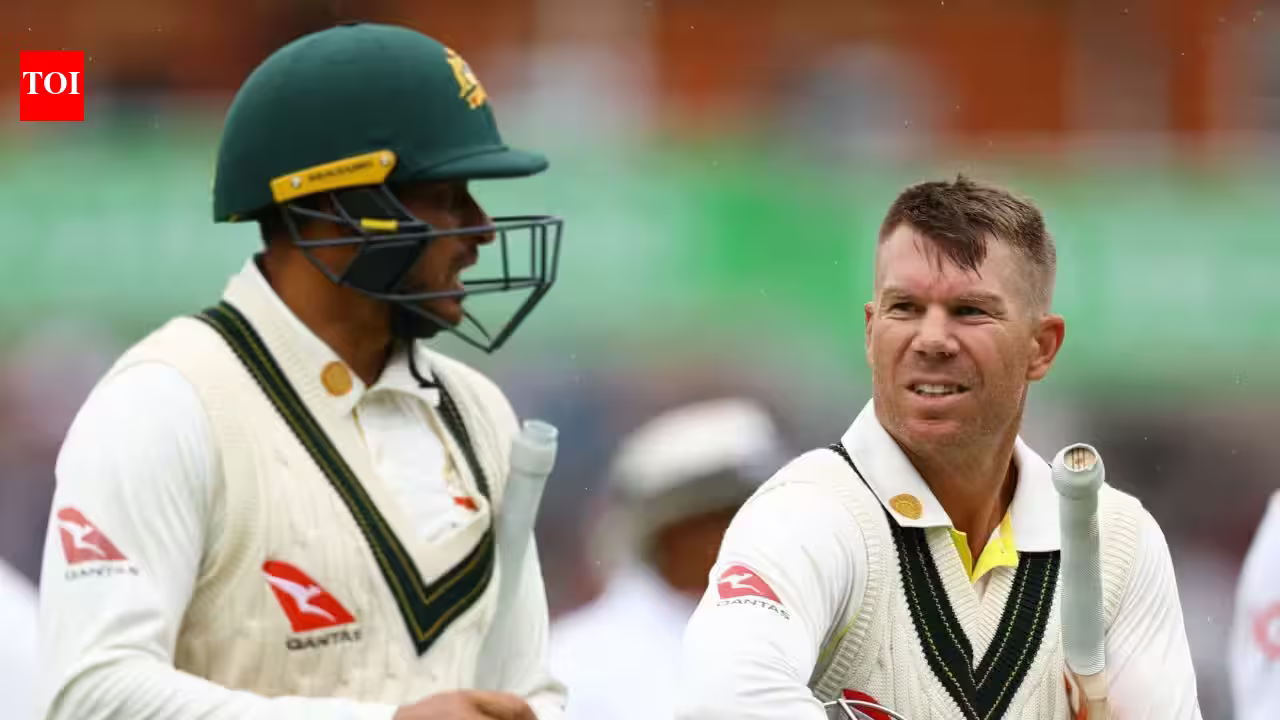
REOPENING the wounds of one of Australian cricket’s darkest chapters, Usman Khawaja has issued a blistering assessment of the “Sandpapergate” scandal, arguing that the infamous 2018 Cape Town incident was the inevitable byproduct of a systemic, toxic culture rather than an isolated act of individual deviance.
Speaking candidly on The Grade Cricketer podcast, the veteran batter doubled down on claims made in his recent autobiography, insisting that the “win at all costs” mentality instilled within the national setup effectively turned the entire squad into complicit beneficiaries of illicit ball-manipulation tactics long before the sandpaper emerged at Newlands.
A Culture of “Winning at All Costs”
Khawaja traced the roots of the controversy back to 2016, painting a picture of an Australian side pressured from the top down. According to Khawaja, the mandate for success was so aggressive that it filtered from Cricket Australia (CA) through the coaching staff and eventually manifested in increasingly unsportsmanlike behavior on the pitch.
“From 2016 and that ‘win at all costs’ mentality all the way to 2018, it came from CA up the top,” Khawaja stated. “It filtered down to the coaching staff. The coaching staff pushed it onto the players.”
He described the period as an “ugly time,” admitting that the team’s conduct extended far beyond the handling of the cricket ball. He cited specific on-field incidents—including heated exchanges with Quinton de Kock and aggressive posturing toward AB de Villiers—as evidence of a team that had lost its way in pursuit of victory.
“Sandpaper didn’t just magically happen,” Khawaja emphasized. “We didn’t go from zero to 100. It was progressive… We kept pushing the boundaries more and more during that two-year period.”
The 2021 Divide: A Fractured Dressing Room
The interview highlighted a deep, lingering resentment regarding a 2021 joint statement issued by Australian bowlers Pat Cummins, Mitchell Starc, Josh Hazlewood, and Nathan Lyon. That statement sought to distance the bowling group from any prior knowledge of the sandpaper incident.
Khawaja revealed that he was never consulted on that statement, characterizing the move as a betrayal of the collective accountability he felt the team owed one another. “It kind of left everyone else with our hands in our pockets. It created this separation. They separated themselves from the rest of the team at that point,” he said.
This sense of abandonment is echoed by Cameron Bancroft, the man caught red-handed with the sandpaper. Khawaja shared that he had been in contact with Bancroft since 2018, noting that the former opener had told him that the isolation he felt following the incident was “the loneliest” he had ever felt in his life.
When asked about the ongoing denial from the senior bowlers, Khawaja remained firm: “We all knew we were trying to reverse swing the ball, and we all know how to reverse swing the ball. That’s the context. You can make up your mind on the rest.”
A Failed Bid for Collective Accountability
In an attempt to finally put the saga to rest, Khawaja recently approached Cricket Australia CEO Todd Greenberg with a proposal for the 2018 squad to issue a unified statement of ownership. The proposed text was unequivocal: “We accept as a group we were ball tampering by artificially altering the condition of the ball in South Africa in 2018.”
The statement also aimed to provide a form of redemption for the three players who bore the brunt of the sanctions—Steve Smith, David Warner, and Cameron Bancroft—by acknowledging they had paid an “enormous price for the sake of the team.”
Greenberg’s response, according to Khawaja, was that the move was “not going to fly,” effectively shutting down the possibility of a final, official closure that would involve the entire unit sharing the burden of the scandal.
The Fallout Continues
The resurfacing of these allegations has placed current Test captain Pat Cummins under renewed scrutiny. While Cummins stood by the 2021 denial in a press conference last week, the narrative support from veterans like David Warner and the public corroboration from Bancroft suggest that the story is far from finished.
Cricket Australia has consistently maintained that it will not reopen the investigation, instead opting for internal forums to address the players’ experiences. However, for Khawaja, the truth is not a matter of debate—it is a matter of integrity.
“I can sleep very easily at night knowing the allegations in my book are true,” Khawaja said. As the sport moves forward, his testimony serves as a stark reminder that while the sandpaper may have been removed from the field in 2018, the questions surrounding the ethics and accountability of that era remain firmly embedded in the history of Australian cricket.
Disclaimer: This content is auto-generated for informational purposes only.
Source: Read Original News