





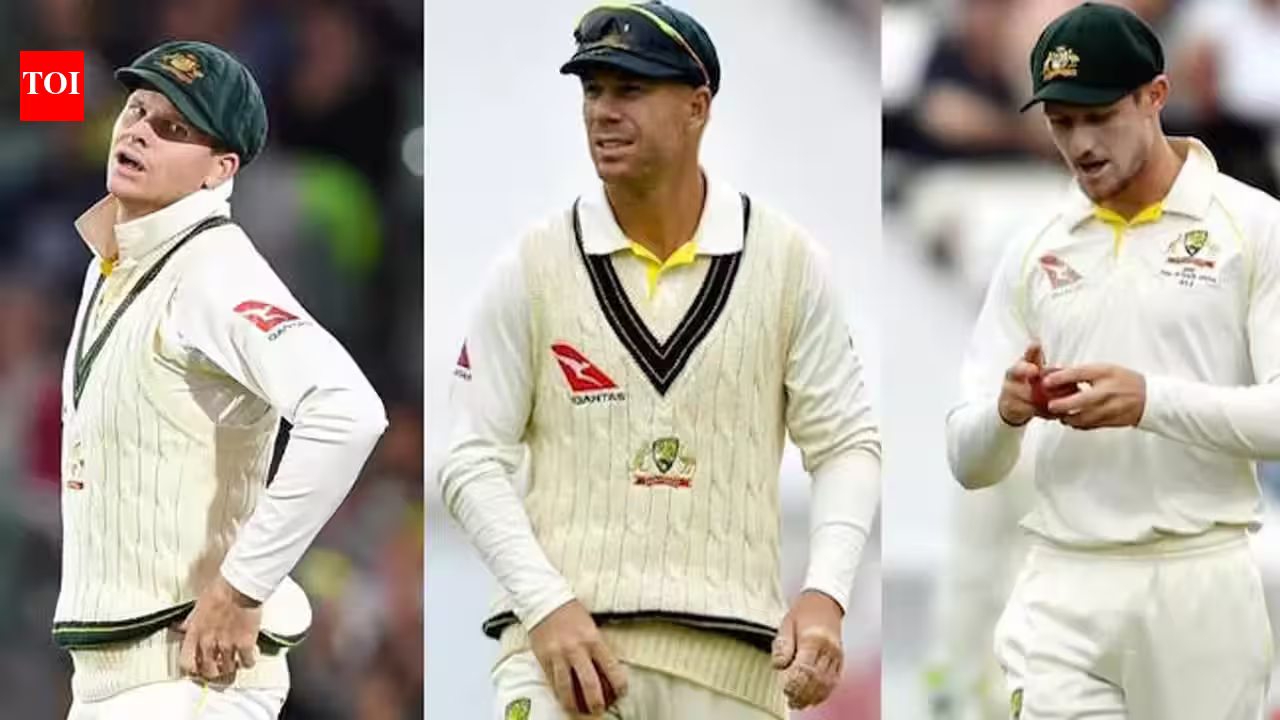
SHADOWS OF the 2018 Cape Town ball-tampering scandal have returned to haunt Australian cricket, as new revelations from the lead ethics consultant suggest that the infamous “Sandpapergate” incident may have been far more widespread than the official narrative admitted.
Dr. Simon Longstaff, the high-profile ethics expert commissioned by Cricket Australia (CA) to conduct a sweeping cultural review in the aftermath of the disaster, has broken his silence regarding “whispers” that reached him during his investigation. His comments, delivered during an appearance on Nine’s Weekend Today, have reignited long-standing questions about the integrity of the original probe and the extent to which the wider Australian dressing room was aware of—or involved in—the plot.
The “Whispers” of a Wider Conspiracy
When the scandal broke, the fallout was swift and severe. Captain Steve Smith and vice-captain David Warner were handed one-year bans, while opening batter Cameron Bancroft was suspended for nine months. The official line from Cricket Australia maintained that the plot was contained to those three players. However, Dr. Longstaff’s testimony suggests he was privy to information indicating a much broader awareness.
“Along the way, there were whispers, and I can’t put it any more strongly than that, that something else had gone on earlier and that more people had known,” Longstaff revealed.
According to the ethics expert, he took the responsibility of confronting the senior figures within the team, offering them a clean slate to disclose any prior knowledge or involvement in previous tampering incidents. Yet, he was met with a wall of silence.
“I afforded the senior people I spoke with an opportunity… ‘Well, is there something else you want to say about the whole circumstance?’ Nobody chose to make any alteration to their statement, so I was left with basically a blank wall,” he added. Because there was no hard evidence to back the hearsay, Longstaff was unable to recommend a broader inquiry at the time, leaving the matter in a state of unresolved suspicion.
A Conflict of Narratives
The legitimacy of the 2018 investigation has come under renewed scrutiny following David Warner’s explosive claims on social media. The former vice-captain, who has long expressed frustration over the handling of the incident, accused Cricket Australia of running a “shoddy investigation” designed specifically to pin the blame on a select few.
Warner pointedly questioned why key senior bowlers—Josh Hazlewood, Mitchell Starc, and Nathan Lyon—were allegedly excluded from the interview process during the initial investigation. “If that’s correct, then how can CA push the idea that the bowlers didn’t know?” Warner posted on Instagram. “It looks like they had decided who they wanted to blame from the very beginning… that stinks of a cover-up.”
The disparity in accounts does not stop with the bowlers. Usman Khawaja, in his recently published book Sabr, claims he was never invited to provide input for the review despite his willingness to speak. When pressed on these contradictions, Dr. Longstaff noted that he could not recall every individual invited to contribute, emphasizing that the review process was governed by strict confidentiality and that some individuals opted not to participate.
Is a Re-Investigation Necessary?
Despite the noise, Dr. Longstaff maintains that current Test captain Pat Cummins—who was not part of the leadership group during the Cape Town incident—acted with sincerity when denying any knowledge of such activities. However, Longstaff concedes that the lingering questions regarding a potentially larger group of complicit players remain a stain on the organization.
The onus now sits with Cricket Australia to decide if the “whispers” are worth a modern-day deep dive. Longstaff suggested that if the organization wishes to resolve the “conflicting accounts,” it must be the entity to decide whether a new inquiry is the appropriate path forward.
For now, the Australian cricket fraternity is left grappling with the reality that the wounds of 2018 have not fully healed. The “Sandpapergate” scandal was intended to be a turning point for the culture of Australian cricket—a moment of reckoning that purged bad habits and established a new standard of integrity. Yet, as experts and former players continue to trade barbs over the legitimacy of that transition, the sport finds itself looking back at the past, wondering if the full truth was ever actually put on the table.
As the debate intensifies, the silence from the Cricket Australia boardroom grows increasingly noticeable. Whether they choose to address these renewed allegations or allow them to fade into the annals of sporting history remains the central mystery. One thing is certain: for as long as these questions remain unanswered, the shadow of Cape Town will continue to loom over the baggy green.
Disclaimer: This content is auto-generated for informational purposes only.
Source: Read Original News


