




The recent World Architecture Festival (WAF) in Fort Lauderdale, Florida, has spotlighted a significant shift in global design: a move toward architecture that balances modern technological ambition with environmental stewardship and historical reverence. From a massive university campus in India to a 100sq m tea shop in the Philippines, the winners of this year’s prestigious awards illustrate how the built environment can actively address the climate crisis.
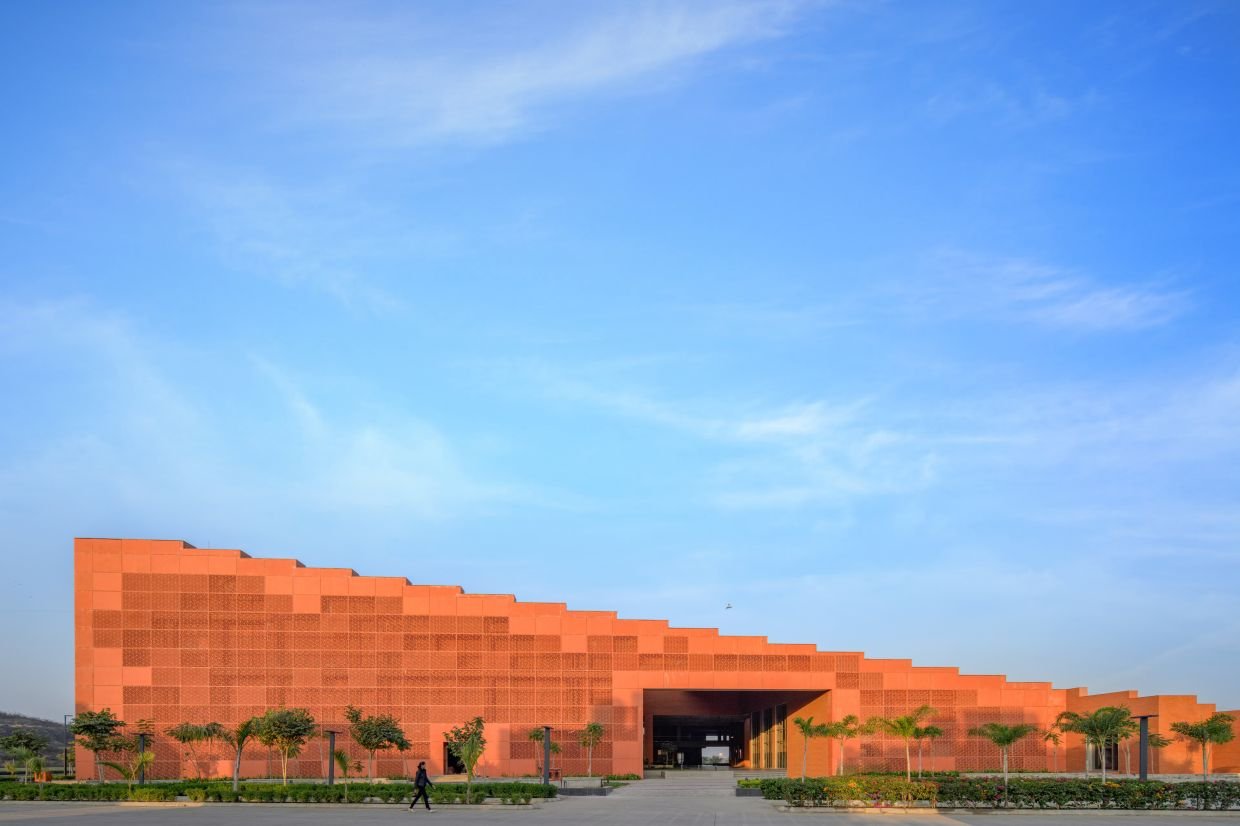
The event’s top honor, World Building of the Year, was awarded to Prestige University in Indore, India. Designed by Sanjay Puri Architects, the project serves as a masterclass in passive climate control. Facing temperatures that frequently climb between 30°C and 40°C for the majority of the year, the design draws inspiration from India’s 1,100-year-old stepped wells. By creating a structure that “steps” gradually and incorporates naturally lit, landscaped internal courtyards, the architects have achieved a space that requires minimal artificial lighting and air conditioning. WAF programme director Paul Finch noted that the project represents a “welcome provision of shaded courtyards” that proves natural ventilation is entirely feasible even in extreme climatic conditions, offering a scalable blueprint for future educational developments in hot climates.
While the university project addressed sustainability at a macro level, the World Interior of the Year winner, &Matcha Three Yards by MLA at Home in the Philippines, demonstrated the power of smaller, more poetic interventions. The 100sq m tea shop was celebrated for its “wabi-sabi” design—an aesthetic valuing imperfection and transience. By utilizing a structural layout that welcomes shifting light, shadow, and air, the project ensures that the interior environment is never static, effectively turning the building into a living, breathing participant in the natural cycle.
Looking toward the future, the WAFX and Future Project of the Year winner, “Coding Kelp: Artificial Reef and Data Archive” by Terreform ONE, pushed the boundaries of architecture into the realm of biotechnology. Located off the coast of Vancouver Island, Canada, this project functions as a 3D-printed, calcium carbonate-based structure designed to assist kelp in taking root within cold waters. More than a habitat for marine life, the reef acts as a “living, solar-powered library,” using microalgae to store data through genetically encoded text and images. Judges praised the project as a “timely hope,” highlighting its ability to combine tectonic engineering with biological preservation to address both carbon sequestration and long-term data storage.
These projects underscore a broader industry trend where the aesthetic quality of a building is now inextricably linked to its environmental performance. Whether through the massive, energy-efficient social spaces of the Prestige University or the experimental, carbon-trapping reefs of the Coding Kelp project, architects are increasingly moving away from energy-intensive designs in favor of structures that interact positively with their local ecosystems.
The festival also recognized several other landmark projects, including the Doca Linear Park in Brazil for Landscape of the Year, and various category winners ranging from the New Government Quarter in Oslo to the Murray-Massenburg Elementary School in North Carolina. By celebrating these diverse contributions, the World Architecture Festival has reinforced the notion that the future of design lies in “neo-natural” solutions—projects that respect the past, foster social cohesion, and provide tangible defenses against a warming planet. As these winning designs move from concept to completion, they set a new, higher standard for what it means to build responsibly in the 21st century.
Disclaimer: This content is auto-generated for informational purposes only.
Source: Read Original News