








“People seldom do what they believe in. They do what is convenient, then repent.”
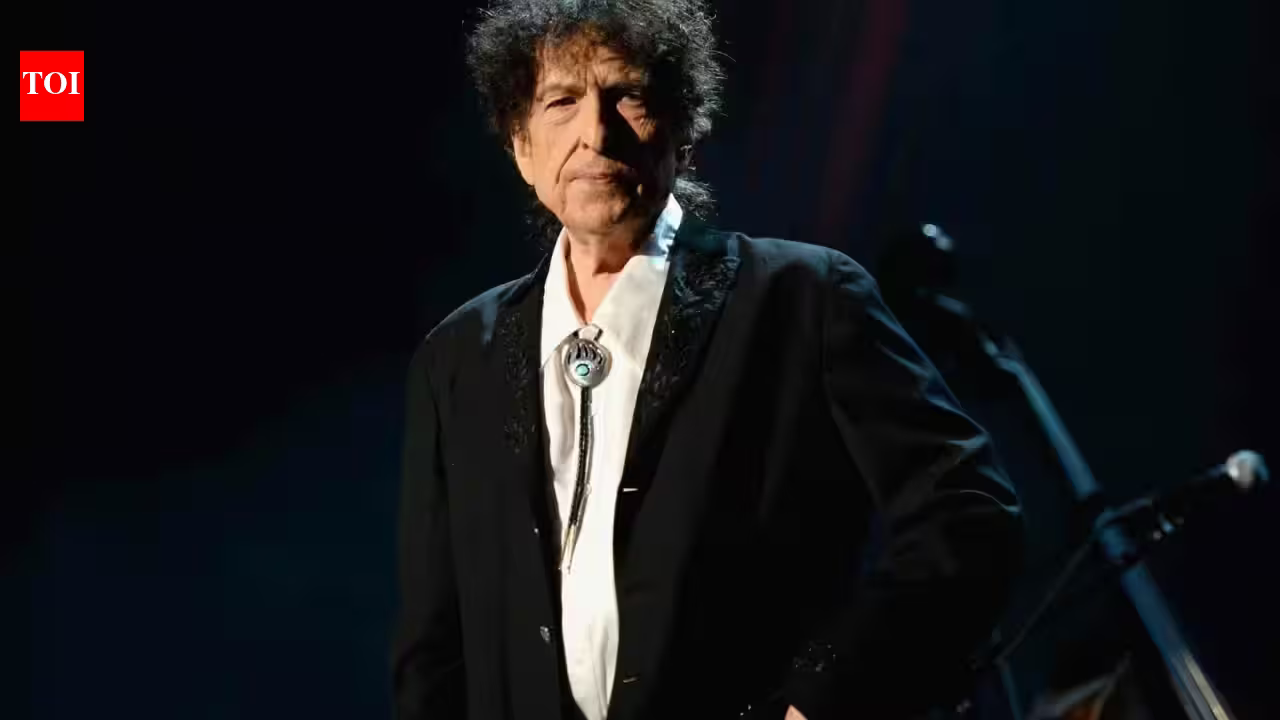
It is a line that cuts through the noise of modern life like a blade through parchment. Penned by Bob Dylan and co-writer Sam Shepard for the 1986 epic Brownsville Girl, these words serve as a stark autopsy of the human condition. In an era where our beliefs are often curated on social media profiles and broadcasted in digital town squares, the gap between our high-minded rhetoric and our daily, hurried compromises has never been more apparent. Dylan, ever the master of the weary, cynical truth, reminds us that while we may want to be the heroes of our own narratives, the siren song of convenience is often far more persuasive.
The anatomy of a compromise
Why do we choose the easy path even when we know it leads away from our core values? Dylan’s insight isn’t just about moral failure; it’s about the heavy tax that reality levies on idealism.
The “convenient” choice is rarely a conscious rejection of one’s ethics. More often, it is a survival mechanism. It is the silence maintained during a meeting to avoid an uncomfortable confrontation; it is the promise to spend quality time with a loved one that gets sidelined by the “urgent” demands of a flickering email inbox; it is the look the other way when a bystander needs help because we have a bus to catch.
Dylan’s genius lies in his focus on the aftermath: the repentance. That word—repent—is heavy. It implies that we don’t just forget our deviations; we feel them. We carry the weight of the “almost.” We walk through life nursing a quiet, low-frequency hum of regret for the versions of ourselves we didn’t quite manage to be. We aren’t intentionally hypocritical; we are simply tired, distracted, and prone to the path of least resistance.
The friction between values and reality
In the context of the 21st century, the relevance of this sentiment has only sharpened. We live in a world of immediate feedback, where the pressure to perform “correct” values is immense. Yet, the structures of our daily lives—the gig economy, the 24-hour news cycle, the crushing pace of modern labor—are engineered for efficiency, not introspection.
When Dylan wrote that line nearly forty years ago, the pace of life was significantly slower, yet the human inclination to settle for the convenient remained the same. Today, we are even more “connected,” yet perhaps more prone to sacrifice our inner convictions to keep the machinery of our lives running smoothly. We trade integrity for convenience so often that it becomes a habit, and eventually, a character trait. Dylan’s quote acts as a mirror, forcing us to ask: If we are constantly repenting for our actions, are our values actually our values, or are they just ideals we keep in a display case, too delicate to take out into the messy, uncomfortable world?
From the iron range to the icon
To understand why Bob Dylan is the one who consistently offers these brutal truths, we have to look back at the trajectory of a boy from Hibbing, Minnesota. Born Robert Zimmerman in 1941, he wasn’t born a legend; he was forged in the isolation of the Iron Range and the gritty, dust-blown curiosity of a young man hungry for more than his hometown could offer.
When he arrived in New York City in 1961, the folk scene was his laboratory. He wasn’t just performing; he was absorbing the entire history of the American experience—the blues, the gospel, the protest songs, the myths of outlaws and drifters. His rise wasn’t just about melody; it was about the sudden, jarring recognition that the world was changing. When he picked up an electric guitar at Newport in 1965, he didn’t just alienate a few folk purists; he fundamentally altered the relationship between an artist and their audience. He proved that to hold on to one’s artistic “belief,” one must often be willing to burn down the “convenient” expectation of what people think you should be.
The enduring legacy of a restless mind
Dylan’s career is a testament to the idea that true consistency is the enemy of growth. By constantly shifting his sound, his persona, and his lyrical focus, he successfully evaded the trap of convenience that kills so many other artists. Whether through the surrealist poetry of Highway 61 Revisited or the raw, domestic heartbreak of Blood on the Tracks, he has spent six decades refusing to be the person the public found “convenient” for him to be.
This trajectory earned him the Nobel Prize in Literature in 2016, a moment that polarized some but cemented his status as the voice of the American subconscious. The Nobel committee recognized what fans have known since the 60s: Dylan doesn’t just write songs; he documents the moral geography of human life.
A final reflection on the gap
As we move further into a decade defined by rapid technological shifts and social fragmentation, Dylan’s warning remains a vital compass. We will all, at some point, succumb to the pressure of the moment. We will choose the easy way. We will have our moments of repentance.
The value of this quote isn’t to make us feel guilty, but to make us aware. If we can recognize the urge to prioritize convenience as it happens, we might just find the courage to pause, take a breath, and act in accordance with the values we claim to hold. It isn’t about being perfect; it’s about narrowing that gap. As Dylan himself proved, the only way to avoid a lifetime of repenting is to stop choosing the easy path and start choosing the true one—even if the world doesn’t always make it convenient.
Disclaimer: This content is auto-generated for informational purposes only.
Source: Read Original News