





Brazil Forges Path Towards Sustainable Waste Management with Landmark Composting and Biodigestion Initiatives
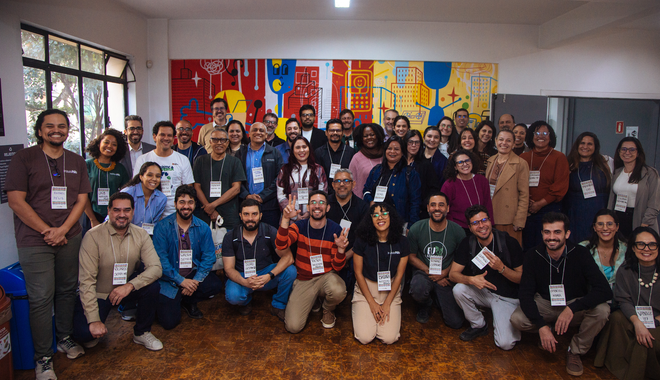
São Paulo, Brazil – A recent national meeting with environmental agencies has marked a pivotal moment for Brazil’s commitment to sustainable waste management. The three-day workshop, focusing on the intricate landscape of composting and biodigestion, brought together diverse stakeholders to align licensing procedures, share best practices, and strategize for the widespread valorization of urban organic waste across the nation.
Renato Trivela, Agronomist at CEPAGRO, underscored the significance of the event, stating, “The national meeting with environmental agencies marked an unprecedented milestone in aligning composting licensing, particularly with the launch of the new bulletin that systematizes state regulations. I believe this concerted effort will drive the valorization of urban organic waste in Brazil.” This sentiment reflects a growing national resolve to transform organic waste from a liability into a valuable resource.
The workshop served as a dynamic forum for an extensive exchange of ideas, delving into Brazil’s diverse regional contexts and existing regulations. Participants also benefited from invaluable practical experience, exploring various composting methods, biodigestion, waste pickers associations, and entrepreneurship experiences – a comprehensive approach designed to address the multifaceted challenges and opportunities within the sector.
Organized under two CCAC projects, the workshop directly supports Brazil’s environmental and climate goals. The first project, “Develop a methane mitigation strategy for urban and agriculture sectors”, implemented by Instituto Pólis and I 17, is crafting a comprehensive strategy to reduce methane emissions in both urban and rural environments. Methane, a potent greenhouse gas, is significantly contributed by organic waste in landfills, making effective management crucial for climate action.
The second project, “Establish standardized national guidelines for small-scale composting, harmonizing subnational regulations and promoting best practices in organic waste management”, is spearheaded by CEPAGRO with support from CCAC. This initiative, undertaken at the request of Brazil’s Ministry of Environment and Climate Change of Brazil, provides critical technical guidance and strengthens municipal capacity to establish small-scale composting facilities, thereby empowering local communities to manage their organic waste effectively.
Beyond theoretical discussions, participants engaged in three insightful site visits, offering firsthand glimpses into successful organic waste management models. At Planta Feliz Adubo, a social enterprise transforming organic waste into organic fertilizers, attendees learned about the journey to secure necessary licenses and the innovative business model that generates revenue from organic waste collection, fertilizer sales, and ecotourism. The waste picker cooperative COOPERPAC showcased its recent foray into collecting and composting organic waste, building upon its established work in recyclables, a solidarity kitchen, and environmental education. The final visit took participants to a mid-size bioenergy and biofertilizer plant at the University of São Paulo, which produces biogas and organic fertilizer from organic waste collected on campus and from partner organizations, demonstrating the potential for decentralized energy and resource recovery.
Raphael Esteves, CCAC Programme Manager, provided a global perspective on methane mitigation in the waste sector. He emphasized that “We understand that licensing is one key enabling condition that can unlock the multiple benefits of composting and biodigestion. It can ensure that environmental impacts are adequately managed, while delivering benefits that go well beyond climate and air quality – job creation, social inclusion and stronger food security.” This holistic view highlights the broader socio-economic advantages of effective organic waste management.
The discussions illuminated challenges common to all subnational governments, alongside specific regional particularities. It was noted that initiatives are unevenly distributed across the country, and states apply somewhat different parameters when assessing licensing requests. Vanice Nakano, Specialist in Energy Recovery from Waste and Effluents at I17, observed that "while composting is already well established among environmental agencies, anaerobic digestion remains relatively unfamiliar. The technical meeting and site visits were essential to strengthening discussions on its environmental licensing." This highlights the need for continued education and harmonization of regulatory frameworks for advanced organic waste treatment technologies.
Victor H. Argentino, Zero Waste Coordinator at Instituto Pólis, concluded by emphasizing the growing importance of these solutions: "Composting and biodigestion are solutions that have been growing significantly across Brazil, despite still receiving limited support and investment. Throughout the workshop, participants discussed the main challenges related to the environmental licensing of these technologies and explored the conditions needed to accelerate this strategic agenda for waste management and climate action. Bringing together different stakeholders is one of the most important ways to expand organic waste recycling and reduce methane emissions in Brazil."
This landmark workshop and the ongoing collaborative efforts signal a promising future for Brazil’s organic waste management landscape. By fostering inter-agency cooperation, harmonizing regulations, and promoting best practices, the nation is poised to significantly reduce methane emissions, create green jobs, and build a more sustainable and circular economy.