









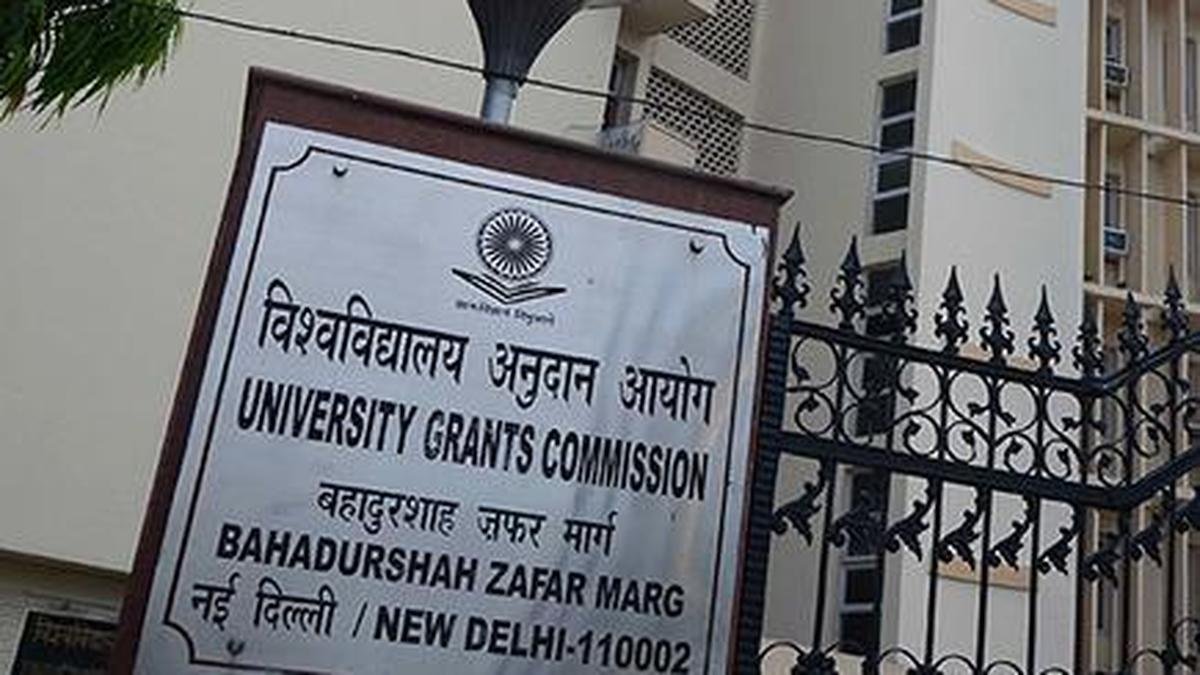
Bureaucratic Limbo: The Crisis Facing Centres for the Study of Social Inclusion
Seven months into the 2026-27 financial year, 24 central universities across India are grappling with a deepening administrative crisis. Their “Centres for the Study of Social Inclusion in Universities” (CSSIU)—vital hubs for research and academic engagement concerning marginalised communities—remain in a state of suspended animation, awaiting the annual renewal of their funding from the University Grants Commission (UGC).
For students and faculty at prestigious institutions such as Banaras Hindu University, Jamia Millia Islamia, the University of Hyderabad, and the Tata Institute of Social Sciences, this delay is more than a mere administrative oversight; it is a hurdle to academic continuity and professional stability.
The Mechanics of a Stalled Scheme
Established in 2007-08, the CSSIU was initially conceptualised as a five-year plan. Over time, it transitioned into an annual UGC scheme, requiring approval every April. These centres serve a crucial academic purpose, offering specialized two-year Master’s programmes and five-year PhD courses that focus on tribal and disadvantaged populations. Beyond the classroom, they perform essential outreach work that bridges the gap between high-level policy research and ground-level social realities.
However, because the funding depends on a yearly “nod” from the central government, the institutions are trapped in a cycle of uncertainty. The Ministry of Education (MoE) maintains that the continuation of the scheme for 2026-27 is “currently under process.” Meanwhile, universities report that the lack of an extension order has resulted in delayed or completely withheld salaries for both teaching and non-teaching staff.
Impact on Academic Ecosystems
The uncertainty surrounding the CSSIU has direct consequences for institutional health. Faculty members have noted that the recurring nature of this financial instability—seen previously between 2019 and 2024—has led to a “flight” of talent. When educators and researchers cannot be guaranteed timely pay or long-term employment, the quality of academic output inevitably suffers.
“Non-payment of salaries on time causes a great deal of hardship,” one anonymous professor remarked. “Such uncertainties undermine the academic objectives behind the centre.” When research centres operate on an ad-hoc, annual basis, they struggle to attract stable research cohorts or sustain long-term studies, effectively limiting the academic impact of these departments.
Calls for Structural Regularisation
The current crisis has renewed calls for the structural integration of these centres into the permanent framework of the universities. Rather than relying on the precarious “scheme-based” funding model, many institutions are advocating for their CSSIU posts to be merged into the regular university establishment.
Jamia Millia Islamia has been particularly vocal, with its Registrar having sent multiple formal communications to the UGC since December 2024, urging for the regularisation of teaching and non-teaching posts. Proponents of this move argue that it would provide the stability required for rigorous academic inquiry and prevent the violation of fair employment practices.
Faculty members have also pointed to the Supreme Court’s landmark judgment in State of Karnataka v. Uma Devi, which posits that employees who have served in government-linked setups for a decade or more should be considered for regularisation. After 15 years of uninterrupted service for many staff members, the argument for transitioning these centers from “project mode” to “permanent status” is gaining momentum within academic circles.
Moving Forward: The Ministry’s Stance
The Ministry of Education contends that financial assistance operates on a reimbursement basis, requiring strict document verification. While the Ministry released over ₹33 crore for the 2024-25 and 2025-26 periods, the bottleneck currently lies in the transition to the new financial year.
For the academic community, the path forward is clear: a shift toward a more predictable, long-term funding policy is essential. Without it, the centres meant to champion social inclusion remain trapped by the very exclusionary bureaucratic delays they were designed to study and overcome.
Disclaimer: This content is auto-generated for informational purposes only.
Source: Read Original News