









SURGING commercial interest in the WNBA has hit a historic milestone, with the league generating an estimated $608 million in Sponsor Media Value (SMV) during the 2026 regular season. According to a comprehensive new report from Relo Metrics, this figure represents a staggering 53.9 percent increase year-over-year, underscoring the meteoric rise of women’s basketball as a premier marketing powerhouse.
The report, which utilizes AI-powered analytics to measure brand exposure across broadcast and social media, highlights a shifting landscape where strategic partnerships—both league-wide and team-specific—are reaping massive dividends for corporate sponsors.
WNBA Sponsorship Value Rises to $608 Million as Broadcast Exposure Drives Growth
The $608 million valuation is not merely a reflection of cash-in-hand sponsorship fees, but rather a granular measurement of the worth of brand exposure across national television and digital platforms. Broadcast media remains the league’s primary growth engine, accounting for $545 million—or roughly 90 percent—of the total SMV. This represents a 62 percent surge in broadcast value compared to the previous season.
A significant catalyst for this growth is the inaugural year of the league’s 11-year media rights deal, which integrated NBC, NBC Sports, and USA Network into the WNBA’s broadcast portfolio. These new partners alone contributed $105 million in SMV, highlighting the immense value inherent in increased prime-time visibility.
While major players like Michelob Ultra, Nike, State Farm, Coinbase, and Tampax continue to dominate the landscape—collectively commanding 41 percent of the total league-wide sponsorship value—the data suggests that the market is far from a monopoly. The report indicates that while league-level agreements offer the most stability, savvy brands are finding lucrative pathways through targeted team-level investments.
Caitlin Clark and Indiana Fever Account for More Than a Third of Broadcast Value
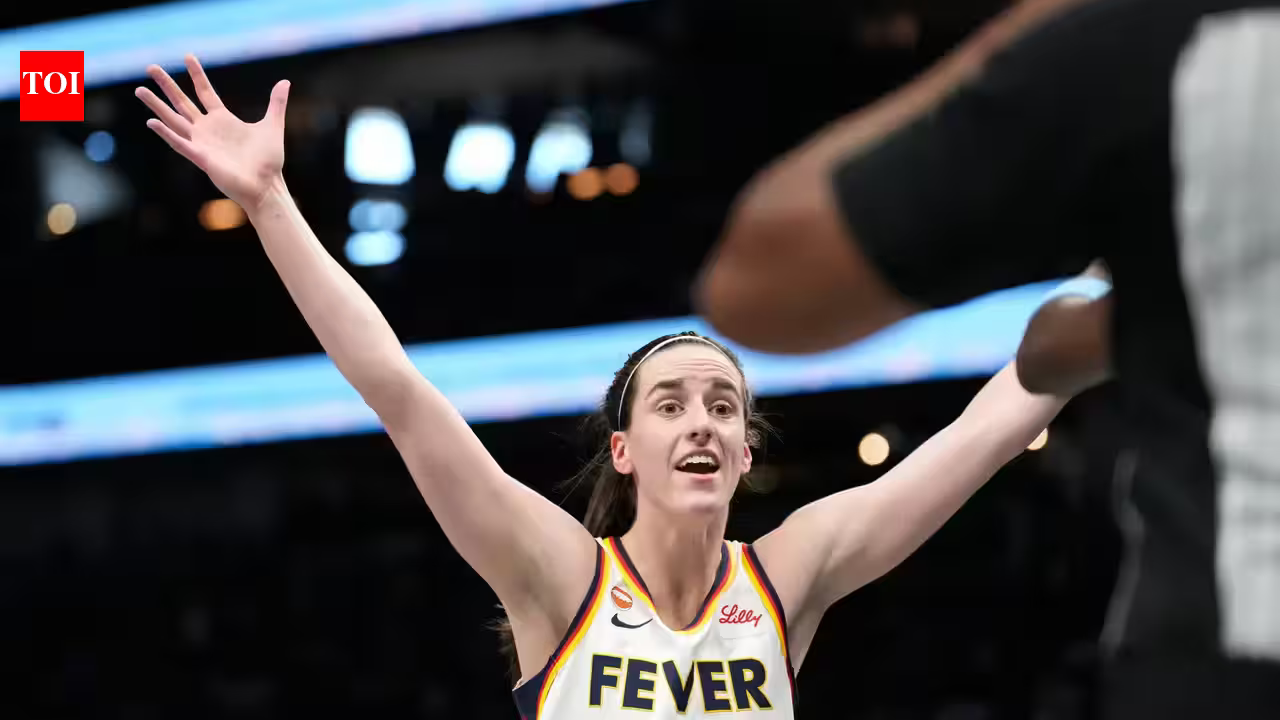
The 2026 season was defined by the unprecedented drawing power of the Indiana Fever, spearheaded by the gravitational pull of Caitlin Clark. The Fever’s influence on the league’s commercial health was nothing short of staggering: the franchise generated $205 million in broadcast SMV, accounting for approximately 37.6 percent of the entire league’s broadcast total.
Perhaps most remarkably, the Fever achieved this dominance while playing in only 13 percent of the league’s regular-season games. As the only team to have every single game broadcast nationally, the Fever provided their partners with consistent, high-reach exposure that far exceeded that of their peers.
“The WNBA offers several ways for brands to reach basketball fans,” explained Ryan Meizinger, Director of Insights and Strategic Services at Relo Metrics. “While league partnerships remain the strongest guarantee to capitalize on women’s basketball, it is a team’s schedule and the placement of a logo that shapes the value of the partnership. Good team deals can put brands in front of national audiences.”
The impact of this visibility is compounded by social media, where player-centric content—including behind-the-scenes clips, Instagram reels, and player-fan Q&As—allows brands to extend their presence well beyond the final buzzer. Uniform patches were identified as a critical asset, generating over $40 million in social media value alone as logos are repeatedly shared across digital fan ecosystems.
Albert Shows How Brands Can Benefit Without a League-Wide Deal
One of the most compelling narratives in the 2026 report is the success of non-league-wide sponsors. Approximately 85 brands recorded at least $1 million in SMV this season, proving that companies do not need to sign a massive, overarching league agreement to achieve significant national footprint.
A prime example of this strategy is the fintech firm Albert. Despite having no central league partnership, Albert secured its position as the official jersey-patch partner for the Atlanta Dream, Dallas Wings, and Los Angeles Sparks. By strategically aligning with these three franchises, Albert saw its branding featured in 87 nationally televised games. The result was a $14.7 million contribution to the company’s SMV, placing it 10th among more than 400 brands analyzed.
This success story illustrates a fundamental shift in sports marketing strategy: for emerging or agile brands, a portfolio of carefully selected team-level deals can provide a higher return on investment and more targeted demographic reach than a blanket league contract.
Looking Ahead: Expansion and Continued Commercial Trajectory
The WNBA’s commercial explosion comes as the league continues to scale its operations. Currently sitting at 15 teams, the league is already projecting an expansion to 18 teams by 2030, with a schedule that will balloon to 468 regular-season games.
This expansion offers a dual opportunity for brands. More games and more teams translate to a wider variety of local and regional sponsorship inventory, while the increased broadcast schedule provides more prime-time slots for national exposure.
As the league continues to solidify its place in the American sporting consciousness, the synergy between elite on-court performance and sophisticated media strategy has never been more apparent. With winning teams like the Atlanta Dream and Indiana Fever driving higher engagement, the evidence is clear: the WNBA is no longer just a growing league—it is a commercial titan in the making. For sponsors, the 2026 season proved that whether you are a global household name or an innovative fintech firm, the court is open, and the potential for return has never been higher.
Disclaimer: This content is auto-generated for informational purposes only.
Source: Read Original News