









Published 24th May 2026, 06:00 BST
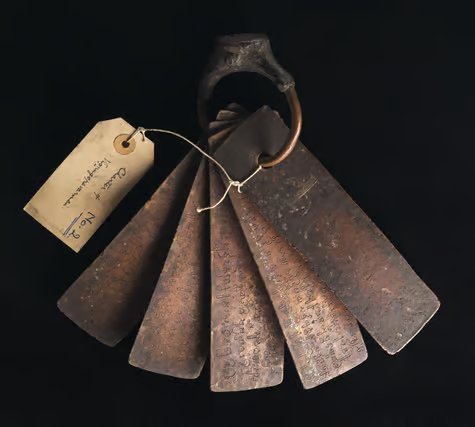
They are regarded as “invaluable” cultural treasures which shed light on day-to-day Indian life as far back as the 5th century.
Now authorities in New Delhi are pushing for the return of seven prized copper plate charters that are held by a leading Scottish university.
The artefacts are viewed as a unique snapshot of Indian society from the classical period through to the late medieval period.
The inscriptions, tantamount to legal documents, typically record royal gifts of land and revenues, and detail information on land tenure, taxation, and other crucial issues.

Nowadays, they are revered not only for their archeological value, but the insight they provide into the history of Indian society, religion, and economics.
The copper plate charters have been held by the University of Edinburgh’s library for nearly 80 years, but amid a return of similar long-lost treasures to India by other British institutions, officials are set to request their repatriation.
The Sanskrit charters, which date from 444 to 1508, span the reigns of several historic rulers. They include what is known as the Mangalur Charter of Simhavarman II, an early king of the Pallava dynasty who reigned from between 425 to 450AD, as well as the charter of Gurjara king Dadda II Prasantaraga, an important inscription issued in 638 which documented the granting of various estates.
All of the plates were collected by Sir Walter Elliot, a Scottish orientalist and archaeologist who served as a civil servant in colonial India. He excavated the Amaravati Temple and shipped many of its beautiful sculptures to the East India Company Museum. The charters came from different areas of India, including Andhra Pradesh, Telangana, and Gujarat.
It is understood that after Elliot’s death, the plates came into the possession of Professor Julius Eggeling, who taught Sanskrit at the University of Edinburgh in the late 19th and early 20th century. According to the university’s online archive records, the plates from part of an “important collection” were donated to its library by Prof Eggeling’s son, Hans, in 1947.

Two volumes of inscriptions were donated to the library by Elliot himself in 1875, with a further volume given to it in 1908 by an unknown donor.
But the Archaeological Survey of India (ASI), an Indian government agency which oversees the conservation and preservation of the nation’s historic cultural monuments, is now formulating a plan to secure their return.
Muniratnam Reddy, director of epigraphy at the ASI, which is part of the Indian culture ministry, said: “These copper charters are an invaluable cultural treasure of our country, throwing light on Indian history and culture.”
According to the Deccan Chronicle, an English-language daily newspaper based in Hyderabad, the ASI is preparing a dossier with details of the charters and how they came to end up in Scotland which will be submitted to the university.
It is understood the Indian embassy will then make representations about securing their return, with the possibility of the artefacts ultimately being sited in museums in their places of origin.
Mr Reddy told the title: “I am preparing a list of how many copper plates and inscribed slabs have been taken away from India, so that we can make efforts to bring them back to our nation.”
It is not the only Indian artefact linked to Elliot that has been the subject of calls for repatriation. A series of Amaravati sculptures, known by some as the ‘Elliot Marbles’, are on display at the British Museum in London, but some have said they should be returned.
Earlier this month, Leiden University in the Netherlands returned a series of historically significant copper plates to India. The so-called Chola plates, which record important records surrounding the likes of a Buddhist shrine and monasteries, had been in the university’s possession since 1862.
An investigation found that the plates were likely excavated by the Dutch East India Company in Nagapattinam between 1687 and 1700, before being removed from India without the consent of their rightful owners.
The Indian government submitted a request for their return in 2023, which culminated in a formal ceremony in The Hague last week attended by India’s prime minister, Narendra Modi, and his Dutch counterpart, Rob Jetten.
Four years ago, Glasgow Life, the arms length organisation which manages the city’s museums, signed an historic agreement to repatriate a series of artefacts to India.
Delegates from the ASI and the Indian government travelled to Scotland for the transfer of ownership ceremony. The items returned to India included a ceremonial Indo-Persian tulwar – a type of sword – which is believed to date back to the 14th century, and an 11th century carved stone door jamb taken from a Hindu temple in Kanpur.
The University of Edinburgh said that to date, it had received no formal request for the return of the seven copper plates from its Sir Walter Elliot collection, but stressed that it worked with communities around the globe to facilitate the return of artefacts.
A spokesperson said: “The university is committed to learning lessons from its past, including addressing its colonial legacy and its contemporary impact. We have teams of experts responsible for ensuring our historically significant archives are preserved, as well as being accessible for non-invasive research projects and outreach initiatives that help to enhance our understanding of the world.
“We continue to work with many communities around the world to engage with our collections and facilitate the return of artefacts and ancestral remains.”