






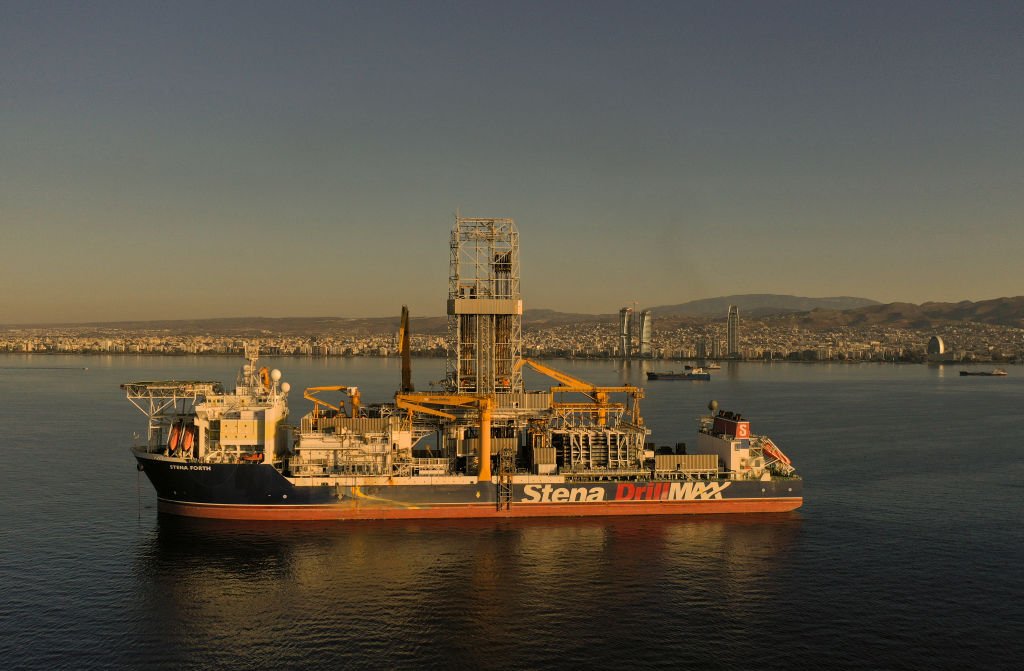
Greece, Cyprus and Romania are pushing for a massive ramp-up of European gas production, putting them on a potential collision course with the European Commission as it prepares to unveil an electrification plan.
For decades, European gas production was centred around the Nordics and the Netherlands. Now, eastern Mediterranean countries say the current energy crisis makes exploiting their copious reserves a strategic imperative.
“We have gas reserves, we just need to make sure that we use those reserves in the next few decades,” said Cypriot energy minister Michael Damianos as his European peers descended on Nicosia for an informal EU Council summit.
“There’s no doubt that we will need fossil fuels,” Damianos told reporters. “Natural gas is greener than anything else, and we do have some reserves.”
Vast reserves
Estimates vary widely but there are thought to be the equivalent of a few trillion cubic metres of untapped natural gas below the Eastern Mediterranean seabed.
Cyprus invited Osama Mobarez, an Egyptian oil expert who chairs the East Mediterranean Gas Forum (EMGF), to make the point. Egypt is one of the eight member countries of the EMGF, which is also composed of a raft of petroleum multinationals – including US giants Chevron and ExxonMobil.
Greece’s energy minister, Stavros Papastavrou, said it was “important for Europe to have a balanced energy mix, not to exclude anything, in order to be able to secure its energy security.”
It isn’t only Mediterranean countries arguing that the role of gas in the European Union should not end at the bloc’s net-zero deadline of 2050.
“We need more natural gas in Europe, for the transition and even beyond 2050,” Romanian energy secretary Cristian Bușoi said, with the proviso that carbon storage technology should be in place by then. “We coordinate with Cyprus in promoting the role of our natural gas in Europe.”
Climate targets
From 2027, Busoi’s home country will become a major European gas producer, once its Neptune Deep offshore platform begins pumping 7 billion cubic metres a year from under the Black Sea.
However, the idea of a new European gas bonanza was not being cheered by all delegates at the summit. “Indigenous renewables are our best bet; that is what we think we need to do in the EU,” said Sara Aagesen, Spain’s energy minister.
Timmy Dooley, Ireland’s state minister for climate, pointed to emissions reduction targets that Europe has undertaken to achieve. “We’ve got to stick to our 2030 and 2040 and 2050 targets to get to net-zero,” he told Euractiv on the sidelines of the meeting.
This, Dooley said, would see fossil fuels “almost eliminated” from Europe’s energy mix.
Energy Commissioner Dan Jørgensen declined to respond to journalists’ questions about the push for EU gas production at a press conference following the ministerial meeting.
(rh, ow)