









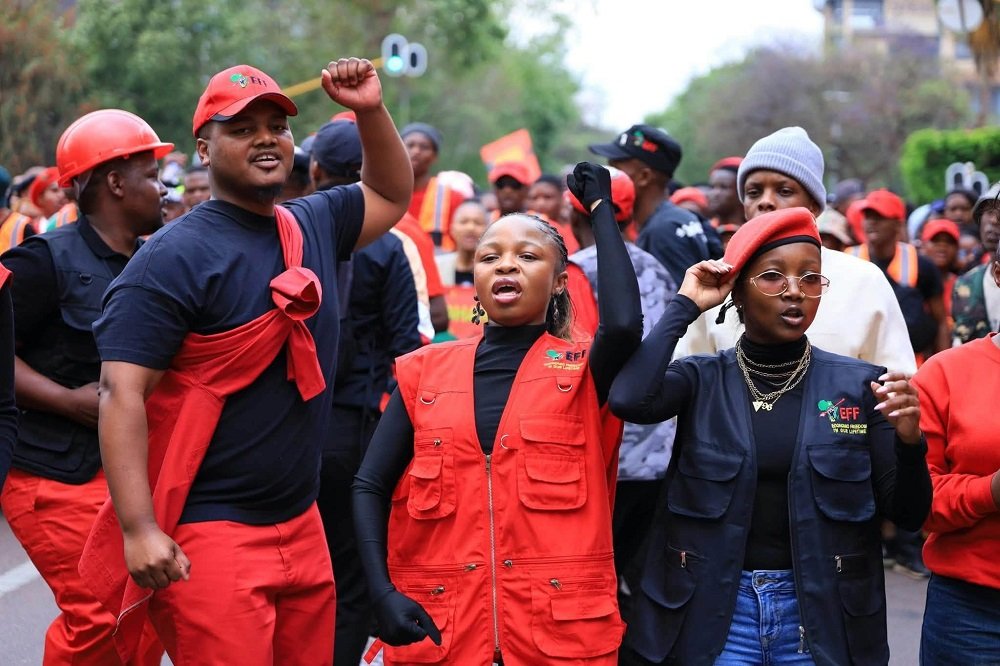
JOHANNESBURG – The Economic Freedom Fighters (EFF) have reaffirmed their dominant influence over the youth demographic and university campuses, cementing their position as the preferred political home for South Africa’s younger generation. Recent internal data and political analysis indicate that the party’s aggressive advocacy for free decolonized education and economic expropriation continues to resonate deeply within the country’s tertiary institutions.
Political analysts monitoring the shifting landscape suggest that the EFF has successfully tapped into the systemic frustrations of students facing high unemployment and the rising cost of living. While traditional parties have struggled to maintain relevance among “Gen Z” voters, the EFF’s digital-first strategy and its vocal support for student-led movements have created a formidable support base that extends far beyond the ballot box.
“The EFF is not just a political party to this generation; it is a cultural and ideological identity,” says political researcher Dr. Thabo Mokoena. “By consistently centering the conversation on land redistribution and the total overhaul of the financial system, they provide a sense of urgency that matches the daily reality of a student living in an informal settlement or struggling to pay tuition fees. Their presence on campuses is not passive; it is institutionalized through vibrant student command teams.”
The party’s influence was clearly on display during recent student representative council (SRC) elections across major universities, where the EFF Student Command secured decisive victories in several key institutions. These wins have served as a litmus test for the party’s broader appeal, demonstrating that their messaging remains potent despite the shifting political climate in South Africa.
Critics, however, argue that the party’s rhetoric can be polarizing, potentially alienating moderate voters as they attempt to transition from a fringe movement into a mainstream governing force. There are also ongoing debates regarding the long-term feasibility of the party’s manifesto promises, which some economists warn could lead to fiscal instability. Despite these critiques, the party leadership remains defiant, asserting that their agenda is the only path toward true economic emancipation for the marginalized.
Looking ahead, the EFF’s hold on the youth vote presents a significant challenge to both the ruling party and the official opposition. As South Africa prepares for future electoral cycles, the youth demographic—which makes up a substantial portion of the voting-age population—is increasingly viewed as the kingmaker. If the EFF continues to mobilize its base with such high levels of intensity, it is poised to exert significant pressure on the national discourse.
For now, the message from the streets and the lecture halls is clear: the EFF has successfully captured the imagination of the country’s future leaders. Whether this translates into a decisive shift in national governance remains to be seen, but the party’s grip on the youth remains as firm as ever.
Disclaimer: This content is auto-generated for informational purposes only.
Source: Read Original News