







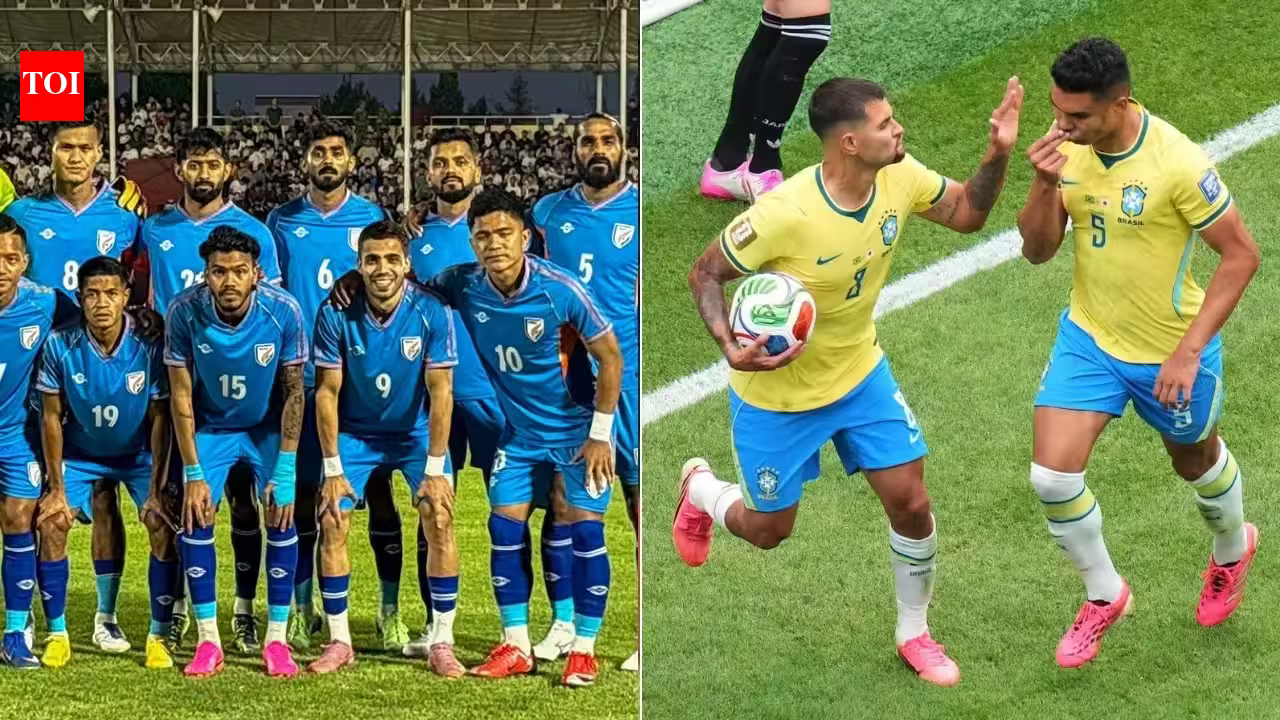
In a significant strategic move, the Indian national football team has officially withdrawn from the inaugural FIFA ASEAN Cup. This decision, confirmed by All India Football Federation (AIFF) deputy secretary general M Satyanarayanan, stems from a clear prioritization of an international friendly match against the five-time world champions, Brazil, scheduled for October. This development aligns with earlier reports indicating the AIFF’s deliberation on foregoing the new tournament to ensure the highly anticipated clash with the South American giants.
Satyanarayanan explicitly stated that the choice was necessitated by the logistical impossibility of participating in both events concurrently. The FIFA ASEAN Cup, conceived as a novel international competition primarily for teams within the ASEAN region, had extended an invitation to India as an external participant. India had initially accepted this invitation and was subsequently placed in Division 1 Group A alongside Indonesia, Malaysia, and Singapore. The tournament was slated to unfold within the FIFA international window spanning September 21 to October 6.
However, the pivotal factor leading to India’s withdrawal is the scheduling conflict. The marquee friendly against Brazil is set for October 3 at the iconic Salt Lake Stadium in Kolkata, directly overlapping with the ASEAN Cup window. While the AIFF had initially explored the possibility of fielding a separate or developmental squad for the ASEAN Cup while deploying the senior team for the Brazil encounter, this option was ultimately discarded. The federation has now definitively opted to withdraw from the regional competition, instead utilizing the international window solely for friendly matches, thereby consolidating their resources and focus on the high-profile fixture.
The friendly against Brazil was officially announced last month, marking a notable shift in India’s international football calendar. This current decision represents a departure from India’s earlier commitment to the FIFA ASEAN Cup, having previously accepted FIFA’s invitation and signed the requisite participation agreement. Consequently, India’s withdrawal means the team will miss a valuable opportunity to compete against some of Southeast Asia’s prominent footballing nations in a FIFA-sanctioned competitive environment. This comes at a time when the Indian national team has faced challenges in securing regular fixtures against higher-ranked opponents, particularly after failing to qualify for the 2027 AFC Asian Cup, making strategic fixture selection even more crucial for their development and global standing.