






Security Lockdown in Delhi as Opposition Rallies Against Election Commission
NEW DELHI – The heart of the Indian capital transformed into a fortress on Tuesday as authorities deployed hundreds of security personnel to manage a major protest march. The demonstration, led by a coalition of opposition parties and youth activists, seeks the immediate resignation of Chief Election Commissioner Gyanesh Kumar. The unrest stems from escalating controversy surrounding the recent revision of national voter lists, which critics argue has been manipulated to favor Prime Minister Narendra Modi and his Bharatiya Janata Party (BJP).
Heightened Tensions in the Capital
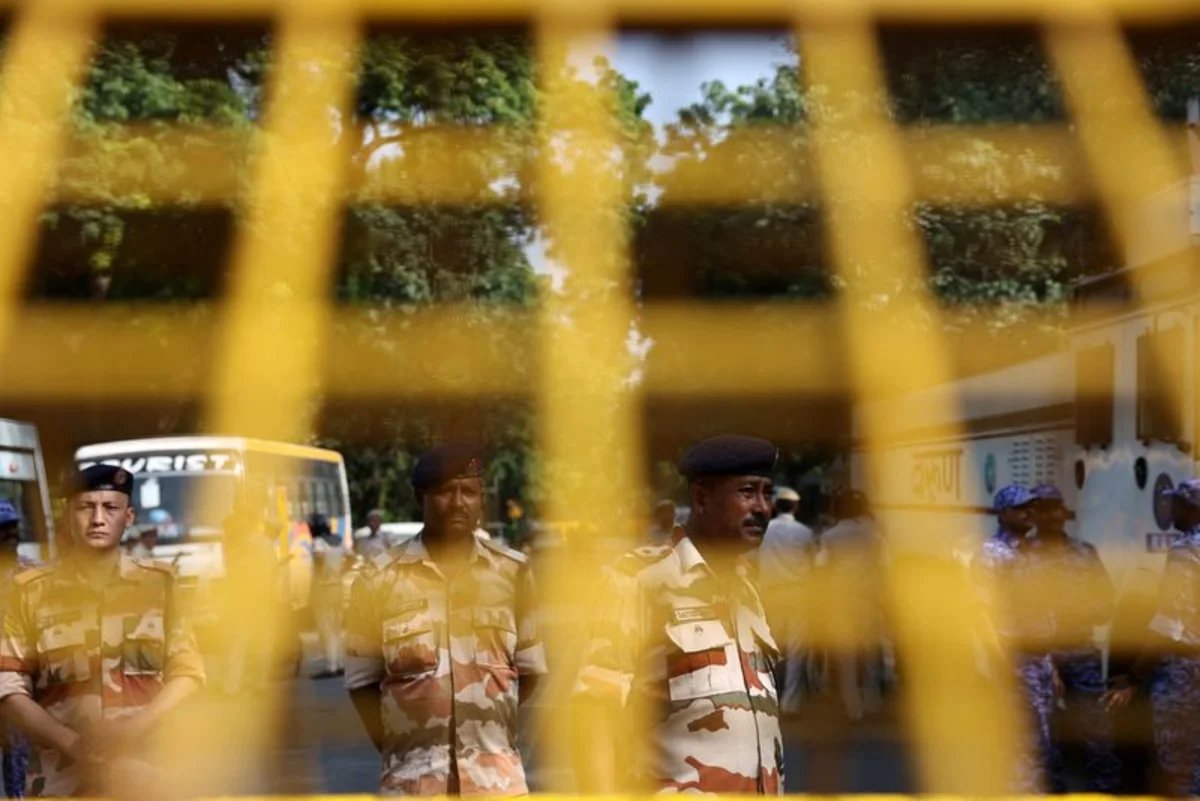
Security forces, equipped with riot gear and batons, established a heavy presence around the Election Commission of India headquarters, located in close proximity to the nation’s Parliament and critical government infrastructure. In anticipation of the march, police erected multi-layered barricades, effectively cordoning off key thoroughfares. Officials issued public advisories urging commuters to avoid the central district, leading to significant traffic diversions and a palpable sense of unease across the capital.
The protest marks a sharp escalation in a series of demonstrations that have roiled the city for the past week. Organizers of the march include lawmakers from the Indian National Congress and members of the grassroots youth organization known as the “cockroach” movement. These groups have been vocal in their skepticism following reports in the Indian Express last month that suggested internal discord within the election body regarding voter registration procedures.
Allegations of Partisanship
The core of the opposition’s grievance lies in the perception that the Election Commission—an institution traditionally lauded for its independence—has compromised its neutrality. Congress leaders allege that the current revision of voter rolls is architected to disenfranchise segments of the electorate while providing an unfair advantage to the ruling BJP.
While Commissioner Gyanesh Kumar has maintained silence regarding the public outcry, the Election Commission has officially refuted the claims of bias. Similarly, spokespersons for the BJP have dismissed the allegations as politically motivated theater intended to destabilize the democratic process. Despite these denials, the internal divisions first brought to light by media reports have fueled widespread public concern regarding the sanctity of future electoral exercises.
Judicial Intervention
As political rhetoric intensifies on the streets, the battleground is shifting toward the judiciary. On Monday, the Supreme Court of India announced its decision to hear formal legal arguments regarding the conduct of the poll body and the legitimacy of the recent voter drive.
During the preliminary hearing, the apex court bench acknowledged the severity of the charges brought by the petitioners. In a stern remark, the court stated, “If there are decisions against the law… we will take care of it,” signaling that the judiciary is prepared to scrutinize the administrative actions of the commission. This intervention offers a glimmer of hope to the opposition, which has framed the march not just as a protest against an individual, but as a defense of India’s constitutional democratic framework.
As of Tuesday morning, the situation remained tense but contained. The march, which commenced near Parliament, represents a critical juncture in the ongoing friction between the government and the opposition, setting the stage for a protracted legal and political standoff.
Disclaimer: This content is auto-generated for informational purposes only.
Source: Read Original News