








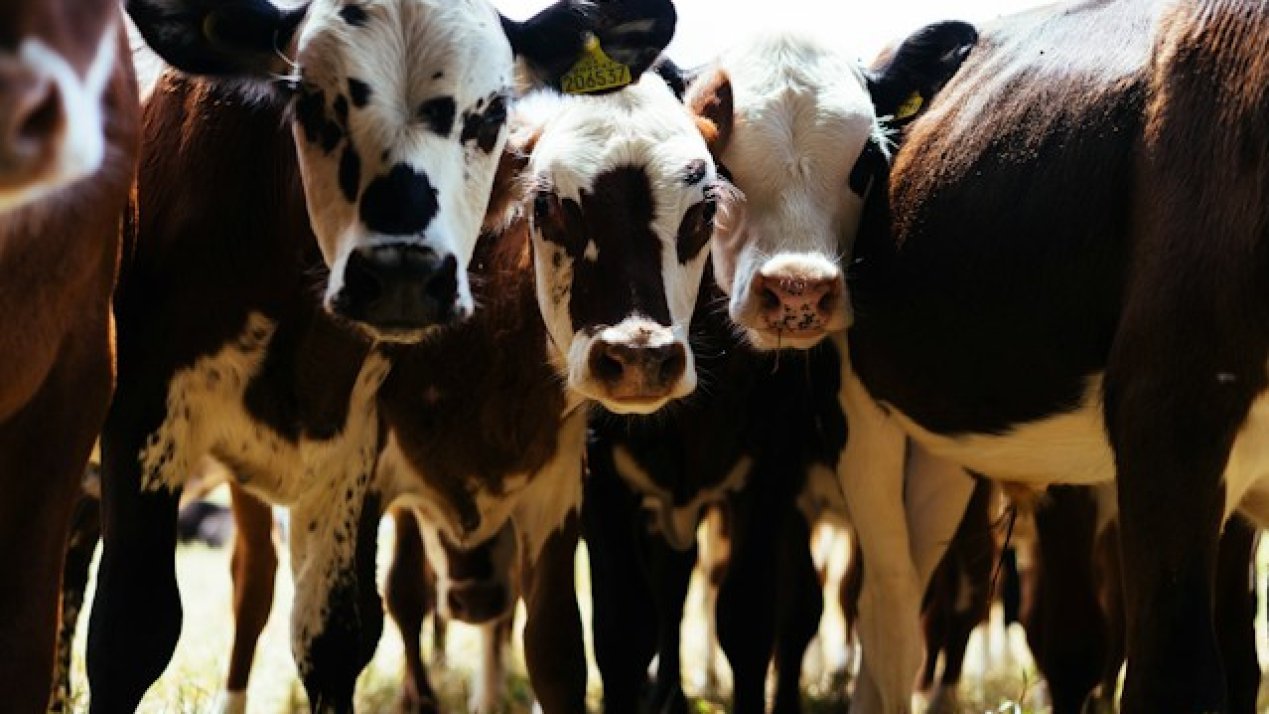
Mexico has officially resumed live cattle exports from the Puerto Palomas quarantine station in Chihuahua to Columbus, New Mexico, marking a significant milestone in the ongoing efforts to normalize cross-border livestock trade. The resumption, which commenced on Oct. 26, represents the third major crossing to be reopened under the U.S. Department of Agriculture’s (USDA) strategic, phased recovery plan.
The inaugural shipment at the Columbus port successfully cleared 750 head of cattle. This addition contributes to a broader effort that is currently seeing an average of 3,500 head of cattle exported daily to the United States through various operational ports in the Mexican states of Chihuahua and Sonora.
## Strengthening Bilateral Agrifood Cooperation
Javier Calderón, Chief Director of Mexico’s National Service for Agrifood Health, Safety and Quality (SENASICA), emphasized that the reopening follows direct mandates from President Claudia Sheinbaum. The agency has been tasked with maintaining rigorous coordination with Mexican producers to ensure full compliance with the sanitary measures established by the USDA’s Animal and Plant Health Inspection Service (APHIS).
The trade flow is vital to the economic stability of small-scale ranchers, transport logistics providers, and local border communities. By adhering to these strict health protocols, Mexico aims to reaffirm its commitment to international sanitary standards, ensuring that the livestock supply chain remains resilient despite global logistical and biological challenges.
## A Phased Recovery and Future Outlook
The reinstatement of the Columbus route follows the successful reopening of crossings in Douglas, Arizona, on Aug. 24, and Santa Teresa, New Mexico, on Sept. 24. With the inclusion of Puerto Palomas, the cross-border infrastructure is steadily regaining its pre-disruption capacity. Industry observers and officials are already eyeing the next phase: the reopening of the Nogales, Arizona, crossing, which is tentatively scheduled for Nov. 30, pending favorable animal health assessments.
For the U.S. agricultural sector, particularly feedlot operators in the southern states, this influx is a welcome development. Mexican feeder cattle have historically played a critical role in American meat production. While the return of these imports is expected to improve supply chain efficiency, experts note that market prices will likely fluctuate based on total import volumes, domestic herd sizes, and available processing capacity.
## The Persistent Threat of New World Screwworm
Despite the progress in trade, both nations remain on high alert regarding the detection of the New World screwworm. The pest remains a significant threat to livestock health, with recent reports confirming infestations in domestic animals within Grant County, New Mexico—situated just across from the border—and the first-ever detection in U.S. wildlife in an elk in Pecos County, Texas.
To mitigate these risks, long-term investments in technology and biological control are underway. A state-of-the-art, $610 million sterile fly production facility is currently under construction at Moore Airbase in Edinburg, Texas. Managed by the U.S. Army Corps of Engineers, the facility is designed to produce sterile flies that interrupt the reproductive cycles of screwworm populations.
As agriculture becomes increasingly data-driven, the use of advanced tracking, genomic surveillance, and automated biological control represents the next frontier in protecting the global food supply. The new facility, slated to reach initial operating capacity in April 2027, will serve as a critical defense layer, utilizing predictive modeling and biological engineering to keep the livestock trade moving securely. By combining physical infrastructure with sophisticated pest-management technology, the U.S. and Mexico are working to ensure that cross-border trade remains not only consistent but also safe from emerging biological threats.
Disclaimer: This content is auto-generated for informational purposes only.
Source: Read Original News