








Charities have to hold themselves to the quality of the stories they are telling amid a hostile media environment, leaders have urged.
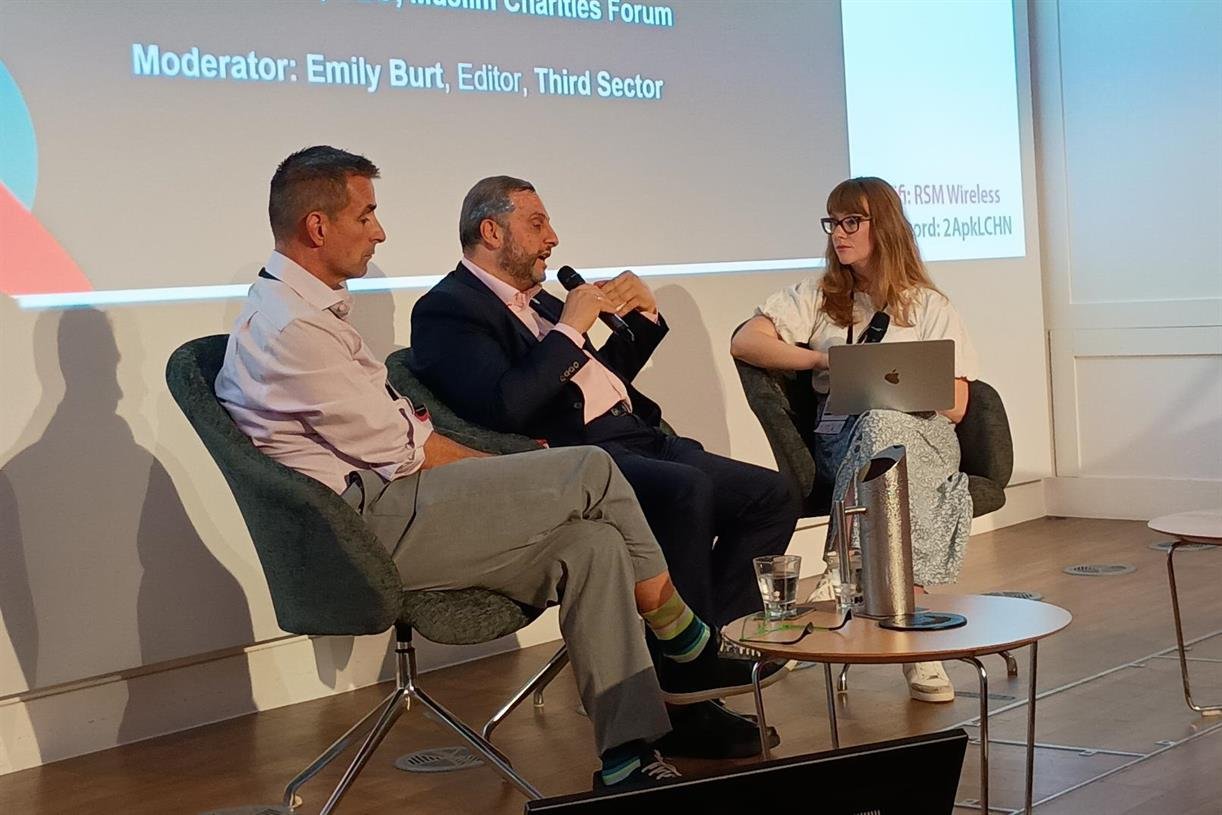
Speaking at Third Sector’s annual conference in central London, Simon Blake, chief executive of Stonewall, said delegates must prioritise the quality of the stories they are telling publicly during times of increasing media hostility and polarisation.
“So often, in our push for content, we forget the quality of a story,” he said.
“A good story can be used through multiple channels for a month if you make it work,” Blake said. “The risk is when we try to have a different story all the time, and that’s incoherent for people who are trying to follow you.”
He added that organisations must also find ways to create narratives that “really mean something, rather than just becoming slogans which we say in moments of community”.
Speaking at the same session, Fadi Itani, chief executive of the Muslim Charities Forum, said that some of the infrastructure body’s members were having to decide whether speaking out on an issue was worth the potential risk to their organisation, in what he described as a “worrying” trend.
“We are guilty until proven otherwise,” Itani said, pointing to reports in the media and on social platforms about unsubstantiated claims against Muslim charities, including instances where the regulator had been alerted but no investigation has been carried out yet.
He said this was resulting in digital footprints that were affecting organisations’ operations, with some of the MCF’s members struggling with “debanking” after banks found misinformation online about them during due diligence.
This has resulted in some Muslim organisations having to make “difficult choices” about whether or not to comment on matters in the media and online, said Itani.
But he added there were risks that came with silence.
“If we don’t get involved and tell our story, someone else will, and it may not be something we like, unfortunately,” he said.
Blake said there was “a lot of noise” in the world at the moment, adding that charities were “often at the sharp end” of the media’s “always-on” culture.
But he said charities must consider what they should not respond to, as much as what they should comment on.
“The temptation is to think that you have to answer everything, or that you should ignore everything. And our job is to keep on navigating that line.”
Blake said charities should make these decisions with their moral compass and keep their mission in mind when responding to moments of publicity or current events.
“Ultimately, we’re here for a purpose,” Blake said. “It doesn’t matter if you know it may not be popular or that some people won’t like it. It’s what we are here to do.”