







Charities risk losing credibility if they fail to anchor community engagement in lived experience amid a changing political environment, the chief executive of the social justice charity Nacro has warned.
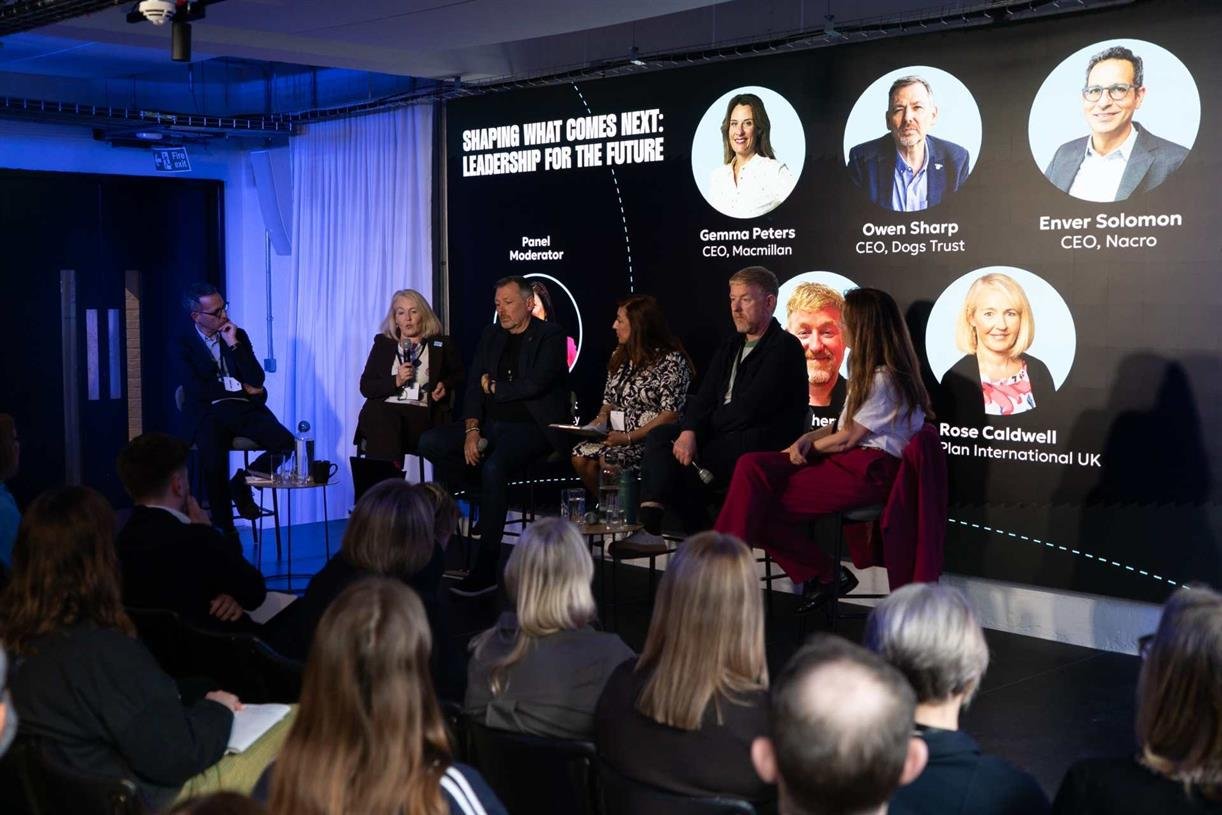
Speaking at the Good Agency’s inaugural summit in London yesterday, chief executives said the voluntary sector must improve how it responds to a changing world, including an increasingly polarised political scene.
Enver Solomon, who was chief executive of the Refugee Council before joining Nacro, said local communities were more polarised and the voluntary sector could be “attacked” by people on the so-called left or right flank of politics.
Debates about certain issues, such as trans rights and the asylum system, had become “deeply polarising” in charities’ communities, according to Solomon. He said: “I think how we navigate that is going to become one of the biggest challenges of our time.”
Charities must engage in the lived experience of communities and “do it in a way that is not about taking sides but about anchoring it in the reality of that experience”, he said.
“Unless we […] think more about that more deeply, we will lose credibility with those in communities that we want to make a difference to.”
Gemma Peters, chief executive of Macmillan, said the charity sector was “not great at change”, since this often ran counter to how charities had historically operated, but that better agility was needed in today’s fast-paced environment.
Owen Sharp, chief executive of Dog’s Trust, added: “We’re going into a world where we are seeing a different political environment.”
He said the sector must think about how it can engage with the public and influence within that changed environment, warning that charities can be too “holier than thou”.
Sharp said: “We’ve really got to start engaging in some of these debates and probably accepting that the public is in a different place […] to where we might be. I think that gap is possibly bigger on some issues than it’s ever been before and we’ve got to face up to that.”
Chris Sherwood, chief executive of the NSPCC, said that as charity leaders, “we can and should be braver” in showing allyship to charities working in polarised cause areas.
Peters said it was difficult as a leader to commit to speaking out on lots of issues, especially when they were outside of your charity’s remit.
“I get really uncomfortable when I am asked to speak about things where my opinion is just my opinion,” she said. “I don’t have any kind of broader mandate for it.”
Sherwood responded: “There are issues that I wouldn’t speak out on because it’s not relevant for me to do so, and I wouldn’t have the authenticity or the informal authority to be able to speak on those issues. But we can be braver.”
Solomon agreed: “I came into the voluntary sector to advance social justice in its full breadth of meaning and I see my role as doing that.
He said it is reasonable if other leaders do not share this view, but added: “I fear that if we don’t have a critical mass that do, [then] this country could drift to places that will ultimately undermine our own interests as a third sector.”
Rose Caldwell, chief executive of Plan International UK, said she is happy to speak for herself and on behalf of her organisation, but is “very clear that I need to differentiate them”.
She said: “There is an additional consideration from us. If I speak out on things in particular countries in which we work, our operations could be stopped. We could put people at risk.”