







Staff at thousands of charities across England and Wales are estimated to have been threatened in-person as workers in the sector increasingly operate “in an environment marked by hostility and threat”, the regulator has warned.
More that a quarter (27%) of charities surveyed by the Charity Commission said they had experienced impacts of the “challenging social environment”.
This could include consequences of international conflict, immigration issues and equality issues, the watchdog said.
While the public have the right to question, challenge and choose which causes to support, disagreement “should never cross the line into abuse, intimidation or threats of violence”, the commission said.
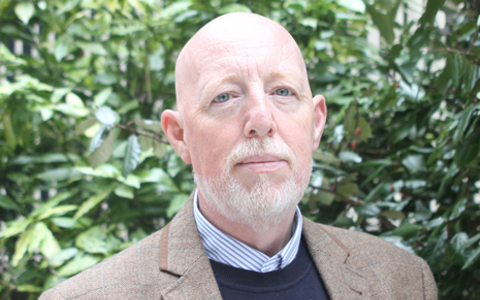
In December, the regulator’s interim chairman Mark Simms (pictured) spoke of the “growing hostility” charity staff and volunteers were facing.
He said charity workers had been verbally and physically abused on the streets, faced death and sexual assault threats, as well as damage and vandalism to charity offices, noting the challenges experienced particularly by those working with refugees and migrants.
A new survey of 2,947 charity trustees in February has now suggested charities working to promote human rights, religious and racial harmony or equality and diversity have been most prone to negative impacts in recent times.
These included reports of people protesting at their sites, a decrease in support, online threats to staff and vandalism to property.
Of the charities surveyed, all of whom were anonymous but gave their charitable purpose, allowing a breakdown of which types of work they did, 2% said their staff had been threatened in-person.
The commission said this could equate to around 3,000 of the 171,500 registered charities in England and Wales, although cautioned this is a rough estimate.
Overall, 11% of charities surveyed said they had a drop in support while 4% reported vandalism or damage to their property.
Rachel Wenstone, assistant director of policy at the Charity Commission, said: “This research gives us clear evidence of the scale of what charities have been telling us over the past 18 months.
“We have heard deeply concerning accounts of staff being threatened, intimidated, and left afraid simply for doing their jobs.
“These findings show those experiences are not isolated: a significant minority of charities are now operating in an environment marked by hostility and threat.
“Ultimately, this impacts on the people charities are there to help, with some charities changing or curtailing their services as a result.
“Charities are not above criticism or scrutiny.
“The public is entitled to question, challenge and choose which causes to support.
“But disagreement should never cross the line into abuse, intimidation or threats of violence, and registered charities should be enabled to pursue their legitimate, legal purposes.
“We will continue to monitor these trends closely and encourage charities to report serious incidents to us.”
Separate research by the commission of more than 4,000 people surveyed in January, showed that trust in charities remains high, with these organisations coming second only to doctors among the most trusted groups in society – and above police and the ordinary person in the street.
Financial reasons were much more common for not donating money than a lack of trust, with 40% of people saying affordability was the reason they did not contribute compared to 9% who cited mistrust.
The top four reasons for giving to a particular charity were a person’s belief in the cause it supports, that it makes a positive difference, that it does important work in the UK and knowing it is a registered charity.
Ms Wenstone said: “It is encouraging that, despite wider social divisions and financial pressure, charities continue to command strong public trust.
“This research shows that people still recognise the value of registered charity status, and associate it with integrity, purpose and accountability.
“But that trust should never be taken for granted.
“Charities need to keep showing that charity status means something: a clear focus on their charitable purpose, responsible stewardship of funds, and the highest standards of governance.”
Copyright (c) PA Media Ltd. 2026, All Rights Reserved. Picture (c) Charity Commission.