






New Delhi Chokes as Post-Diwali Smog Sets Record Air Quality Crisis
NEW DELHI — The national capital region awoke on Sunday to a suffocating blanket of thick, grey haze as air quality levels plummeted to “severe” categories following the annual Diwali festivities. Despite strict government mandates and widespread awareness campaigns, the combination of illegal firecracker usage and unfavorable meteorological conditions has once again pushed Delhi’s pollution levels into the hazardous zone, casting a grim shadow over the city’s skyline.
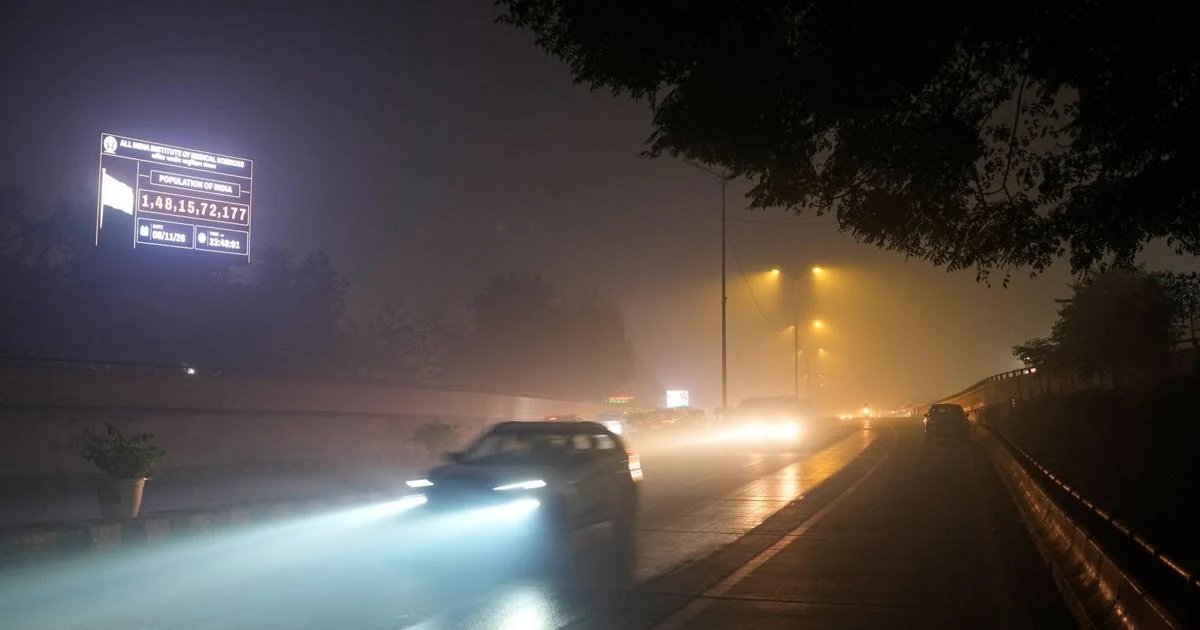
Traffic moved at a crawl through the downtown corridors, with motorists squinting through dense smog as they passed landmarks, including the iconic Indian population clock. The stark visual of the digital ticker, standing against a backdrop of toxic air, served as a grim reminder of the public health challenge facing millions of residents in one of the world’s most populated urban centers.
A Seasonal Cycle of Pollution
Environmental experts and health officials have expressed deep concern over the current Air Quality Index (AQI) readings, which in several parts of the city soared well beyond the 400-mark, entering the “hazardous” bracket. The post-Diwali spike is a recurring phenomenon, driven by a “triple threat” of atmospheric factors: the lingering smoke from thousands of firecrackers, the late-autumn drop in wind speeds that traps pollutants near the ground, and the seasonal practice of stubble burning in the neighboring states of Punjab and Haryana.
“The air is physically heavy to breathe today,” said Dr. Rajiv Sharma, a pulmonary specialist at a city hospital. “We are already seeing an uptick in patients arriving with respiratory distress, burning eyes, and severe throat irritation. For children, the elderly, and those with pre-existing conditions, this environment is essentially toxic.”
Government Response and Public Frustration
In an effort to mitigate the crisis, the Commission for Air Quality Management (CAQM) had implemented the Graded Response Action Plan (GRAP) Stage II prior to the festival. These measures include strict dust control norms at construction sites, increased mechanical road sweeping, and advisories against the use of coal and firewood. However, activists argue that the enforcement mechanisms remain insufficient to address the sheer scale of the pollution load.
On the streets, the sentiment among residents is one of collective exhaustion. While many citizens adhered to the government’s plea for a “green Diwali,” the widespread defiance in certain pockets of the city undermined the efforts.
“We want to celebrate our traditions, but at what cost?” asked Anjali Mehra, a commuter navigating the haze near the city center. “Every year, we hope for better air, and every year, we find ourselves trapped behind masks, checking AQI apps as if we are monitoring a disaster zone. It has become a cycle that feels impossible to break.”
Long-Term Health Implications
Medical professionals warn that short-term exposure to these pollution levels can cause acute bronchitis and asthma attacks, while long-term exposure significantly increases the risk of cardiovascular diseases and reduced lung capacity in younger generations.
As the sun struggled to penetrate the layer of smog throughout the day, the government has urged residents to minimize outdoor physical activities and advised schools to monitor the situation closely for potential closures in the coming week. With meteorologists predicting that the stagnant air conditions could persist for several more days, Delhi faces an uphill battle to clear its skies and protect the health of its dense population.
Disclaimer: This content is auto-generated for informational purposes only.
Source: Read Original News