






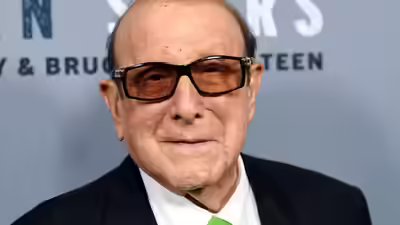
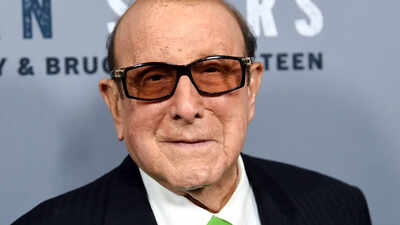
Clive Davis, the record company lawyer who became one of the music industry’s most powerful figures, launching or resurrecting the careers of such superstars as Janis Joplin, Whitney Houston, Carlos Santana and Alicia Keys, passed away, his family confirmed. He was 94.His death, in his Manhattan apartment, was confirmed by his publicist Aliza Rabinoff, who also shared a statement from his family.
Clive Davis’ family announce his demise
“To the world, our father was the iconic music legend whose vision, instincts, and relentless pursuit of excellence shaped the soundtrack of countless lives. He discovered, mentored, and championed the greatest artists in modern music history, leaving an indelible mark on culture that will endure for generations,” the statement read.Earlier this year, Davis was hospitalized following an upper respiratory issue and was released a few days later.Unlike other record moguls whose influence waned as they got older, Davis’ might only seemed to grow, spanning multiple genres and labels. Into his later years, he was directing the careers of everyone from Barry Manilow to “American Idol” winners Carrie Underwood and Kelly Clarkson. And his exclusive pre-Grammys gala, held the Saturday night before the Sunday award show every year since 1975, continued to be an institution.
Celebs mourn Clive Davis’ demise
“Clive’s talent has always been seeing and hearing what other people don’t,” former President Barack Obama said in a video message played at this year’s gala.Carlos Santana said in a statement, “Clive Davis was a visionary. He could hear the intangible before anyone else could see it. He believed in Santana from the beginning, and years later he believed in us again. That kind of faith is a beautiful blessing, and I will always be grateful. Clive understood that music is more than entertainment. Music is a healing force. It brings people together beyond fear, beyond separation, beyond borders. He dedicated his life to championing artists and helping them share their gifts with the world.”He went on to add, “Clive recognized the light in people. He encouraged artists to trust their own voice and step into their destiny. Because of his vision, countless musicians were able to reach hearts across the planet.”Alicia Keys paid tribute to Clive Davis saying, “To Clive Davis, the visionary who transformed dreams into reality, leaving an indeible mark on music and lives worldwide.”Michael Bublé wrote on Instagram, “Heartbroken to hear of the passing of Clive Davis. Clive wasn’t just a music legend, he was a champion of artists and someone who believed in people and their dreams. Forever grateful for his guidance, his generosity, and the opportunities he gave so many of us.”Paul Stanley wrote in a tweet, “The music world and all those who have loved music for 6 decades have lost the visionary and champion of so many artists in so many genres. A one of a kind genius.”Barry Manilow also tweeted, “My heart is heavy with the loss of my friend Clive Davis. For fifty years we worked together, created together, argued together, and celebrated together. Yes, some would say it was business. But to Clive, it never was. It was family. And I was honored to be a part of his.”
A Brooklyn background
Clive Jay Davis was born on April 4, 1932 in Brooklyn, New York, where he grew up in the Crown Heights neighborhood. His father was an electrician and traveling salesman. He attended New York University and then Harvard Law School, eventually landing a job as an in-house lawyer at Columbia Records.Davis always had a knack for business, and by 1967, became president of the company, just seven years after being hired as an attorney. He cited attending the Monterey International Pop Festival that year as pivotal; it eventually led him to bringing Bruce Springsteen, Chicago, Neil Diamond and many other groups to the label – bringing a counterculture spirit to a company that had resisted rock ‘n’ roll.Davis took big swings in the music industry, particularly in his support for Black artists, beginning when he signed Gamble and Huff’s Philadelphia International Records in 1971.In 2015, the NAACP recognized Davis for his groundbreaking work by presenting him with the Vanguard Award. And last summer, Davis was presented with the Apollo Theater’s Apollo Legacy Award and inducted onto its Walk of Fame.
Clive Davis’ success stories
His success stories were staggering, with Houston a crowning achievement and devastating tragedy: Davis signed her to his Arista record label when she was just a teen and turned her into America’s reigning pop princess. Houston racked up multiple No. 1 hits and became one of the top-selling artists in pop history before drug abuse hobbled her career. She died in a Los Angeles hotel room in 2012, just hours before she was to appear at the annual pre-Grammy Awards gala hosted by Davis, who had been convinced she was turning her life around.“Maybe I should have been more skeptical,” Davis wrote in his 2013 memoir, “The Soundtrack of My Life,” “but I’ve always been optimistic, and I felt hopeful. It felt like old times.”He also launched the career of multi-platinum, multiple-Grammy winner Keys – and was quick to note other talents he signed, including Joplin and Billy Joel, Blood Sweat & Tears and other “all-timers,” as he so often put it.“I signed Patti Smith, the great Renaissance woman … I signed Lou Reed … I signed the Grateful Dead,” he proudly touted in an interview with The Associated Press in 1999.
Clive Davis signs Sean Diddy Combs
He also signed the then up-and-coming producer Sean “Diddy” Combs to a label deal with his Bad Boy Records. Under Davis, the label would have some of its biggest successes, most notably with late rap icon the Notorious B.I.G. That was long before the hip-hop mogul Diddy would be incarcerated, convicted of violating the federal Mann Act, which bans transporting people across state lines for any sexual crime.
An exec who built lifelong careers
Davis didn’t simply have an eye for new talent – he also knew how to keep veterans relevant, decades after their first hit. Aretha Franklin, whose legend was made at Atlantic Records, flourished in her later years at Arista, as did Luther Vandross, who made his last albums for another Davis label, J Records.It was Davis who conceived of the 1999 album “Supernatural,” which paired guitar god Santana with some of the day’s hottest talents. The record won a record-tying eight Grammys and gave Santana more success than he had ever enjoyed in his decades-long career.And he had middle-aged star Rod Stewart trade in his rock hits for standards from “The Great American Songbook.” The album, released in 2003, sold millions and was so successful it spawned four titles in all.He and producer David Foster fought bitterly over the arrangement for Houston’s all-time hit, a cover of Dolly Parton’s “I Will Always Love You.” Davis won that fight – and the song was published with its iconic a capella intro.And Manilow strongly objected to recording “I Write the Songs,” noting that he didn’t even write the song, a Bruce Johnston ballad that became a signature hit for Manilow, who would have similar latter-day success mining the music of the 1950s, 60s and ’70s.“He’s just brilliant at picking ideas he thinks the public will connect,” raved Manilow, who had worked with Davis since he was a budding singer at Columbia Records.
But not an infallible figure
Davis also had his struggles. Though he became president of Columbia Records in 1967 after joining the label in 1960 as a lawyer, by 1973 he was gone in a bitter fallout. The label accused him of mismanagement of funds and he was fired. Although Davis says he was later cleared, it wasn’t the end of his problems; he later was indicted on tax evasion charges, pleaded guilty to one count and had to pay a $10,000 fine.However, Davis would declare victory: He says Columbia gave him the money to start Arista to resolve the dispute, and the label would become a huge success with artists like country superstars Brooks & Dunn, sassy R&B group TLC, Babyface, Houston, Franklin and others.The label had huge success with a debut act – Milli Vanilli. But the male pop duo would become the embarrassment of the industry when, after winning a Grammy, it was revealed that they weren’t actually singing their songs (Davis blamed the debacle on the label’s European division, which he said signed them; the group was later stripped of its best new artist Grammy).In 1999, as Arista was celebrating its 25th anniversary, Davis faced another crisis: The label’s then-parent company, BMG Entertainment, a division of German media conglomerate Bertelsmann, wanted him to retire; most of its executives were eased out by 60, and Davis was in his mid-60s.In 2000, despite support from his superstar roster, the company ousted him in favor of producer and songwriter Antonio “L.A.” Reid, who would later become chairman of Island/Def Jam.
Still, Davis’ successes were many
However, instead of severing its ties with Davis, BMG helped him launch J Records in what BMG has described as the largest record company startup ever created. Vandross was one of his initial artists, along with forgettable acts like the boy-band O-Town.J Records was a success from the start, though, and only grew in stature with the arrival of a young singer named Keys, a piano-playing singer-songwriter with powerful pipes and dramatic R&B songs. Keys’ albums would go on to sell millions and win several Grammys.His influence grew even more when Davis was tapped for BMG’s U.S. division.He became a key backer of the careers of the winners of “American Idol,” guiding many albums to platinum status. The show’s link to Sony BMG came through a deal between Davis and 19 Recordings Unlimited, the label managed by “Idol” creator Simon Fuller.In 2007, however, Davis disagreed with the direction of Clarkson’s “My December,” and she publicly criticized him. The album was a flop, and she later apologized.In 2008, Sony BMG replaced Davis as chairman and chief executive officer of the BMG label group, giving him the title of chief creative officer.He was serving as worldwide chief creative officer at Sony Music Entertainment up until his death.
A love-filled personal life
In his memoir, Davis confirmed longtime rumors that he was bisexual and had been living with a man in recent years.“Do I feel I could have been similarly attracted to a woman?” Davis wrote. “The answer is yes.”He is survived by his four children, sons Fred, Doug and Mitchell, daughter Lauren, and his eight grandchildren Austin, Charlie, Matthew, Hayley, Harper, Sloane, Billie and Cody, two great grandchildren, cousin Jo Schuman and partner Greg Schriefer.His family shared a loving statement on Monday.“Through every chapter of his remarkable life, family remained Clive’s greatest pride and deepest joy. Today, we celebrate not only a towering figure whose influence changed music forever, but the man who led our family with grace, generosity, and kindness. We will miss him greatly, cherish him always, and carry his love with us for the rest of our lives.”