







India Calls for Global Reform and Accountability at 81st UN General Assembly
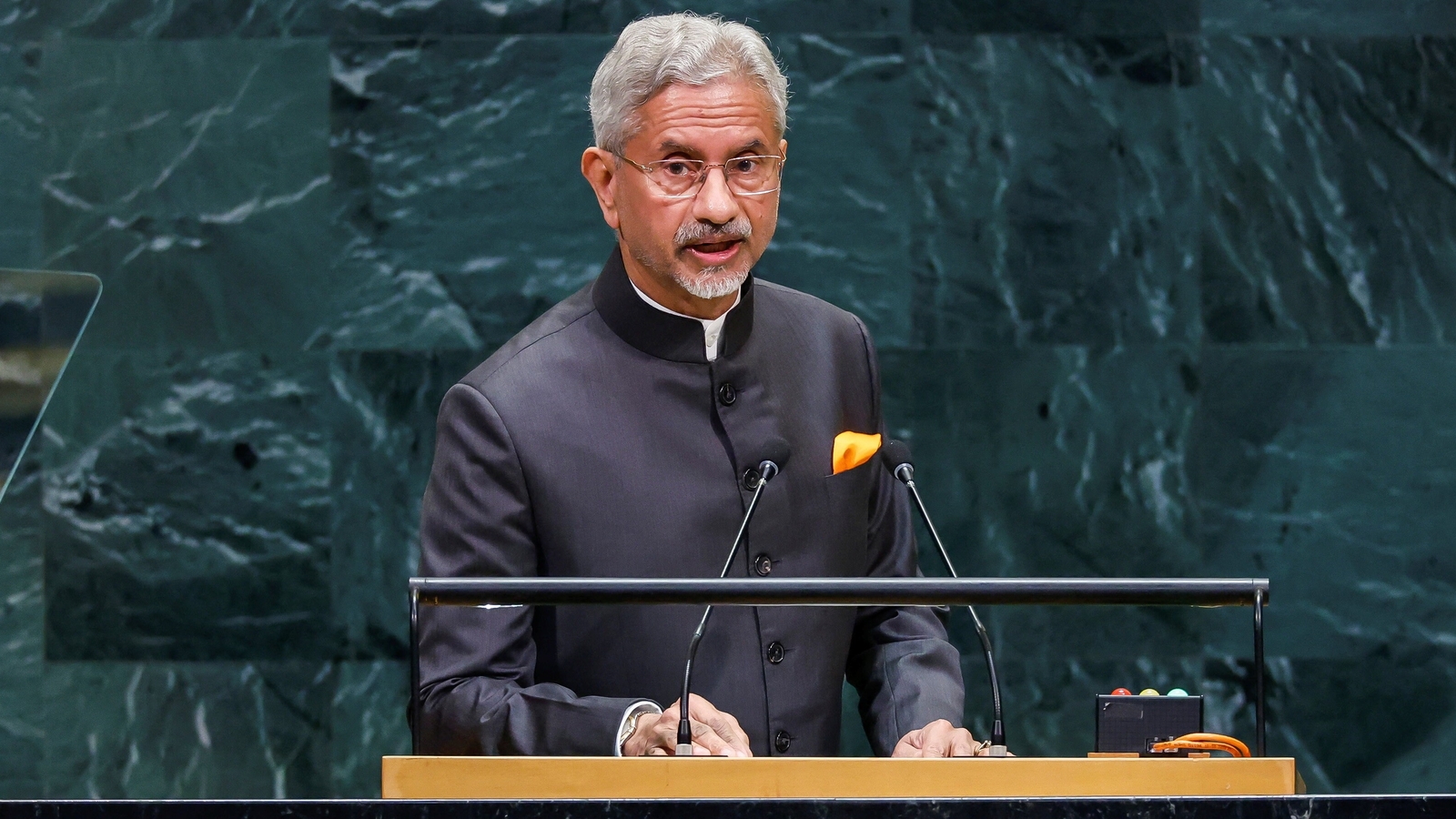
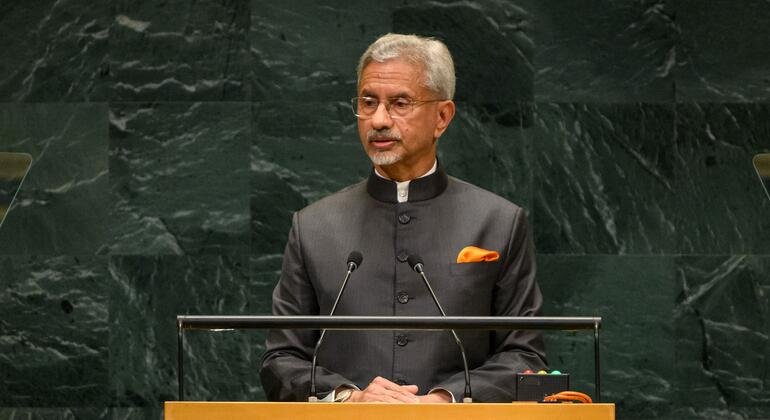
External Affairs Minister S. Jaishankar delivered a stinging critique of the current state of global governance during the high-level debate of the 81st session of the United Nations General Assembly. In a wide-ranging address, he warned that the world is teetering “on the brink of the abyss,” hampered by an inability to maintain peace and a growing tendency to weaponize every facet of international interaction.
A World in Crisis
Mr. Jaishankar emphasized that the systemic failure to resolve international conflicts is not merely a security concern but a significant drag on global economic development. He noted that even nations far removed from the geographical epicenter of wars are suffering the collateral economic consequences, paying a heavy price for conflicts they did not provoke.
The Minister expressed grave concern over the instability in the Gulf, particularly the attacks on commercial maritime vessels, which he labeled as entirely unacceptable. Regarding the volatility in West Asia, he reaffirmed India’s support for a two-State solution as the only viable path to lasting peace. He further urged all parties to prioritize the protection of civilians and ensure the uninterrupted flow of global energy and commerce.
Addressing the ongoing conflict in Ukraine, which has now reached its fifth year, Mr. Jaishankar echoed Prime Minister Narendra Modi’s call for a paradigm shift. He argued that the international community must transition from a mindset of sustaining “an endless war” to one focused on “ending the war,” noting that India remains a committed partner in initiatives that genuinely seek to restore peace.
The Weaponization of Global Systems
A central theme of the Minister’s address was the disturbing trend of “hyper-competition” that has permeated international relations. He lamented that eight decades after the founding of the United Nations, rather than fostering predictability, the world is witnessing a environment where finance, supply chains, technology, and market access are being weaponized.
This environment, he noted, has forced nations to focus on “de-risking and diversification,” further weakening the institutional foundations of global cooperation. The resulting turbulence in the availability of food, fuel, fertilizers, and finance has created a disproportionate burden on the Global South, threatening to reverse decades of developmental gains.
Zero Tolerance for Terrorism
Mr. Jaishankar did not mince words when discussing the “scourge” of terrorism. He described state-sponsored, cross-border terrorism as a direct challenge to the global order, insisting that there can be no compromise on the policy of “zero tolerance.”
In a pointed rebuttal to neighboring Pakistan—without explicitly naming it—the Minister accused a “serial practitioner of terrorism” of attempting to manipulate facts on the global stage. He asserted that it is the responsibility of the perpetrator to change its behavior, adding that such nations must be held accountable by the international community rather than being allowed to normalize extremist activities.
Development and the Path to Multipolarity
Highlighting India’s domestic trajectory, the Minister showcased how the nation’s rapid progress is elevating one-sixth of humanity. Through the strategic implementation of digital public infrastructure, India has transformed governance and social welfare delivery. Beyond its borders, India continues to be a “first responder” and a reliable development partner, currently supporting 600 projects across 78 countries in fields ranging from sustainable agriculture to clean energy.
Looking toward the future, Mr. Jaishankar argued that the international order established in 1945 is no longer sufficient to address the complexities of a multipolar reality. He cautioned that while the transition toward a more inclusive global order will be challenging, it is an unavoidable necessity. Concluding his speech with a poignant reference to the legacy of Mahatma Gandhi, he reminded the assembly: “There is no path to peace. Peace is the path.”
Disclaimer: This content is auto-generated for informational purposes only.
Source: Read Original News