
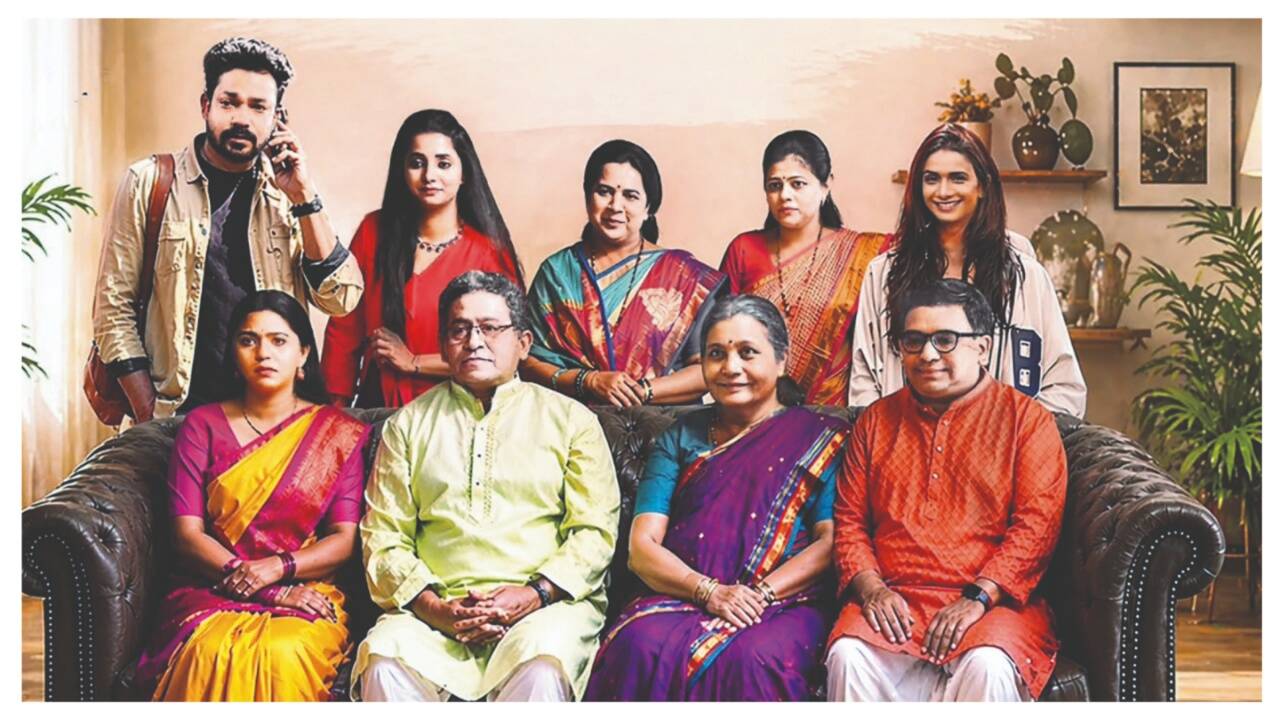
Making her directorial debut with Na Aavdti Goshta, filmmaker-actor Sai Deodhar has chosen to tell an LGBTQIA+ story at a time when conversations around queer representation in cinema continue to evolve. Unfazed by questions around commercial viability, she says her only priority was to make “a beautiful film” with honesty and conviction. Excerpts from an exclusive conversation with Bombay Times…Despite growing visibility, LGBTQIA+ characters in Indian cinema are still often reduced to comic relief, trauma, or token representation. Do you think mainstream Hindi cinema has genuinely evolved in its treatment of queer stories? Change always takes time. But I would say that today, we’re seeing many good films being made about the LGBTQIA community that treat their characters with dignity instead of reducing them to jokes or stereotypes. If you look back, there was a time when LGBTQIA characters were rarely, if ever, the central focus of a film. Over the last few years, that has started to change. It’s an ongoing process, but we’re definitely moving in the right direction. I’m confident we’ll reach a point where LGBTQI characters are given larger, more nuanced roles and are represented in a much more authentic way. Perceptions have already begun to change, times have changed, and I’m sure that in the years ahead, the representation will only continue to improve.For your debut directorial, you could’ve chosen a more commercially familiar subject. What made you gravitate towards an LGBTQIA+ story? I come from a typical middle-class Maharashtrian family, and I’ve realised that while the middle class is progressive in many ways, conversations around LGBTQI issues still make many families uncomfortable. And this isn’t limited to Maharashtrian families, it applies to middle-class households across small towns and cities. Whether they support or oppose it comes later; often, the conversation itself never begins. A child may want to say, “This is who I am. This is what I’m going through. I need you to hear me out.” But even that dialogue is missing in many homes. That was the driving force behind making Na Aavdti Goshta. I wanted to create a wholesome family film that addresses this subject without making families uncomfortable about watching it together. The film has everything you would expect from an entertainer, humour, emotions, fun and warmth. At its heart, though, it is a story about siblings, about coming out, and about the importance of having someone in the family who stands beside you through that journey. I believe it will resonate with many families where a sibling, cousin or even a parent has found the courage to say, “I’m with you.” That was the whole idea behind the film -to bring families together, encourage them to watch it as one, and, more importantly, inspire conversations that many have avoided for far too long.In an industry driven largely by box-office considerations, did you ever worry that making an LGBTQIA+ film as your debut feature might limit its audience, funding opportunities, or commercial prospects? I have always believed that films are either good films or bad films. I don’t believe in commercial or non-commercial films. We’ve made a very beautiful film, with a lot of hard work, a lot of purity, with this entire mindset that we’re not just preaching to people, we’re making a wholesome family entertainer which talks about a sensitive topic. So that was never a worry in our head. The worry was always about making a good film, something that resonates with everyone. LGBTQIA+ stories are often criticised either for stereotyping communities or for being overly cautious. How did you ensure authenticity and sensitivity in your portrayal, particularly if you were telling experiences that may not be your own?Many LGBTQI films tend to be love stories, which naturally include intimate moments. For audiences who are unfamiliar with these subjects or come from families where conversations around LGBTQI identities are uncomfortable, such scenes can sometimes become a barrier. Instead of engaging with the story, they may end up feeling uneasy. That’s why I consciously chose to move away from romance and tell a relationship-driven story between two siblings in my film. LGBTQI communities have often been stereotyped and portrayed in a limited way, but that’s also a reflection of how society has been conditioned to see them. I believe LGBTQI stories shouldn’t be confined to romance. They can be about families, siblings, cousins, friendships, and everyday relationships. When you widen that spectrum, you include the whole family in the conversation instead of focusing on just one relationship. As filmmakers, the responsibility is on us to explore these different facets. That’s how meaningful conversations begin, and people from the community can feel more comfortable watching such stories with their families and peers. It reminds audiences that there is so much more to LGBTQI lives than what has traditionally been shown on screen.
Your film premiered at the Kashish Pride Film Festival, where audiences are already receptive to queer narratives. The bigger challenge is often reaching mainstream viewers. Did you plan to take this conversation beyond the festival circuit?You’re right. My film was screened at Kashish, an LGBTQIA film festival, so the audience was naturally more receptive. But, as I always say, if it’s good cinema, if the content is honest, and the intentions are genuine, it will resonate with people. Of course, not everyone will like it, and that’s the beauty of cinema. Just as people have different tastes and preferences, films also connect differently with different audiences. Cinema is a personal experience. If you set out to please everyone, you’ll never succeed. The idea is to make something you truly believe in, with complete faith and conviction. When you’re convinced about your own story, that conviction reaches the audience as well. I think that’s the thumb rule of filmmaking: the filmmaker has to believe wholeheartedly in what they’re creating. Every film eventually finds its audience. The goal isn’t to make everyone happy; it’s to reach the people who understand it, connect with it, and embrace it.