









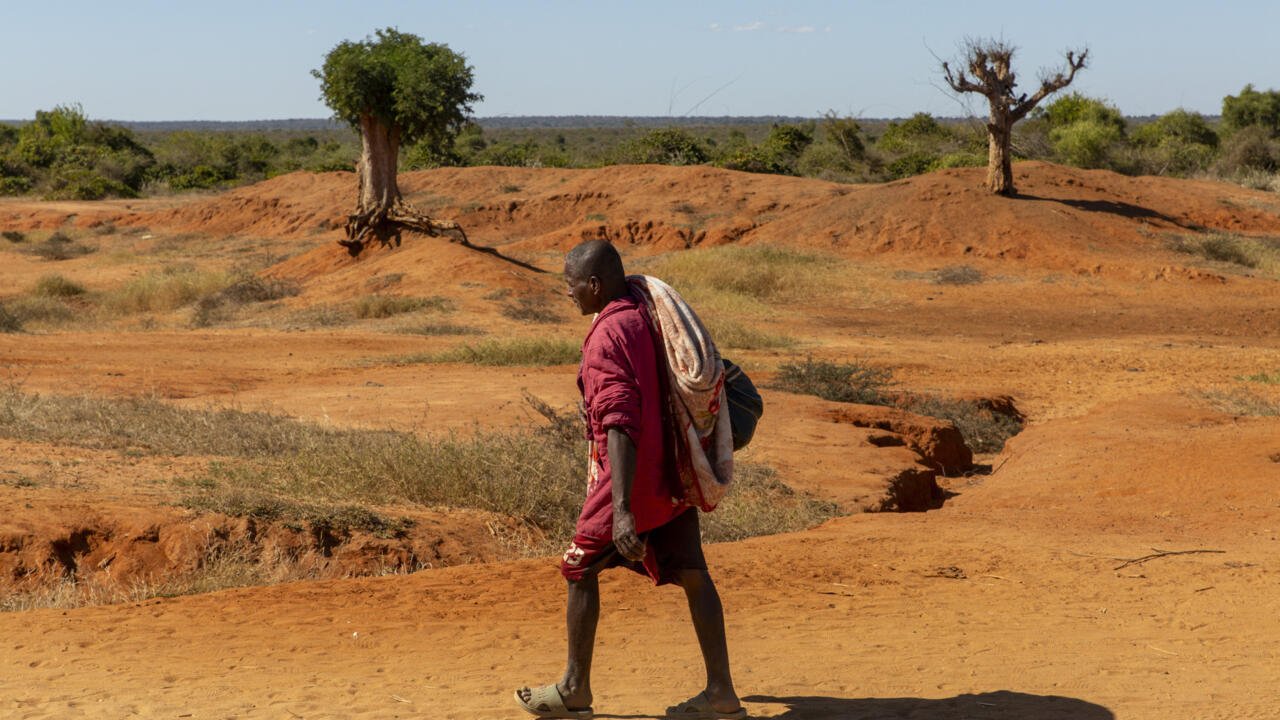
The gravity of global land degradation and desertification is being brought into sharp focus as the 17th session of the Conference of the Parties (Cop17) to the United Nations Convention to Combat Desertification (UNCCD) commences in Ulaanbaatar, Mongolia. Running from August 17th to 28th, the conference, themed “Restoring Land. Restoring Hope,” takes on heightened urgency against a backdrop of unprecedented extreme weather events gripping much of Europe and other regions worldwide. This year’s gathering underscores the critical need for global action to address the escalating environmental crisis.
While often overshadowed by climate and biodiversity conferences, the biennial desertification talks have gained significant prominence in light of recent widespread heatwaves and devastating wildfires experienced across the Northern Hemisphere, particularly in Europe and Asia. Scientific data from NASA reveals a stark reality: North America, Africa, and Asia all recorded their hottest July on record, indicating a rapidly warming planet and the tangible consequences of environmental degradation.
A key agenda item at the Mongolian summit will be the “operationalisation” of the Riyadh Global Drought Resilience Partnership. This initiative, established during Cop16 in 2024 under the leadership of Saudi Arabia, aims to bolster drought resilience globally. Through this partnership, 196 countries and the European Union have committed a collective $12 billion (€10.3 billion) over seven years. This funding is designated to assist 74 vulnerable nations in confronting the challenges of drought and its inextricably linked problem of land degradation.
However, the pledged amount, while substantial, pales in comparison to the estimated financial requirements. The UNCCD projects that approximately $2.6 trillion will be needed by 2030 to effectively repair degraded land, halt desertification, provide protection against drought, and revitalize essential soils. This staggering figure highlights the immense scale of the problem. Globally, an alarming 40 percent of the Earth’s land area is impacted by desertification and land degradation, with a shocking 100 million hectares of healthy land becoming unproductive each year. This relentless erosion of fertile land has dire consequences.
Factors such as climate change, extensive deforestation, unsustainable farming practices, and the prevalence of monocultures exert immense pressure on land resources. As soils become exhausted, agricultural yields decline, directly imperiling the livelihoods of 3.2 billion people and incurring estimated annual economic losses totaling $880 billion (€758 billion). In wealthier nations, the symptoms of land degradation are frequently masked by the intensive application of fertilizers, a practice that, ironically, can further harm soil health over time. Conversely, in low-income countries, particularly across sub-Saharan Africa, reduced yields coupled with limited access to fertilizers leave populations extremely vulnerable to food insecurity and poverty.
Despite the monumental financial requirements, investing in land restoration yields significant returns. Sandra Rulliere, deputy head of the agriculture, rural development, and biodiversity division at the French Development Agency (AFD), emphasizes this economic rationale. She states that “Every dollar invested in restoring degraded land brings a return of between seven and 30 dollars. So these are investments that pay off – for societies and for the planet.” Rulliere underscores that investing in healthy land is synonymous with investing in food security and enhancing humanity’s capacity to adapt to the adverse effects of climate change, given the crucial role soils play in carbon sequestration. Healthy soils, rich in organic matter, possess a greater ability to capture and retain water, subsequently releasing it to plants. This mechanism significantly boosts the land’s capacity to sustain and nourish crops, making it more resilient to climatic shocks. Therefore, a primary objective of Cop17 will be to persuade governments, agricultural banks, and the private sector to prioritize investments in land restoration and to cease subsidizing intensive farming methods that ultimately deplete and destroy vital soils.
Pastoralism is also anticipated to be a significant area of discussion at Cop17, especially in Mongolia, where a staggering 77 percent of the land has been degraded by desertification. Mongolia’s initiative led the UN General Assembly to declare 2026 the International Year of Rangelands and Pastoralists. This designation represents a long-overdue acknowledgment of the multifaceted benefits of pastoralism, not only for protecting soils and fragile ecosystems but also for fostering economic development and social cohesion in arid and semi-arid regions.