









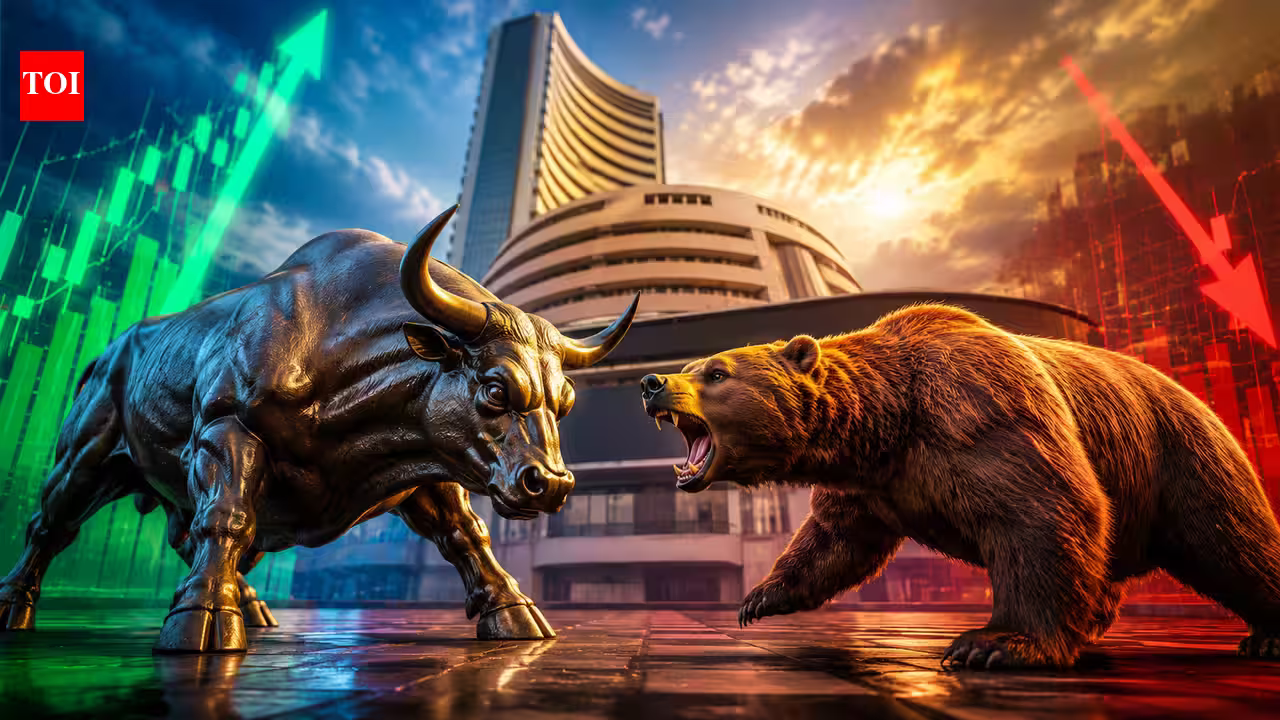
Market Dynamics and the Momentum of Indian Equities
The Indian equity markets have recently exhibited remarkable resilience and upward trajectory, characterized by a sharp, sustained rally that has captured the attention of both institutional and retail investors. Following a period of notable volatility, the benchmarks—BSE Sensex and NSE Nifty—delivered substantial gains, reflecting a strengthening sentiment toward the domestic growth narrative. The recent performance, underscored by an impressive 8.82 percent jump in the Sensex over a single week, marks a significant shift in market mechanics. This rally is not merely a statistical rebound; it signifies a recalibration of investor confidence fueled by macro-economic stability and favorable corporate earnings outlooks.
For the Indian business ecosystem, this bullish phase serves as a vital barometer of economic health. As markets touch higher thresholds, the focus shifts toward the sustainability of these gains. The recent session, which saw the Sensex settle above the 81,000 mark, indicates that investors are increasingly comfortable with current valuations, provided the macro-economic environment remains supportive. The surge in indices, particularly driven by heavyweights in the banking and financial services sector, confirms that institutional capital continues to view Indian blue-chip stocks as the primary engine of wealth creation.
The Role of Banking and Financial Services in Market Gains
At the core of the recent equity rally lies the robust performance of the financial sector. Banking stocks, particularly State Bank of India, HDFC Bank, and ICICI Bank, have emerged as the primary catalysts for the market’s ascent. In the context of the Indian economy, banks are the primary conduits for credit growth, and their performance is intrinsically linked to the broader industrial and retail consumption cycles. The sustained buying interest in these financial entities suggests that market participants are optimistic about the credit off-take and asset quality management of major lenders.
From an analytical perspective, the financial sector’s performance provides a buffer against volatility in other cyclical industries. When banking stocks perform well, they provide a floor to the indices, preventing sharp corrections even when other sectors, such as metals or technology, experience sluggish movement. The inclusion of these banks in the gainers’ list amidst a broader market climb highlights the trend of capital rotation, where investors seek exposure to sectors that demonstrate high earnings visibility and balance sheet strength. This preference for stability is a defining characteristic of the current market cycle in India.
Commodity Trends and the Impact of Crude Oil Prices
A critical factor that cannot be overlooked in the current market environment is the cooling of international crude oil prices. Crude oil is a vital import for the Indian economy, and its pricing serves as a significant influence on the nation’s trade deficit, inflation levels, and fiscal health. The recent decline in Brent crude to below the $98 per barrel threshold has provided a much-needed tailwind for the domestic equity markets. Lower oil prices reduce the input cost burden for manufacturing and transportation sectors, thereby improving corporate margins and alleviating pressure on the Indian Rupee.
The inverse correlation between crude oil prices and Indian market performance remains a cornerstone of macro-economic analysis. When oil prices moderate, inflationary pressures are contained, which allows the Reserve Bank of India (RBI) more maneuverability in its monetary policy stance. Investors often perceive lower oil prices as a signal to increase allocations toward sectors that are sensitive to energy input costs, such as cement and manufacturing. Conversely, the correction in crude prices serves as a strategic relief for government balance sheets, facilitating better allocation toward infrastructure projects and development initiatives, which in turn fuels further economic activity.
Corporate Performance and Sectoral Divergence
While the broader indices remain in positive territory, the divergence in stock performance across various sectors provides a nuanced view of the market. While banking and capital goods firms like Larsen & Toubro and power producers like NTPC have led the gains, other segments have faced challenges. The presence of companies such as HCL Tech, Tata Steel, and Bajaj Finance among the laggards in the recent session highlights that the rally is not uniform. This sectoral divergence is common in mature bull cycles, where selective stock picking becomes more important than broad-based index buying.
The laggards represent a mix of macroeconomic pressures and company-specific headwinds. For instance, the IT sector, represented by companies like HCL Tech, often grapples with global demand fluctuations and currency volatility. Similarly, the metals sector is highly sensitive to global commodity cycles and demand from major manufacturing hubs like China. The market’s decision to favor financial and infrastructure-linked stocks over technology and commodity-linked ones suggests a tactical shift. Investors are currently prioritizing businesses with strong domestic demand exposure, reflecting a consensus that India’s internal consumption and infrastructure spending will remain the primary drivers of growth in the near term.
Investor Strategy in a High-Valuation Environment
As the Sensex and Nifty hover near record highs, the strategy for long-term investors requires a focus on fundamental strength rather than short-term price momentum. The current market context demands a shift toward risk management and portfolio diversification. With indices having surged rapidly in recent weeks, the possibility of short-term consolidation cannot be discounted. Institutional investors, both domestic and foreign, are likely to monitor key indicators such as corporate margin expansion, consumer demand indices, and international geopolitical stability to gauge the next leg of the movement.
For the retail participant, the current climate serves as a reminder that equity investment is a marathon, not a sprint. While the recent gains are significant, historical data suggests that market corrections are a natural part of the cycle. Consequently, maintaining a disciplined approach—such as systematic investment plans (SIPs) and focusing on high-quality, dividend-paying companies—remains the most effective strategy. As the Indian corporate sector continues to leverage the country’s demographic dividend and favorable regulatory environment, the long-term outlook remains positive. However, vigilance regarding global systemic risks and internal inflationary trends remains essential for navigating the complexities of the current Indian financial landscape.
Concluding Outlook on the Indian Macro-Economic Narrative
Looking ahead, the stability of the Indian market will depend on a confluence of domestic resilience and global integration. The transition of India into a global manufacturing hub, supported by the government’s focus on the ‘Make in India’ initiative and infrastructure modernization, continues to provide a structural support system for equities. Despite intermittent volatility triggered by international events or commodity price fluctuations, the underlying trend is guided by increasing formalization of the economy and a growing base of retail and institutional capital.
The recent performance of the markets serves as a validation of India’s comparative advantage in an uncertain global climate. By maintaining a focus on sustainable growth, sound fiscal policy, and robust corporate governance, Indian companies are well-positioned to continue attracting global investor interest. As the benchmarks continue to test new levels, the focus will inevitably shift from mere price appreciation to earnings-led growth. For stakeholders within the Indian economy, the path forward involves balancing optimism with a rigorous assessment of risks, ensuring that the momentum captured in the recent rally translates into long-term value creation.
Disclaimer: This content is auto-generated for informational purposes only.
Source: Read Original News