







Strategic Expansion at Indira Gandhi International Airport
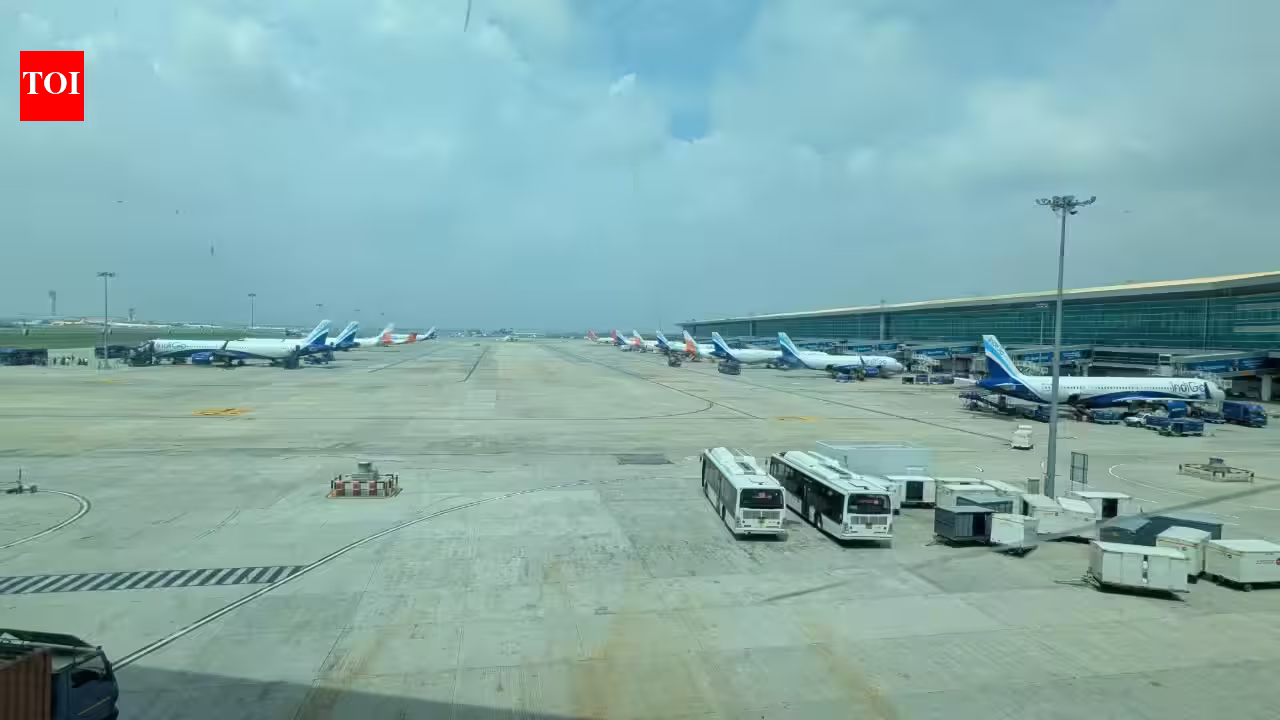
The expansion roadmap for Delhi’s Indira Gandhi International Airport (IGIA) marks a significant turning point for Indian aviation infrastructure. As the primary gateway to the nation’s capital, IGIA is currently undergoing a strategic transformation designed to accommodate a projected surge in passenger traffic. By 2030, the airport aims to raise its annual capacity from the current 10.4 crore passengers per annum (CPA) to over 12.5 crore. This capital-intensive project, spearheaded by Delhi International Airport Limited (DIAL), represents a proactive approach to managing the demographic and economic shifts defining modern India.
The core of this expansion focuses on augmenting international transit capacity. With the addition of a new international pier, designated as Pier E, at Terminal 3, DIAL intends to solidify IGIA’s position as a premier global transit hub. This infrastructure upgrade is projected to increase Terminal 3’s international handling capacity by over 50%, effectively boosting international traffic support to 4.6 crore passengers annually. This development is not merely an engineering feat but a calculated response to the burgeoning demand for long-haul travel, connecting India more robustly with North America, Europe, and Southeast Asia.
Optimizing Domestic Throughput and Terminal Efficiency
While the focus on international capacity dominates the headline figures, the master plan also addresses the need for domestic throughput efficiency. Terminal 1, which serves as a cornerstone for domestic connectivity, will undergo internal modifications. DIAL proposes a strategic reconfiguration of check-in and security counters to raise the terminal’s capacity to 4.5 crore passengers annually. These changes are designed to be implemented without significant structural alterations to the existing T1 building, demonstrating a cost-effective approach to resource management.
Terminal 2 continues to serve as an interim asset in this grand strategy. The current master plan envisions the maintenance of T2’s operations for the immediate future. However, the long-term outlook involves the eventual demolition of T2 to clear space for the construction of a much larger Terminal 4. This decision is contingent upon the evolution of passenger demand and the competitive landscape of the Delhi National Capital Region (NCR). As the secondary airport in Greater Noida matures and gradually builds its own operational footprint, the phased development of IGIA’s terminals will ensure that the region’s aviation infrastructure remains agile and responsive to shifting market conditions.
The Infrastructure-Aviation Integration Challenge
A critical component of airport scalability is the efficacy of the transport network feeding into the hub. With the projected increase in passenger volume and the commercial expansion of Aerocity—which will soon host one of the largest retail complexes in the country—road congestion has become a primary policy concern. The planning process, involving collaboration with the Public Works Department and consultancy from RITES, emphasizes the necessity of seamless surface access.
Current proposals include the construction of a Y-shaped flyover to eliminate signalized intersections at key approach points. This would allow for free-flowing traffic for commuters traveling between Dhaula Kuan, Vasant Vihar, and the airport terminals. Furthermore, the plan includes doubling the width of roads leading up to Terminal 3, as well as an expansion of the critical under-runway tunnel. These enhancements are vital, as they prevent the airport from becoming an isolated island of efficiency surrounded by a sea of gridlock. Ensuring that the logistics of getting to the terminal remain as fluid as the flight operations themselves is essential for maintaining the airport’s operational integrity.
Enhancing Passenger Experience Through Operational Connectivity
Beyond bricks and mortar, DIAL is finalizing the technical architecture required for seamless airside passenger transfers. The ability to move passengers between terminals without requiring them to exit the secure zone is a hallmark of global mega-hubs. This development is critical for travelers connecting from domestic flights in Terminal 1 to international departures in Terminal 3.
To facilitate this, DIAL has secured specialized, low-floor Volvo buses equipped with dedicated baggage compartments. While the physical infrastructure is ready, the commencement of this service is currently awaiting regulatory clearance from the Bureau of Civil Aviation Security. Once operational, this airside transfer system will significantly reduce the time and logistical burden on connecting passengers, thereby improving the overall throughput rate and comfort levels. This transition signifies a movement toward a more integrated, singular hub experience rather than a collection of disjointed terminal units.
Economic Implications for the Indian Aviation Sector
The capital investment involved in these projects—approximately Rs 2,000 crore for Pier E alone—underscores the GMR Group’s commitment to reinforcing India’s aviation competitive advantage. This 10-year master plan, submitted to the aviation ministry, serves as a blueprint for long-term growth in a sector that is becoming increasingly vital to the Indian economy. As India continues to integrate into the global supply chain, the role of IGIA as a high-capacity gateway is non-negotiable.
The master plan also highlights the maturity of the consultation process between private operators and government stakeholders. By aligning terminal expansion with broader urban planning initiatives and security mandates, the plan reflects a sophisticated understanding of contemporary travel trends. As the aviation ministry reviews these proposals, the focus will remain on balancing rapid expansion with the long-term stability of the airport’s financial and operational model.
In conclusion, the vision for IGIA by 2030 is one of calculated capacity management. By layering internal terminal improvements, major international infrastructure additions, and enhanced road access, DIAL is preparing to meet the challenges of the next decade. The success of this master plan will likely set the benchmark for other major metropolitan airports across India, demonstrating how brownfield assets can be expanded to meet the aggressive demands of a rapidly growing economy. The shift toward higher passenger density, integrated transit, and streamlined surface connectivity is a testament to the ongoing evolution of Indian infrastructure.
Disclaimer: This content is auto-generated for informational purposes only.
Source: Read Original News