








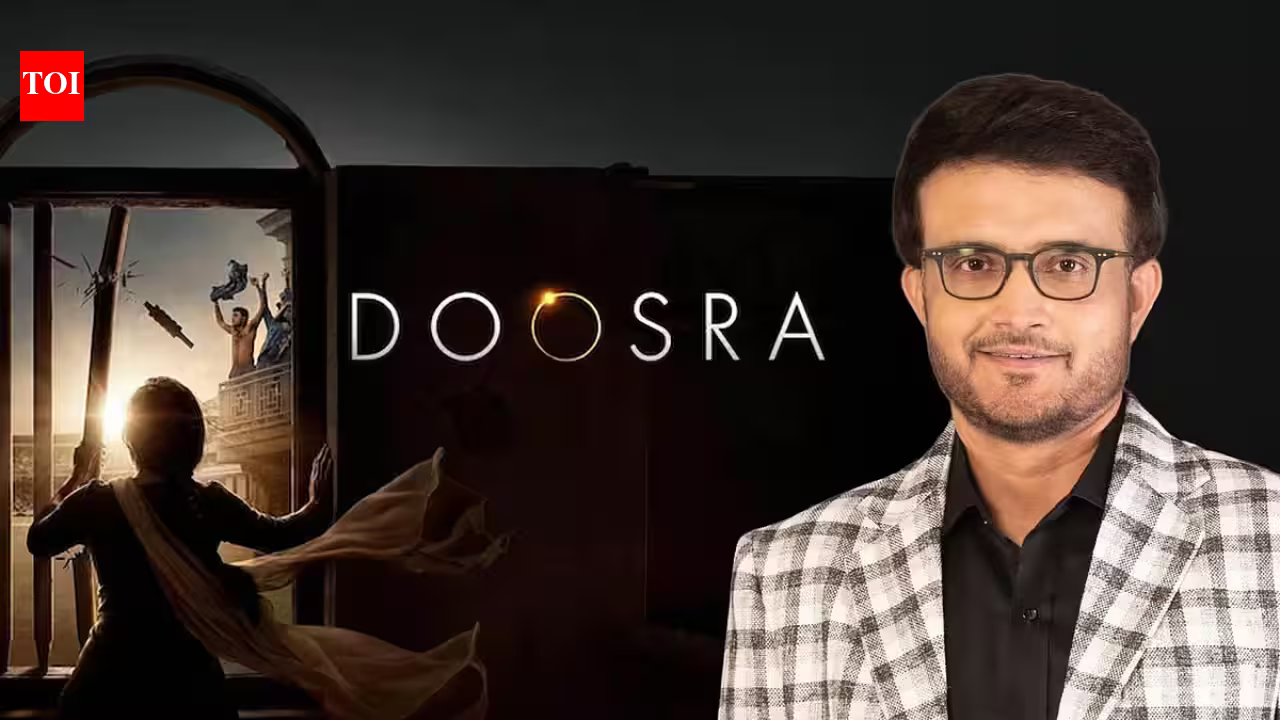
The battle for the crease has moved from the hallowed turf of Lord’s to the stark, fluorescent-lit corridors of the Delhi High Court. In a high-stakes legal standoff that pits the sanctity of creative expression against the burgeoning legal concept of “personality rights,” former Indian cricket captain Sourav Ganguly has found himself at a stalemate. As the clock ticks toward the theatrical release of the film Doosra, the High Court has refused to issue an immediate stay, leaving the curtains to rise on a controversy that is as much about cinema as it is about the commercial sovereignty of a legend.
The Plea Behind the Pitch
Sourav Ganguly, known for his grit on the field and his firm stance off it, has moved the court with a plea that hits at the heart of modern celebrity management. At the core of his contention is the argument that Doosra—a film that promises to chronicle a specific era of Indian cricket—has crossed the line into unauthorized exploitation.
Ganguly’s legal team contends that the film leverages his identity and iconic career milestones without his consent. Specifically, the plea highlights the depiction of his captaincy during the historic 2002 NatWest Series final—a victory that redefined Indian cricket’s mentality. By integrating these real-world images and narrative anchors into a commercial cinematic product, Ganguly argues that the filmmakers are effectively monetizing his persona. For the ‘Prince of Kolkata,’ this isn’t merely about artistic portrayal; it is about the protection of his commercial rights, a battlefront that has become increasingly crowded for India’s top-tier icons.
A Legacy of Iconic Moments
To understand the gravity of the dispute, one must look at the specific imagery in question. The shirtless celebration at the Lord’s balcony following the 2002 NatWest triumph is not just a photograph; it is a piece of cultural shorthand. For a generation of Indians, that moment represents a seismic shift—a transition from timid cricket to a brand of aggression that could look the English in the eye and command the field.
Because that moment is so deeply etched into the public consciousness, the filmmakers likely view it as public domain or historical record. However, Ganguly’s legal team views it as his “brand equity.” When an image becomes synonymous with a personality, where does history end and personal property begin? This is the fundamental tension that the Delhi High Court is now tasked with untangling as the film prepares to hit theaters this Friday.
The Legal Tightrope of Personality Rights
The case of Ganguly vs. The Makers of Doosra is a bellwether for the evolving landscape of Indian intellectual property law. We are currently witnessing an unprecedented surge in celebrity-led litigation. From Amitabh Bachchan to Anil Kapoor, A-list stars are increasingly seeking court injunctions to prevent the “misuse” of their likeness, voice, and even signature mannerisms by AI, advertisers, and filmmakers.
The court faces a delicate balancing act. On one hand, protecting an individual’s right to control their own persona is essential in an era where data and likenesses are commodities. On the other hand, courts must be wary of creating a “celebrity veto” on creative content. If every public figure could block the portrayal of their career highlights, the genre of sports biography and historical docudrama could face an existential crisis. The judge’s refusal to stay the release on Thursday signifies a reluctance to censor a work of art prematurely, suggesting that the court requires a more nuanced debate before deciding whether the film’s use of Ganguly’s identity constitutes a commercial infringement or fair reportage.
What’s at Stake for Indian Cinema
If Doosra proceeds to release, it will serve as a test case for filmmakers. Every producer in the industry will be watching the ongoing Friday hearings with bated breath. A ruling in Ganguly’s favor could force a total overhaul in how production houses secure “life rights” or clearances when creating content that references historical figures. It would essentially mandate a “clearance culture” that could make independent filmmaking significantly more expensive and bureaucratically cumbersome.
Conversely, a win for the filmmakers would reinforce the idea that public figures—especially those who shaped history on a global stage—do not have absolute ownership over the archival footage of their greatest public achievements. It posits that history belongs to the people, and by extension, the storytellers.
The Friday Showdown
As the legal proceedings continue on Friday, the film’s team remains in a state of nervous anticipation. For the audience, the film represents a trip down memory lane, a celebration of the era when Indian cricket found its backbone. For Sourav Ganguly, the theater represents a potential violation of the boundaries he has spent decades carefully defining.
The Delhi High Court’s refusal to pull the plug on the release is not a final verdict, but it is a significant signal. It implies that for now, the story of the NatWest win—and the man at the helm—will play out on the big screen, regardless of the legal skirmish in the background. Whether this turns out to be a mere footnote in Indian legal history or a landmark judgment that reshapes the entertainment industry, one thing is certain: the ‘Doosra’ has been bowled, and the response from the judiciary will dictate the rules of the game for years to come. In the world of high-stakes litigation, much like in cricket, timing is everything. As of now, the show goes on.
Disclaimer: This content is auto-generated for informational purposes only.
Source: Read Original News