






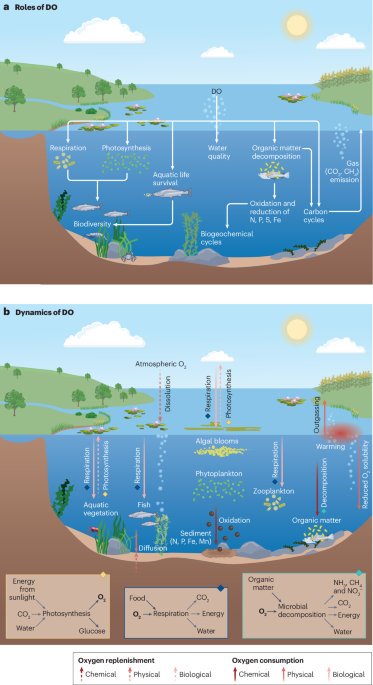
Rose, K. C. et al. Aquatic deoxygenation as a planetary boundary and key regulator of Earth system stability. Nat. Ecol. Evol. 8, 1400–1406 (2024).
Weyhenmeyer, G. A. et al. Global lake health in the Anthropocene: societal implications and treatment strategies. Earth’s Future 12, e2023EF004387 (2024).
Dutton, C. L., Subalusky, A. L., Hamilton, S. K., Rosi, E. J. & Post, D. M. Organic matter loading by hippopotami causes subsidy overload resulting in downstream hypoxia and fish kills. Nat. Commun. 9, 1951 (2018).
Michalak, A. M. et al. Record-setting algal bloom in Lake Erie caused by agricultural and meteorological trends consistent with expected future conditions. Proc. Natl Acad. Sci. USA 110, 6448–6452 (2013).
Stramma, L. et al. Expansion of oxygen minimum zones may reduce available habitat for tropical pelagic fishes. Nat. Clim. Change 2, 33–37 (2012).
Deutsch, C., Penn, J. L. & Lucey, N. Climate, oxygen, and the future of marine biodiversity. Annu. Rev. Mar. Sci. 16, 217–245 (2024).
Zhou, Y. et al. Episodic flooding causes sudden deoxygenation shocks in human-dominated rivers. Nat. Commun. 16, 6865 (2025).
Jansen, J. et al. Climate-driven deoxygenation of northern lakes. Nat. Clim. Change 14, 832–838 (2024).
Jane, S. F. et al. Widespread deoxygenation of temperate lakes. Nature 594, 66–70 (2021).
Breitburg, D. et al. Declining oxygen in the global ocean and coastal waters. Science 359, eaam7240 (2018).
Carey, C. C. Causes and consequences of changing oxygen availability in lakes. Inland Waters 13, 316–326 (2023).
Jenny, J.-P. et al. Urban point sources of nutrients were the leading cause for the historical spread of hypoxia across European lakes. Proc. Natl Acad. Sci. USA 113, 12655–12660 (2016).
Zhang, Y., Shi, K., Woolway, R. I., Wang, X. & Zhang, Y. Climate warming and heatwaves accelerate global lake deoxygenation. Sci. Adv. 11, eadt5369 (2025).
Zhi, W., Klingler, C., Liu, J. & Li, L. Widespread deoxygenation in warming rivers. Nat. Clim. Change 13, 1105–1113 (2023).
Schmidtko, S., Stramma, L. & Visbeck, M. Decline in global oceanic oxygen content during the past five decades. Nature 542, 335–339 (2017).
Blaszczak, J. R. et al. Extent, patterns, and drivers of hypoxia in the world’s streams and rivers. Limnol. Oceanogr. Lett. 8, 453–463 (2023).
LaBrie, R. & Maranger, R. Predicting the presence of hypoxic hypolimnia in lakes at large spatial scales. Limnol. Oceanogr. 69, 355–366 (2024).
Vaquer-Sunyer, R. & Duarte, C. M. Thresholds of hypoxia for marine biodiversity. Proc. Natl Acad. Sci. USA 105, 15452–15457 (2008).
Woolway, R. I. & Merchant, C. J. Worldwide alteration of lake mixing regimes in response to climate change. Nat. Geosci. 12, 271–276 (2019).
Breitburg, D. L., Hondorp, D. W., Davias, L. A. & Diaz, R. J. Hypoxia, nitrogen, and fisheries: integrating effects across local and global landscapes. Annu. Rev. Mar. Sci. 1, 329–349 (2009).
Giomi, F. et al. Oxygen dynamics in marine productive ecosystems at ecologically relevant scales. Nat. Geosci. 16, 560–566 (2023).
Wang, J. et al. Global inland-water oxygen cycle has changed in the Anthropocene. Sci. Adv. 11, eadr1695 (2025).
Zhi, W., Ouyang, W., Shen, C. & Li, L. Temperature outweighs light and flow as the predominant driver of dissolved oxygen in US rivers. Nat. Water 1, 249–260 (2023).
Helton, A. M., Poole, G. C., Payn, R. A., Izurieta, C. & Stanford, J. A. Scaling flow path processes to fluvial landscapes: an integrated field and model assessment of temperature and dissolved oxygen dynamics in a river-floodplain-aquifer system. J. Geophys. Res. Biogeosci. https://doi.org/10.1029/2012JG002025 (2012).
Bernhardt, E. S. et al. Light and flow regimes regulate the metabolism of rivers. Proc. Natl Acad. Sci. USA 119, e2121976119 (2022).
Sullivan, C. J., Read, J. S. & Hansen, G. J. A. Climate-driven alterations of lake thermal regimes. Limnol. Oceanogr. 70, 2348–2364 (2025).
Feng, L. et al. Harmful algal blooms in inland waters. Nat. Rev. Earth Environ. 5, 631–644 (2024).
Scavia, D. et al. Assessing and addressing the re-eutrophication of Lake Erie: central basin hypoxia. J. Great Lakes Res. 40, 226–246 (2014).
D’Hondt, S. et al. Presence of oxygen and aerobic communities from sea floor to basement in deep-sea sediments. Nat. Geosci. 8, 299–304 (2015).
Wang, J., Zhang, Z. & Johnson, B. Low flows and downstream decline in phytoplankton contribute to impaired water quality in the lower Minnesota River. Water Res. 161, 262–273 (2019).
Sikder, M. S. et al. Lake-TopoCat: a global lake drainage topology and catchment database. Earth Syst. Sci. Data 15, 3483–3511 (2023).
Messager, M. L., Lehner, B., Grill, G., Nedeva, I. & Schmitt, O. Estimating the volume and age of water stored in global lakes using a geo-statistical approach. Nat. Commun. 7, 13603 (2016).
Carter, A. M., Blaszczak, J. R., Heffernan, J. B. & Bernhardt, E. S. Hypoxia dynamics and spatial distribution in a low gradient river. Limnol. Oceanogr. 66, 2251–2265 (2021).
Morée, A. L., Clarke, T. M., Cheung, W. W. L. & Frölicher, T. L. Impact of deoxygenation and warming on global marine species in the 21st century. Biogeosciences 20, 2425–2454 (2023).
LaBrie, R., Hupfer, M. & Lau, M. P. Anaerobic duration predicts biogeochemical consequences of oxygen depletion in lakes. Limnol. Oceanogr. Lett. 8, 666–674 (2023).
Encinas Fernández, J., Peeters, F. & Hofmann, H. Importance of the autumn overturn and anoxic conditions in the hypolimnion for the annual methane emissions from a temperate lake. Environ. Sci. Technol. 48, 7297–7304 (2014).
Cohen, A. S. et al. Climate warming reduces fish production and benthic habitat in Lake Tanganyika, one of the most biodiverse freshwater ecosystems. Proc. Natl Acad. Sci. USA 113, 9563–9568 (2016).
Blaszczak, J. R. Deoxygenation of temperate rivers. Nat. Clim. Change 13, 1021–1022 (2023).
Yeeles, A. Sustainable development and climate goals. Nat. Clim. Change 9, 497–498 (2019).
Switching gears for the sustainable development goals. Nat. Commun. 12, 4154 (2021).
Raymond, J. & Segrè, D. The effect of oxygen on biochemical networks and the evolution of complex life. Science 311, 1764–1767 (2006).
Islam, S. T. et al. Limnochemistry and plankton diversity in some high altitude lakes of Kashmir Himalaya. Front. Environ. Sci. https://doi.org/10.3389/fenvs.2021.681965 (2021).
Tu, Z., Zhang, Y., Shi, K., Gong, S. & Zhao, Z. Landsat data reveal lake deoxygenation worldwide. Water Res. 267, 122525 (2024).
Graham, D. J., Bierkens, M. F. P., Jones, E. R., Sutanudjaja, E. H. & van Vliet, M. T. H. Climate change drives low dissolved oxygen and increased hypoxia rates in rivers worldwide. Nat. Clim. Change 15, 1348–1354 (2025).
Dolma, K., Ahmed, I., Aravind, N. A. & Farah, M. A. Multivariate statistical approach for the determination of physicochemical parameters of trans-Himalayan high-altitude streams of Leh, Ladakh, India. Environ. Syst. Res. 14, 40 (2025).
Laas, A. et al. Summer depth distribution profiles of dissolved CO2 and O2 in shallow temperate lakes reveal trophic state and lake type specific differences. Sci. Total Environ. 566–567, 63–75 (2016).
Jane, S. F. et al. Longer duration of seasonal stratification contributes to widespread increases in lake hypoxia and anoxia. Glob. Change Biol. 29, 1009–1023 (2023).
Zhang, H. et al. Natural and anthropogenic imprints on seasonal river water quality trends across China. npj Clean Water 8, 49 (2025).
Martínez-Rodríguez, G. A. et al. Water quality trends of streams in Puerto Rico: evaluating 50 years of the Clean Water Act. J. Environ. Qual. 53, 253–264 (2024).
Foley, B., Jones, I. D., Maberly, S. C. & Rippey, B. Long-term changes in oxygen depletion in a small temperate lake: effects of climate change and eutrophication. Freshw. Biol. 57, 278–289 (2012).
Zhou, Y., Michalak, A. M., Beletsky, D., Rao, Y. R. & Richards, R. P. Record-breaking Lake Erie hypoxia during 2012 drought. Environ. Sci. Technol. 49, 800–807 (2015).
Jalil, A. et al. The role of wind field induced flow velocities in destratification and hypoxia reduction at Meiling Bay of large shallow Lake Taihu, China. Environ. Pollut. 232, 591–602 (2018).
Couture, R.-M., de Wit, H. A., Tominaga, K., Kiuru, P. & Markelov, I. Oxygen dynamics in a boreal lake responds to long-term changes in climate, ice phenology, and DOC inputs. J. Geophys. Res. Biogeosci. 120, 2441–2456 (2015).
Diamond, J. S. et al. Hypoxia is common in temperate headwaters and driven by hydrological extremes. Ecol. Indic. 147, 109987 (2023).
Danladi Bello, A.-A., Hashim, N. B. & Mohd Haniffah, M. R. Predicting impact of climate change on water temperature and dissolved oxygen in tropical rivers. Climate 5, 58 (2017).
Rajesh, M. & Rehana, S. Impact of climate change on river water temperature and dissolved oxygen: Indian riverine thermal regimes. Sci. Rep. 12, 9222 (2022).
Ficklin, D. L., Stewart, I. T. & Maurer, E. P. Effects of climate change on stream temperature, dissolved oxygen, and sediment concentration in the Sierra Nevada in California. Water Resour. Res. 49, 2765–2782 (2013).
Liu, J. et al. Expansion of aquatic vegetation in northern lakes amplified methane emissions. Nat. Geosci. 18, 322–329 (2025).
Yuan, L. L. & Pollard, A. I. Classifying lakes to quantify relationships between epilimnetic chlorophyll a and hypoxia. Environ. Manage. 55, 578–587 (2015).
Ziegler, J. P., Roy, J. W., Bogard, M. J. & Drake, D. A. R. Predicting warming-induced hypoxic stress for fish in a fragmented river channel using ecosystem metabolism models. Can. J. Fish. Aquat. Sci. 78, 1900–1909 (2021).
Guan, Q. et al. Declining predictions of net ecosystem production in US rivers and streams throughout the 21st century. Environ. Sci. Technol. 59, 27800–27810 (2025).
North, R. P., North, R. L., Livingstone, D. M., Köster, O. & Kipfer, R. Long-term changes in hypoxia and soluble reactive phosphorus in the hypolimnion of a large temperate lake: consequences of a climate regime shift. Glob. Change Biol. 20, 811–823 (2014).
O’Connor, M. I., Piehler, M. F., Leech, D. M., Anton, A. & Bruno, J. F. Warming and resource availability shift food web structure and metabolism. PLoS Biol. 7, e1000178 (2009).
Gudasz, C., Vachon, D. & Prairie, Y. T. A comprehensive framework for integrating lake hypsography and function on a global scale. Nat. Water 3, 818–830 (2025).
Müller, B., Bryant, L. D., Matzinger, A. & Wüest, A. Hypolimnetic oxygen depletion in eutrophic lakes. Environ. Sci. Technol. 46, 9964–9971 (2012).
Steinsberger, T., Schwefel, R., Wüest, A. & Müller, B. Hypolimnetic oxygen depletion rates in deep lakes: effects of trophic state and organic matter accumulation. Limnol. Oceanogr. 65, 3128–3138 (2020).
Boehrer, B. & Schultze, M. Stratification of lakes. Rev. Geophys. https://doi.org/10.1029/2006RG000210 (2008).
Pilla, R. M. et al. Global data set of long-term summertime vertical temperature profiles in 153 lakes. Sci. Data 8, 200 (2021).
Schwefel, R., Gaudard, A., Wüest, A. & Bouffard, D. Effects of climate change on deepwater oxygen and winter mixing in a deep lake (Lake Geneva): comparing observational findings and modeling. Water Resour. Res. 52, 8811–8826 (2016).
Williamson, C. E. et al. Ecological consequences of long-term browning in lakes. Sci. Rep. 5, 18666 (2015).
Saros, J. E. et al. Abrupt transformation of West Greenland lakes following compound climate extremes associated with atmospheric rivers. Proc. Natl Acad. Sci. USA 122, e2413855122 (2025).
Hazuková, V., Burpee, B. T., Northington, R. M., Anderson, N. J. & Saros, J. E. Earlier ice melt increases hypolimnetic oxygen despite regional warming in small Arctic lakes. Limnol. Oceanogr. Lett. 9, 258–267 (2024).
Dugan, H. A. A comparison of ecological memory of lake ice-off in eight north-temperate lakes. J. Geophys. Res. Biogeosci. 126, e2020JG006232 (2021).
Bégin, P. N. et al. Extreme warming and regime shift toward amplified variability in a far northern lake. Limnol. Oceanogr. 66, S17–S29 (2021).
Mesman, J. P. et al. The role of internal feedbacks in shifting deep lake mixing regimes under a warming climate. Freshw. Biol. 66, 1021–1035 (2021).
Cavaliere, E. et al. The lake ice continuum concept: influence of winter conditions on energy and ecosystem dynamics. J. Geophys. Res. Biogeosci. 126, e2020JG006165 (2021).
Jansen, J. et al. Divergent oxygen trends in ice-covered lakes driven by ice-cover decline and ecological memory. Proc. Natl Acad. Sci. USA 122, e2426140122 (2025).
Tong, Y. et al. Global lakes are warming slower than surface air temperature due to accelerated evaporation. Nat. Water 1, 929–940 (2023).
Kaushal, S. S. et al. Rising stream and river temperatures in the United States. Front. Ecol. Environ. 8, 461–466 (2010).
van Vliet, M. T. H. et al. Global river water quality under climate change and hydroclimatic extremes. Nat. Rev. Earth Environ. 4, 687–702 (2023).
Hall, R. J. O. & Tank, J. L. Ecosystem metabolism controls nitrogen uptake in streams in Grand Teton National Park, Wyoming. Limnol. Oceanogr. 48, 1120–1128 (2003).
Shinohara, R. et al. Heat waves can cause hypoxia in shallow lakes. Geophys. Res. Lett. 50, e2023GL102967 (2023).
Jankowski, T., Livingstone, D. M., Bührer, H., Forster, R. & Niederhauser, P. Consequences of the 2003 European heat wave for lake temperature profiles, thermal stability, and hypolimnetic oxygen depletion: implications for a warmer world. Limnol. Oceanogr. 51, 815–819 (2006).
Demars, B. O. L. et al. Temperature and the metabolic balance of streams. Freshw. Biol. 56, 1106–1121 (2011).
Bartosiewicz, M., Laurion, I., Clayer, F. & Maranger, R. Heat-wave effects on oxygen, nutrients, and phytoplankton can alter global warming potential of gases emitted from a small shallow lake. Environ. Sci. Technol. 50, 6267–6275 (2016).
Sadayappan, K. & Li, L. Riverine heat waves on the rise, outpacing air heat waves. Proc. Natl Acad. Sci. USA 122, e2503160122 (2025).
Hari, R. E., Livingstone, D. M., Siber, R., Burkhardt-Holm, P. & Güttinger, H. Consequences of climatic change for water temperature and brown trout populations in Alpine rivers and streams. Glob. Change Biol. 12, 10–26 (2006).
ODUM, H. T. Primary production in flowing waters. Limnol. Oceanogr. 1, 102–117 (1956).
van Vliet, M. T. H. & Zwolsman, J. J. G. Impact of summer droughts on the water quality of the Meuse river. J. Hydrol. 353, 1–17 (2008).
Poole, G. C. & Berman, C. H. An ecological perspective on in-stream temperature: natural heat dynamics and mechanisms of human-caused thermal degradation. Environ. Manage. 27, 787–802 (2001).
Zappa, C. J. et al. Rain-induced turbulence and air-sea gas transfer. J. Geophys. Res. Oceans https://doi.org/10.1029/2008JC005008 (2009).
Hou, X. et al. Fifteen-year monitoring of the turbidity dynamics in large lakes and reservoirs in the middle and lower basin of the Yangtze River, China. Remote Sens. Environ. 190, 107–121 (2017).
Richardson, J. et al. Response of cyanobacteria and phytoplankton abundance to warming, extreme rainfall events and nutrient enrichment. Glob. Change Biol. 25, 3365–3380 (2019).
Bierschenk, A. M., Savage, C. & Matthaei, C. D. Intensity of catchment land use influences biological traits of benthic invertebrates along a freshwater-marine continuum. Limnol. Oceanogr. 62, S292–S308 (2017).
Zhang, Y., Shi, K., Zhou, Y., Liu, X. & Qin, B. Monitoring the river plume induced by heavy rainfall events in large, shallow, Lake Taihu using MODIS 250m imagery. Remote Sens. Environ. 173, 109–121 (2016).
Zhang, Y. et al. River plume monitoring in a deep valley reservoir using HJ-1 A/B images. J. Hydrol. 587, 125031 (2020).
Cussioli, M. C. et al. Spectral differences in the underwater light regime caused by sediment types in New Zealand estuaries: implications for seagrass photosynthesis. Geo-Mar. Lett. 40, 217–225 (2020).
Li, Y. et al. Changes in water chemistry associated with rainstorm events increase carbon emissions from the inflowing river mouth of a major drinking water reservoir. Environ. Sci. Technol. 56, 16494–16505 (2022).
Sinha, E., Michalak, A. M. & Balaji, V. Eutrophication will increase during the 21st century as a result of precipitation changes. Science 357, 405–408 (2017).
Baxa, M. et al. Dissolved oxygen deficits in a shallow eutrophic aquatic ecosystem (fishpond) – sediment oxygen demand and water column respiration alternately drive the oxygen regime. Sci. Total Environ. 766, 142647 (2021).
Aufdenkampe, A. K. et al. Riverine coupling of biogeochemical cycles between land, oceans, and atmosphere. Front. Ecol. Environ. 9, 53–60 (2011).
Blaszczak, J. R., Delesantro, J. M., Urban, D. L., Doyle, M. W. & Bernhardt, E. S. Scoured or suffocated: urban stream ecosystems oscillate between hydrologic and dissolved oxygen extremes. Limnol. Oceanogr. 64, 877–894 (2019).
Weyhenmeyer, G. A., Müller, R. A., Norman, M. & Tranvik, L. J. Sensitivity of freshwaters to browning in response to future climate change. Clim. Change 134, 225–239 (2016).
Gómez-Gener, L., Lupon, A., Laudon, H. & Sponseller, R. A. Drought alters the biogeochemistry of boreal stream networks. Nat. Commun. 11, 1795 (2020).
Kerr, J. L., Baldwin, D. S. & Whitworth, K. L. Options for managing hypoxic blackwater events in river systems: a review. J. Environ. Manage. 114, 139–147 (2013).
Ribaudo, C., Tison-Rosebery, J., Eon, M., Jan, G. & Bertrin, V. Wind exposure regulates water oxygenation in densely vegetated shallow lakes. Plants 10, 1269 (2021).
Koue, J. Assessing the impact of climate change on dissolved oxygen using a flow field ecosystem model that takes into account the anaerobic and aerobic environment of bottom sediments. Acta Geochim. 44, 11–22 (2025).
Winslow, L. A. et al. LakeMetabolizer: an R package for estimating lake metabolism from free-water oxygen using diverse statistical models. Inland Waters 6, 622–636 (2016).
Woolway, R. I. et al. Northern hemisphere atmospheric stilling accelerates lake thermal responses to a warming world. Geophys. Res. Lett. 46, 11983–11992 (2019).
Klaus, M., Karlsson, J. & Seekell, D. Tree line advance reduces mixing and oxygen concentrations in arctic–alpine lakes through wind sheltering and organic carbon supply. Glob. Change Biol. 27, 4238–4253 (2021).
Deng, K., Azorin-Molina, C., Minola, L., Zhang, G. & Chen, D. Global near-surface wind speed changes over the last decades revealed by reanalyses and CMIP6 model simulations. J. Clim. 34, 2219–2234 (2021).
Jabbari, A., Ackerman, J. D., Boegman, L. & Zhao, Y. Increases in Great Lake winds and extreme events facilitate interbasin coupling and reduce water quality in Lake Erie. Sci. Rep. 11, 5733 (2021).
Appling, A. P., Hall, R. O. Jr., Yackulic, C. B. & Arroita, M. Overcoming equifinality: leveraging long time series for stream metabolism estimation. J. Geophys. Res. Biogeosci. 123, 624–645 (2018).
Liu, X., Zhang, Y., Yin, Y., Wang, M. & Qin, B. Wind and submerged aquatic vegetation influence bio-optical properties in large shallow Lake Taihu, China. J. Geophys. Res. Biogeosci. 118, 713–727 (2013).
Gücker, B., Boëchat, I. G. & Giani, A. Impacts of agricultural land use on ecosystem structure and whole-stream metabolism of tropical Cerrado streams. Freshw. Biol. 54, 2069–2085 (2009).
Henley, W. F., Patterson, M. A., Neves, R. J. & Lemly, A. D. Effects of sedimentation and turbidity on lotic food webs: a concise review for natural resource managers. Rev. Fish. Sci. 8, 125–139 (2000).
Chen, H. et al. Climate-driven decline in water level causes earlier onset of hypoxia in a subtropical reservoir. Water Res. 267, 122445 (2024).
Winton, R. S., Calamita, E. & Wehrli, B. Reviews and syntheses: dams, water quality and tropical reservoir stratification. Biogeosciences 16, 1657–1671 (2019).
Powers, S. M. et al. Long-term accumulation and transport of anthropogenic phosphorus in three river basins. Nat. Geosci. 9, 353–356 (2016).
Bastviken, D., Persson, L., Odham, G. & Tranvik, L. Degradation of dissolved organic matter in oxic and anoxic lake water. Limnol. Oceanogr. 49, 109–116 (2004).
Kothawala, D. N., Kellerman, A. M., Catalán, N. & Tranvik, L. J. Organic matter degradation across ecosystem boundaries: the need for a unified conceptualization. Trends Ecol. Evol. 36, 113–122 (2021).
LaRowe, D. E. et al. The fate of organic carbon in marine sediments – new insights from recent data and analysis. Earth-Sci. Rev. 204, 103146 (2020).
Zhou, L. et al. Agricultural ditches and stream networks are overlooked hotspots of carbon emissions. Natl Sci. Rev. 12, nwaf111 (2025).
Zhou, Y. et al. Terrestrial organic matter inputs modulate methane emissions from a mega-reservoir. Environ. Sci. Technol. 59, 6590–6599 (2025).
Davidson, T. A. et al. Synergy between nutrients and warming enhances methane ebullition from experimental lakes. Nat. Clim. Change 8, 156–160 (2018).
Carey, C. C., Doubek, J. P., McClure, R. P. & Hanson, P. C. Oxygen dynamics control the burial of organic carbon in a eutrophic reservoir. Limnol. Oceanogr. Lett. 3, 293–301 (2018).
Shi, K. et al. Vertical dynamics of DOM-specialized bacteria and fungi drive stability in stratified reservoirs: mechanisms revealed by machine learning. Water Res. 287, 124334 (2025).
Qu, L. et al. Hypolimnetic deoxygenation enhanced production and export of recalcitrant dissolved organic matter in a large stratified reservoir. Water Res. 219, 118537 (2022).
Sobek, S., DelSontro, T., Wongfun, N. & Wehrli, B. Extreme organic carbon burial fuels intense methane bubbling in a temperate reservoir. Geophys. Res. Lett. https://doi.org/10.1029/2011GL050144 (2012).
Zhou, Y. et al. Autochthonous dissolved organic matter potentially fuels methane ebullition from experimental lakes. Water Res. 166, 115048 (2019).
Catalán, N., Marcé, R., Kothawala, D. N. & Tranvik, L. J. Organic carbon decomposition rates controlled by water retention time across inland waters. Nat. Geosci. 9, 501–504 (2016).
Yu, X., Zhuge, Y., Liu, X., Du, Q. & Tan, H. Evolution mechanism of dissolved oxygen stratification in a large deep reservoir. J. Lake Sci. 32, 1496–1507 (2020).
Doyle, R., Gagnon, A., Vanrolleghem, P. A. & Bott, C. Elucidating the impact of low DO on enhanced biological phosphorus removal under aerobic and anoxic conditions at full-scale. Water Res. 274, 123098 (2025).
Ruiz-Haddad, L., Ali, M., Pronk, M., van Loosdrecht, M. C. M. & Saikaly, P. E. Demystifying polyphosphate-accumulating organisms relevant to wastewater treatment: a review of their phylogeny, metabolism, and detection. Environ. Sci. Ecotechnol. 21, 100387 (2024).
Klein, E. et al. Enrichment of phosphate-accumulating organisms (PAOs) in a microfluidic model biofilm system by mimicking a typical aerobic granular sludge feast/famine regime. Appl. Microbiol. Biotechnol. 106, 1313–1324 (2022).
WU, F. et al. Effects and significance of organic nitrogen and phosphorous in the lake aquatic environment. J. Lake Sci. 22, 1–7 (2010).
Wen, S. et al. Iron (hydr)oxides mediated immobilization and interaction of dissolved organic matter and inorganic phosphate: a review. J. Lake Sci. 34, 1428–1440 (2022).
Jiang, X. et al. Interface processes of endogenous phosphorus during the freeze period: the driving role of iron dissimilation reduction and the unignorable organic phosphorus release. Water Res. 284, 123962 (2025).
Liu, M. et al. Effects of dredging on nitrogen and phosphorus storage patterns and retention mechanisms in column core sediments in the Caohai region of Dianchi Lake. Water 16, 449 (2024).
Li, J., Zhang, Y. & Katsev, S. Phosphorus recycling in deeply oxygenated sediments in Lake Superior controlled by organic matter mineralization. Limnol. Oceanogr. 63, 1372–1385 (2018).
Zhao, H. et al. Effect of OM content and constituents on phosphorus adsorption-release of the sediment from Erhai Lake. Huanjing Kexue Xuebao/Acta Sci. Circumstantiae 34, 2346–2354 (2014).
Smith, V. H. & Schindler, D. W. Eutrophication science: where do we go from here? Trends Ecol. Evol. 24, 201–207 (2009).
Lewis, A. S. L. et al. Anoxia begets anoxia: a positive feedback to the deoxygenation of temperate lakes. Glob. Change Biol. 30, e17046 (2024).
Humphries, G. E. et al. Transitions in nitrogen and organic matter form and concentration correspond to bacterial population dynamics in a hypoxic urban estuary. Biogeochemistry 163, 219–243 (2023).
Qin, L. et al. Impact of dissolved oxygen on the performance and microbial dynamics in side-stream activated sludge hydrolysis process. Water 15, 1977 (2023).
Voss, M. et al. The marine nitrogen cycle: recent discoveries, uncertainties and the potential relevance of climate change. Philos. Trans. R. Soc. B Biol. Sci. 368, 20130121 (2013).
Sennett, L. B. et al. Determining how oxygen legacy affects trajectories of soil denitrifier community dynamics and N2O emissions. Nat. Commun. 15, 7298 (2024).
Naqvi, S. W. A. et al. Increased marine production of N2O due to intensifying anoxia on the Indian continental shelf. Nature 408, 346–349 (2000).
Dadi, T., Rinke, K. & Friese, K. Trajectories of sediment-water interactions in reservoirs as a result of temperature and oxygen conditions. Water 12, 1065 (2020).
Roy, E. D., Nguyen, N. T., Bargu, S. & White, J. R. Internal loading of phosphorus from sediments of Lake Pontchartrain (Louisiana, USA) with implications for eutrophication. Hydrobiologia 684, 69–82 (2012).
Zhang, X. et al. Diatom-dinoflagellate succession in the Bohai Sea: the role of N/P ratios and dissolved organic nitrogen components. Water Res. 251, 121150 (2024).
Takahashi, K. et al. Denitrification in low oxic environments increases the accumulation of nitrogen oxide intermediates and modulates the evolutionary potential of microbial populations. Environ. Microbiol. Rep. 16, e13221 (2024).
Saari, G. N., Wang, Z. & Brooks, B. W. Revisiting inland hypoxia: diverse exceedances of dissolved oxygen thresholds for freshwater aquatic life. Environ. Sci. Pollut. Res. Int. 25, 3139–3150 (2018).
Fernandes, S. et al. Enhanced carbon-sulfur cycling in the sediments of Arabian Sea oxygen minimum zone center. Sci. Rep. 8, 8665 (2018).
Gnanaprakasam, E. T. et al. Microbial community structure and arsenic biogeochemistry in two arsenic-impacted aquifers in Bangladesh. mBio https://doi.org/10.1128/mbio.01326-01317 (2017).
Murphy, A. E., Bulseco, A. N., Ackerman, R., Vineis, J. H. & Bowen, J. L. Sulphide addition favours respiratory ammonification (DNRA) over complete denitrification and alters the active microbial community in salt marsh sediments. Environ. Microbiol. 22, 2124–2139 (2020).
Liang, Z. et al. Blackening and odorization of urban rivers: a bio-geochemical process. FEMS Microbiol. Ecol. https://doi.org/10.1093/femsec/fix180 (2017).
Wang, R. et al. Fe(III) reduction and vivianite formation in activated sludge. Sep. Purif. Technol. 220, 126–135 (2019).
Shao, B. et al. Versatile nitrate-respiring heterotrophs are previously concealed contributors to sulfur cycle. Nat. Commun. 16, 1202 (2025).
Wang, Z. et al. How redox gradient potentially influences nitrate reduction coupled with sulfur cycling: a new insight into nitrogen cycling in the hyporheic zone of effluent-dominated rivers. Sci. Total Environ. 915, 170070 (2024).
Defeo, S., Beutel, M. W., Rodal-Morales, N. & Singer, M. Sediment release of nutrients and metals from two contrasting eutrophic California reservoirs under oxic, hypoxic and anoxic conditions. Front. Water https://doi.org/10.3389/frwa.2024.1474057 (2024).
Wilfert, P. et al. Sulfide induced phosphate release from iron phosphates and its potential for phosphate recovery. Water Res. 171, 115389 (2020).
Xu, X. et al. Global patterns and drivers of coupling between anammox and denitrification processes across inland aquatic ecosystems. Commun. Earth Environ. 6, 23 (2025).
Benoit, J. M., Gilmour, C. C. & Mason, R. P. The influence of sulfide on solid-phase mercury bioavailability for methylation by pure cultures of Desulfobulbus propionicus (1pr3). Environ. Sci. Technol. 35, 127–132 (2001).
Chadwick, S. P., Babiarz, C. L., Hurley, J. P. & Armstrong, D. E. Influences of iron, manganese, and dissolved organic carbon on the hypolimnetic cycling of amended mercury. Sci. Total Environ. 368, 177–188 (2006).
Matthews, D. A. et al. Whole-lake nitrate addition for control of methylmercury in mercury-contaminated Onondaga Lake, NY. Environ. Res. 125, 52–60 (2013).
Kharaillah, A. et al. Low-oxygen freshwaters as ecological niches for mercury methylators. Water Res. 290, 125014 (2026).
Eckley, C. S., Luxton, T. P., Knightes, C. D. & Shah, V. Methylmercury production and degradation under light and dark conditions in the water column of the hells canyon reservoirs, USA. Environ. Toxicol. Chem. 40, 1827–1837 (2021).
Sunderland, E. M., Krabbenhoft, D. P., Moreau, J. W., Strode, S. A. & Landing, W. M. Mercury sources, distribution, and bioavailability in the North Pacific Ocean: insights from data and models. Glob. Biogeochem. Cycles https://doi.org/10.1029/2008GB003425 (2009).
Fusi, M. et al. Ideas and perspectives: the fluctuating nature of oxygen shapes the ecology of aquatic habitats and their biogeochemical cycles – the aquatic oxyscape. Biogeosciences 20, 3509–3521 (2023).
Yue, Y. et al. Vertical distribution of bacterial community in water columns of reservoirs with different trophic conditions during thermal stratification. Front. Environ. Sci. https://doi.org/10.3389/fenvs.2021.632089 (2021).
Moran, M. A. & Miller, W. L. Resourceful heterotrophs make the most of light in the coastal ocean. Nat. Rev. Microbiol. 5, 792–800 (2007).
Diao, M., Sinnige, R., Kalbitz, K., Huisman, J. & Muyzer, G. Succession of bacterial communities in a seasonally stratified lake with an anoxic and sulfidic hypolimnion. Front. Microbiol. 8, 2511 (2017).
Sadro, S., Melack, J. M. & MacIntyre, S. Spatial and temporal variability in the ecosystem metabolism of a high-elevation lake: integrating benthic and pelagic habitats. Ecosystems 14, 1123–1140 (2011).
Park, Y. et al. Total microbial activity and sulfur cycling microbe changes in response to the development of hypoxia in a shallow estuary. Ocean Sci. J. 55, 165–181 (2020).
Wright, J. J., Konwar, K. M. & Hallam, S. J. Microbial ecology of expanding oxygen minimum zones. Nat. Rev. Microbiol. 10, 381–394 (2012).
Cai, J. et al. Characterization of bacterial and microbial eukaryotic communities associated with an ephemeral hypoxia event in Taihu Lake, a shallow eutrophic Chinese lake. Environ. Sci. Pollut. Res. 25, 31543–31557 (2018).
Bush, T. et al. Oxic-anoxic regime shifts mediated by feedbacks between biogeochemical processes and microbial community dynamics. Nat. Commun. 8, 789 (2017).
Bastviken, D., Tranvik, L. J., Downing, J. A., Crill, P. M. & Enrich-Prast, A. Freshwater methane emissions offset the continental carbon sink. Science 331, 50–50 (2011).
Rocher-Ros, G. et al. Global methane emissions from rivers and streams. Nature 621, 530–535 (2023).
Ekau, W., Auel, H., Pörtner, H. O. & Gilbert, D. Impacts of hypoxia on the structure and processes in pelagic communities (zooplankton, macro-invertebrates and fish). Biogeosciences 7, 1669–1699 (2010).
Molot, L. A. et al. Low sediment redox promotes cyanobacteria blooms across a trophic range: implications for management. Lake Reserv. Manag. 37, 120–142 (2021).
Chang, K.-H. et al. Impact of improved bottom hypoxia on zooplankton community in shallow eutrophic lake. Knowl. Manag. Aquat. Ecosyst. 408, 03p01–03p08 (2013).
Sinkko, H. et al. Increasing oxygen deficiency changes rare and moderately abundant bacterial communities in coastal soft sediments. Sci. Rep. 9, 16341 (2019).
Jessen, G. L. et al. Hypoxia causes preservation of labile organic matter and changes seafloor microbial community composition (Black Sea). Sci. Adv. 3, e1601897 (2017).
Sobek, S. et al. Organic carbon burial efficiency in lake sediments controlled by oxygen exposure time and sediment source. Limnol. Oceanogr. 54, 2243–2254 (2009).
Breitburg, D. Effects of hypoxia, and the balance between hypoxia and enrichment, on coastal fishes and fisheries. Estuaries 25, 767–781 (2002).
Wu, R. S. S. Hypoxia: from molecular responses to ecosystem responses. Mar. Pollut. Bull. 45, 35–45 (2002).
Horppila, J., Malinen, T., Nurminen, L., Tallberg, P. & Vinni, M. A metalimnetic oxygen minimum indirectly contributing to the low biomass of cladocerans in Lake Hiidenvesi – a diurnal study on the refuge effect. Hydrobiologia 436, 81–90 (2000).
Pollock, M. S., Clarke, L. M. J. & Dubé, M. G. The effects of hypoxia on fishes: from ecological relevance to physiological effects. Environ. Rev. 15, 1–14 (2007).
Ludsin, S. A., Kershner, M. W., Blocksom, K. A., Knight, R. L. & Stein, R. A. Life after death in Lake Erie: nutrient controls drive fish species richness, rehabilitation. Ecol. Appl. 11, 731–746 (2001).
Breitburg, D. L. et al. The pattern and influence of low dissolved oxygen in the Patuxent River, a seasonally hypoxic estuary. Estuaries 26, 280–297 (2003).
Wyeth, A. C., Grünbaum, D., Keister, J. E., Crouser, D. & Roberts, P. In situ observations of zooplankton show changes in abundance and swimming speed in response to hypoxia and acidification. Limnol. Oceanogr. 69, 2307–2317 (2024).
Bręk-Laitinen, G., Bellido, J. L. & Ojala, A. Response of a microbial food web to prolonged seasonal hypoxia in a boreal lake. Aquat. Biol. 14, 105–120 (2012).
Larsson, P. & Lampert, W. Experimental evidence of a low-oxygen refuge for large zooplankton. Limnol. Oceanogr. 56, 1682–1688 (2011).
Bartley, T. J. et al. Food web rewiring in a changing world. Nat. Ecol. Evol. 3, 345–354 (2019).
Dugener, N. M., Weinke, A. D., Stone, I. P. & Biddanda, B. A. Recurringly hypoxic: bottom water oxygen depletion is linked to temperature and precipitation in a Great Lakes estuary. Hydrobiology 2, 410–430 (2023).
Emilson, E. J. S. et al. Climate-driven shifts in sediment chemistry enhance methane production in northern lakes. Nat. Commun. 9, 1801 (2018).
Moras, S., Zellmer, U. R., Hiltunen, E., Grasset, C. & Sobek, S. Predicting methane formation rates of freshwater sediments in different biogeographic regions. J. Geophys. Res. Biogeosci. 129, e2023JG007463 (2024).
Yang, G. et al. Characteristics of methane emissions from alpine thermokarst lakes on the Tibetan Plateau. Nat. Commun. 14, 3121 (2023).
Yvon-Durocher, G. et al. Methane fluxes show consistent temperature dependence across microbial to ecosystem scales. Nature 507, 488–491 (2014).
Wallenius, A. J., Dalcin Martins, P., Slomp, C. P. & Jetten, M. S. M. Anthropogenic and environmental constraints on the microbial methane cycle in coastal sediments. Front. Microbiol. 12, 631621 (2021).
Arend, K. K. et al. Seasonal and interannual effects of hypoxia on fish habitat quality in central Lake Erie. Freshw. Biol. 56, 366–383 (2011).
Magee, M. R., McIntyre, P. B. & Wu, C. H. Modeling oxythermal stress for cool-water fishes in lakes using a cumulative dosage approach. Can. J. Fish. Aquat. Sci. 75, 1303–1312 (2018).
Budnik, R. R. et al. Effects of hypoxia on habitat quality of reservoir Largemouth Bass, saugeye, and White Crappie. Trans. Am. Fish. Soc. 150, 75–88 (2021).
Verschuren, D. et al. History and timing of human impact on Lake Victoria, East Africa. Proc. Biol. Sci. 269, 289–294 (2002).
Chamberlin, D. W. et al. Hypoxia augments edge effects of water column stratification on fish distribution. Fish. Res. 231, 105684 (2020).
Caraballo, P., Forsberg, B. R., Almeida, F. F. D. & Leite, R. G. Diel patterns of temperature, conductivity and dissolved oxygen in an Amazon floodplain lake: description of a friagem phenomenon. Acta Limnol. Bras. 26, 318–331 (2014).
Calheiros, D. F. & Hamilton, S. K. Limnological conditions associated with natural fish kills in the Pantanal Wetland of Brazil. Proceedings of the International Association of Theoretical and Applied Limnology 26, 2189–2193 (1998).
Luis Val, A. & Wood, C. M. Global change and physiological challenges for fish of the Amazon today and in the near future. J. Exp. Biol. 225, jeb216440 (2022).
Junk, W. J., Soares, G. M. & Carvalho, F. M. Distribution of fish species in a lake of the Amazon River floodplain near Manaus (Lago Camaleão), with special reference to extreme oxygen conditions. Amazoniana 4, 397–431 (1983).
Ojea, E., Lester, S. E. & Salgueiro-Otero, D. Adaptation of fishing communities to climate-driven shifts in target species. One Earth 2, 544–556 (2020).
Free, C. M. et al. Realistic fisheries management reforms could mitigate the impacts of climate change in most countries. PLoS ONE 15, e0224347 (2020).
Lynch, A. J. et al. Inland fisheries – invisible but integral to the UN Sustainable Development Agenda for ending poverty by 2030. Glob. Environ. Change 47, 167–173 (2017).
Byers, J. E., Blaze, J. A., Dodd, A. C., Hall, H. L. & Gribben, P. E. Exotic asphyxiation: interactions between invasive species and hypoxia. Biol. Rev. Camb. Philos. Soc. 98, 150–167 (2023).
O’Reilly, C. M., Alin, S. R., Plisnier, P.-D., Cohen, A. S. & McKee, B. A. Climate change decreases aquatic ecosystem productivity of Lake Tanganyika, Africa. Nature 424, 766–768 (2003).
Jane, S. F. et al. Climate-driven deoxygenation of lakes alters the nutrient-toxin profile of a food fish. Environ. Sci. Technol. 59, 9486–9496 (2025).
Díaz, R. J. & Rosenberg, R. Introduction to environmental and economic consequences of hypoxia. Int. J. Water Resour. Dev. 27, 71–82 (2011).
Ruberg, S. A. et al. Societal benefits of the real-time coastal observation network (recon): Implications for municipal drinking water quality. Mar. Technol. Soc. J. 42, 103–109 (2008).
Khan, A. L. et al. Phytoplankton drivers of dissolved organic material production in Colorado reservoirs and the formation of disinfection by-products. Front. Environ. Sci. https://doi.org/10.3389/fenvs.2021.673627 (2021).
Lenstra, W. K. et al. Coastal hypoxia and eutrophication as key controls on benthic release and water column dynamics of iron and manganese. Limnol. Oceanogr. 66, 807–826 (2021).
Krueger, K. M. et al. Iron and manganese fluxes across the sediment-water interface in a drinking water reservoir. Water Res. 182, 116003 (2020).
Gerke, T. L., Little, B. J. & Barry Maynard, J. Manganese deposition in drinking water distribution systems. Sci. Total Environ. 541, 184–193 (2016).
Allaire, M. C. et al. Water and wastewater infrastructure inequity in unincorporated communities. npj Clean Water 7, 125 (2024).
Roegner, A. et al. Harmful algal blooms threaten the health of peri-urban fisher communities: a case study in Kisumu Bay, Lake Victoria, Kenya. Expo. Health 12, 835–848 (2020).
Dodds, W. K. et al. Eutrophication of U.S. freshwaters: analysis of potential economic damages. Environ. Sci. Technol. 43, 12–19 (2009).
Breen, B., Curtis, J. & Hynes, S. Water quality and recreational use of public waterways. J. Environ. Econ. Policy 7, 1–15 (2018).
Brenckman, C. M., Parameswarappa Jayalakshmamma, M., Pennock, W. H., Ashraf, F. & Borgaonkar, A. D. A review of harmful algal blooms: causes, effects, monitoring, and prevention methods. Water 17, 1980 (2025).
Igwaran, A., Kayode, A. J., Moloantoa, K. M., Khetsha, Z. P. & Unuofin, J. O. Cyanobacteria harmful algae blooms: causes, impacts, and risk management. Water Air Soil Pollut. 235, 71 (2024).
Tellier, J. M. et al. Widespread prevalence of hypoxia and the classification of hypoxic conditions in the Laurentian Great Lakes. J. Great Lakes Res. 48, 13–23 (2022).
LEIA. Sustaining healthy waters for Lake Erie’s economy. Lake Erie improvement association strategic plan for Lake Erie partners (2012).
Woolway, R. I., Sharma, S. & Smol, J. P. Lakes in hot water: the impacts of a changing climate on aquatic ecosystems. BioScience 72, 1050–1061 (2022).
Wolf, D., Georgic, W. & Klaiber, H. A. Reeling in the damages: harmful algal blooms’ impact on Lake Erie’s recreational fishing industry. J. Environ. Manage. 199, 148–157 (2017).
Duan, H. et al. Two-decade reconstruction of algal blooms in China’s Lake Taihu. Environ. Sci. Technol. 43, 3522–3528 (2009).
Clapper, J. & Caudill, S. B. Water quality and cottage prices in Ontario. Appl. Econ. 46, 1122–1126 (2014).
Liu, T., Opaluch, J. J. & Uchida, E. The impact of water quality in Narragansett Bay on housing prices. Water Resour. Res. 53, 6454–6471 (2017).
Pretty, J. N. et al. Environmental costs of freshwater eutrophication in England and Wales. Environ. Sci. Technol. 37, 201–208 (2003).
Cioffi, F. & Gallerano, F. Response of Lake Piediluco to the change of hydrodynamic conditions and nutrient load reductions. Ecol. Model. 135, 199–229 (2000).
Risacher, F. F. et al. The interplay of methane and ammonia as key oxygen consuming constituents in early stage development of Base Mine Lake, the first demonstration oil sands pit lake. Appl. Geochem. 93, 49–59 (2018).
Randall, D. J. et al. Urea excretion as a strategy for survival in a fish living in a very alkaline environment. Nature 337, 165–166 (1989).
Ji, P. et al. Nitrogen and phosphorus trends in lake sediments of China may diverge. Nat. Commun. 15, 2644 (2024).
Beutel, M. W. Inhibition of ammonia release from anoxic profundal sediments in lakes using hypolimnetic oxygenation. Ecol. Eng. 28, 271–279 (2006).
Lürling, M., Mackay, E., Reitzel, K. & Spears, B. M. Editorial – a critical perspective on geo-engineering for eutrophication management in lakes. Water Res. 97, 1–10 (2016).
Go, J., Lampert, D. J., Stegemann, J. A. & Reible, D. D. Predicting contaminant fate and transport in sediment caps: mathematical modelling approaches. Appl. Geochem. 24, 1347–1353 (2009).
Chen, L., Zheng, T., Zhang, J., Liu, J. & Zheng, X. Effective control of modified palygorskite to NH 4+−N release from sediment. Environ. Technol. 35, 60–69 (2014).
Singleton, V. L. & Little, J. C. Designing hypolimnetic aeration and oxygenation systems—a review. Environ. Sci. Technol. 40, 7512–7520 (2006).
Xu, X. et al. Eutrophication triggers the shift of nutrient absorption pathway of submerged macrophytes: implications for the phytoremediation of eutrophic waters. J. Environ. Manage. 239, 376–384 (2019).
Gao, Y.-X. et al. Effect of ecological engineering on the nutrient content of surface sediments in Lake Taihu, China. Ecol. Eng. 35, 1624–1630 (2009).
Huser, B. J., Futter, M., Lee, J. T. & Perniel, M. In-lake measures for phosphorus control: the most feasible and cost-effective solution for long-term management of water quality in urban lakes. Water Res. 97, 142–152 (2016).
Zhang, L., Liu, C., He, K., Shen, Q. & Zhong, J. Dramatic temporal variations in methane levels in black bloom prone areas of a shallow eutrophic lake. Sci. Total Environ. 767, 144868 (2021).
Zhu, L. et al. Algal accumulation decreases sediment nitrogen removal by uncoupling nitrification-denitrification in shallow eutrophic lakes. Environ. Sci. Technol. 54, 6194–6201 (2020).
Hanson, P. C., Bade, D. L., Carpenter, S. R. & Kratz, T. K. Lake metabolism: relationships with dissolved organic carbon and phosphorus. Limnol. Oceanogr. 48, 1112–1119 (2003).
Solomon, C. T. et al. Ecosystem respiration: drivers of daily variability and background respiration in lakes around the globe. Limnol. Oceanogr. 58, 849–866 (2013).
Carey, R. O. & Migliaccio, K. W. Contribution of wastewater treatment plant effluents to nutrient dynamics in aquatic systems: a review. Environ. Manage. 44, 205–217 (2009).
Xia, B. et al. Sewage leakage challenges urban wastewater management as evidenced by the Yangtze River basin of China. npj Clean Water 7, 99 (2024).
Li, Y. et al. Characterization and sources apportionment of overflow pollution in urban separate stormwater systems inappropriately connected with sewage. J. Environ. Manage. 303, 114231 (2022).
Huang, J. et al. Characterizing the river water quality in China: recent progress and on-going challenges. Water Res. 201, 117309 (2021).
Tong, Y. et al. Decline in Chinese lake phosphorus concentration accompanied by shift in sources since 2006. Nat. Geosci. 10, 507–511 (2017).
Zhang, W., Han, S., Zhang, D. & Shan, B. Recovery in dissolved oxygen levels in Chinese freshwater ecosystems in the past three decades. ACS ES T Water 2, 967–974 (2022).
Xu, C. et al. China Sponge City database development and urban runoff source control facility configuration comparison between China and the US. J. Environ. Manage. 304, 114241 (2022).
You, L., Ros, G. H., Chen, Y., Zhang, F. & de Vries, W. Optimized agricultural management reduces global cropland nitrogen losses to air and water. Nat. Food 5, 995–1004 (2024).
Yang, G. & Best, E. P. H. Spatial optimization of watershed management practices for nitrogen load reduction using a modeling-optimization framework. J. Environ. Manage. 161, 252–260 (2015).
Yu, W. et al. Restoration of submerged vegetation modulates microbial communities to decrease nitrogen and phosphorus loads in sediment-water systems. Water Res. 269, 122835 (2025).
James, W. F., Barko, J. W. & Butler, M. G. Shear stress and sediment resuspension in relation to submersed macrophyte biomass. Hydrobiologia 515, 181–191 (2004).
Dugdale, S. J., Malcolm, I. A. & Hannah, D. M. Understanding the effects of spatially variable riparian tree planting strategies to target water temperature reductions in rivers. J. Hydrol. 635, 131163 (2024).
Lv, C. et al. The dual role of benthic fish: effects on water quality in the presence and absence of submerged macrophytes. Water Res. 267, 122466 (2024).
Jeppesen, E. et al. in Advances in Ecological Research Vol. 47 (eds Woodward, G., Jacob, U. & O’Gorman, E. J.) 411–488 (Academic Press, 2012).
Yang, S., Yang, G., Li, B. & Wan, R. Water quality improves with increased spatially surface hydrological connectivity in plain river network areas. J. Environ. Manage. 377, 124703 (2025).
Henry, C. P. & Amoros, C. Restoration ecology of riverine wetlands: I. A scientific base. Environ. Manage. 19, 891–902 (1995).
Visser, P. M., Ibelings, B. W., Bormans, M. & Huisman, J. Artificial mixing to control cyanobacterial blooms: a review. Aquat. Ecol. 50, 423–441 (2016).
Lerminiaux, J. et al. Effects of aeration on water quality in agricultural reservoirs in the northern Great Plains. Lake Reserv. Manag. 40, 264–284 (2024).
Naderi, H., Javid, A. H., Borghei, S. M. & Eslamizadeh, M. Investigation of short-time artificial aeration on water quality parameters and phytoplankton structure: a case study “Mamloo Reservoir”. Desalin. Water Treat. 254, 217–228 (2022).
European Commission. Commission reports show faster progress is needed across Europe to protect waters and better manage flood risks. https://go.nature.com/4eaD0um (2025).
Murphy, R. R. et al. Nutrient improvements in Chesapeake Bay: direct effect of load reductions and implications for coastal management. Environ. Sci. Technol. 56, 260–270 (2022).
Zhang, Q. et al. Progress in reducing nutrient and sediment loads to Chesapeake Bay: three decades of monitoring data and implications for restoring complex ecosystems. WIREs Water 10, e1671 (2023).
Zhang, Q., Murphy, R. R., Tian, R., Gootman, K. S. & Tango, P. J. Dissolved oxygen criteria attainment in Chesapeake Bay: where has it improved since 1985? Sci. Total Environ. 957, 177617 (2024).
St. Laurent, K. A., Coles, V. J. & Hood, R. R. Climate extremes and variability surrounding Chesapeake Bay: past, present, and future. J. Am. Water Resour. Assoc. 58, 826–854 (2022).
UNEP. Progress on Ambient Water Quality: Mid-term Status of SDG Indicator 6.3.2 and Acceleration Needs, with a Special Focus on Health (United Nations Environment Programme, 2024).
Best, M. A., Wither, A. W. & Coates, S. Dissolved oxygen as a physico-chemical supporting element in the Water Framework Directive. Mar. Pollut. Bull. 55, 53–64 (2007).
Kelly, M. et al. Physico-chemical Supporting Elements in Inland Waters Under the Water Framework Directive: A Review of National Standards to Support Good Ecological Status. EUR31040 EN (Publications Office of the European Union, 2022).
Kelly, M. et al. Physico-chemical Criteria to Support Good Ecological Status in Europe: Report to ECOSTAT by the Task Group on Supporting Physico-chemical Elements (Publications Office of the European Union, 2024).
Borsuk, M. E., Stow, C. A. & Reckhow, K. H. Predicting the frequency of water quality standard violations: a probabilistic approach for TMDL development. Environ. Sci. Technol. 36, 2109–2115 (2002).
Mu, L. et al. The impact of the river chief system on transboundary water pollution. Sci. Rep. 15, 8192 (2025).
Yu, H., Chen, C. & Shao, C. Spatial and temporal changes in ecosystem service driven by ecological compensation in the Xin’an River Basin, China. Ecol. Indic. 146, 109798 (2023).
Sheng, J., Cheng, Q. & Wu, Y. Payment for watershed services and the coordination of interests in transboundary rivers: China’s Xin’an River Basin Eco-compensation pilot. J. Environ. Manage. 328, 116670 (2023).
Li, N. et al. Application of eco-compensation to control transboundary water pollution in water diversion projects: the case of the Heihe River transfer project in China. Ecol. Indic. 158, 111326 (2024).
Hu, Y. Decade-long conservation efforts restore crystal-clear water to Erhai Lake. Global Times (1 November 2023).
Breier, J. A. et al. Revealing ocean-scale biochemical structure with a deep-diving vertical profiling autonomous vehicle. Sci. Robot. 5, eabc7104 (2020).
Wasehun, E. T., Hashemi Beni, L. & Di Vittorio, C. A. UAV and satellite remote sensing for inland water quality assessments: a literature review. Environ. Monit. Assess. 196, 277 (2024).
Mason, L. A. et al. Fine-scale spatial variation in ice cover and surface temperature trends across the surface of the Laurentian Great Lakes. Clim. Change 138, 71–83 (2016).
Woolway, R. I. & Merchant, C. J. Intralake heterogeneity of thermal responses to climate change: a study of large Northern Hemisphere lakes. J. Geophys. Res. Atmos. 123, 3087–3098 (2018).
Cunha, D. G. F., Casali, S. P., de Falco, P. B., Thornhill, I. & Loiselle, S. A. The contribution of volunteer-based monitoring data to the assessment of harmful phytoplankton blooms in Brazilian urban streams. Sci. Total Environ. 584–585, 586–594 (2017).
Flaim, G., Andreis, D., Piccolroaz, S. & Obertegger, U. Ice cover and extreme events determine dissolved oxygen in a placid mountain lake. Water Resour. Res. 56, e2020WR027321 (2020).
Wagner, N. D. et al. Lake stability and anoxia dynamics revealed from high frequency vertical profiling in a eutrophic polymictic reservoir. Inland Waters 13, 167–181 (2023).
Marce, R. et al. Automatic high frequency monitoring for improved lake and reservoir management. Environ. Sci. Technol. 50, 10780–10794 (2016).
Macaulay, S. J. et al. Addressing grand ecological challenges in aquatic ecosystems: how can mesocosms be used to advance solutions? Oikos 2025, e11020 (2025).
Kim, Y. H. et al. Application of satellite remote sensing in monitoring dissolved oxygen variabilities: A case study for coastal waters in Korea. Environ. Int. 134, 105301 (2020).
Dierssen, H. M. et al. Synergies between NASA’s hyperspectral aquatic missions PACE, GLIMR, and SBG: opportunities for new science and applications. J. Geophys. Res. Biogeosci. 128, e2023JG007574 (2023).
Vinogradova, N. T., Pavelsky, T. M., Farrar, J. T., Hossain, F. & Fu, L.-L. A new look at Earth’s water and energy with SWOT. Nat. Water 3, 27–37 (2025).
Hamilton, D. P. et al. A Global Lake Ecological Observatory Network (GLEON) for synthesising high-frequency sensor data for validation of deterministic ecological models. Inland Waters 5, 49–56 (2015).
Matli, V. R. R. et al. Fusion-based hypoxia estimates: combining geostatistical and mechanistic models of dissolved oxygen variability. Environ. Sci. Technol. 54, 13016–13025 (2020).
Lin, S., Pierson, D. C., Ladwig, R., Kraemer, B. M. & Hu, F. R. S. Multi-model machine learning approach accurately predicts lake dissolved oxygen with multiple environmental inputs. Earth Space Sci. 11, e2023EA003473 (2024).
Hanson, P. C. et al. Predicting lake surface water phosphorus dynamics using process-guided machine learning. Ecol. Model. 430, 109136 (2020).
Karpatne, A. et al. Theory-guided data science: a new paradigm for scientific discovery from data. IEEE Trans. Knowl. Data Eng. 29, 2318–2331 (2017).
Ladwig, R. et al. Modular compositional learning improves 1D hydrodynamic lake model performance by merging process-based modeling with deep learning. J. Adv. Model. Earth Syst. 16, e2023MS003953 (2024).
Read, J. S. et al. Process-guided deep learning predictions of lake water temperature. Water Resour. Res. 55, 9173–9190 (2019).
Yu, R. et al. Adaptive process-guided learning: an application in predicting lake DO concentrations. In Proceedings of the IEEE International Conference on Data Mining (ICDM) 580–589 (IEEE, 2024).
Li, L. et al. Toward catchment hydro-biogeochemical theories. WIREs Water 8, e1495 (2021).
Yu, R. et al. Evolution-based feature selection for predicting dissolved oxygen concentrations in lakes. In Parallel Problem Solving from Nature – PPSN XVIII, 398–415 (Springer, 2024).
Zhu, N., Ji, X., Tan, J., Jiang, Y. & Guo, Y. Prediction of dissolved oxygen concentration in aquatic systems based on transfer learning. Comput. Electron. Agric. 180, 105888 (2021).
Zhi, W. et al. From hydrometeorology to river water quality: can a deep learning model predict dissolved oxygen at the continental scale? Environ. Sci. Technol. 55, 2357–2368 (2021).
Willard, J. D. et al. Predicting water temperature dynamics of unmonitored lakes with meta-transfer learning. Water Resour. Res. 57, e2021WR029579 (2021).
Reichstein, M. et al. Deep learning and process understanding for data-driven Earth system science. Nature 566, 195–204 (2019).
Zhi, W., Appling, A. P., Golden, H. E., Podgorski, J. & Li, L. Deep learning for water quality. Nat. Water 2, 228–241 (2024).
Nkwalale, L., Schwefel, R., Yaghouti, M. & Rinke, K. A simple model for predicting oxygen depletion in lakes under climate change. Inland Waters 13, 576–595 (2023).
Schwefel, R., Nkwalale, L. G. T., Jordan, S., Rinke, K. & Hupfer, M. Temperatures and hypolimnetic oxygen in German lakes: observations, future trends and adaptation potential. Ambio 54, 428–447 (2025).
Piccolroaz, S. et al. Lake water temperature modeling in an era of climate change: data sources, models, and future prospects. Rev. Geophys. 62, e2023RG000816 (2024).
Jiang, Y., Yin, S., Li, K., Luo, H. & Kaynak, O. Industrial applications of digital twins. Philos. Trans. A Math. Phys. Eng. Sci. 379, 20200360 (2021).
Akamani, K. & Wilson, P. I. Toward the adaptive governance of transboundary water resources. Conserv. Lett. 4, 409–416 (2011).
Norström, A. V. et al. Principles for knowledge co-production in sustainability research. Nat. Sustain. 3, 182–190 (2020).
Wyborn, C. et al. Co-producing sustainability: reordering the governance of science, policy, and practice. Annu. Rev. Environ. Resour. 44, 319–346 (2019).
China National Environmental Monitoring Centre. Weekly report on automatic water quality monitoring at key sections of major river basins in China. https://szzdjc.cnemc.cn:8070/GJZ/Business/Publish/Main.html (2026).