






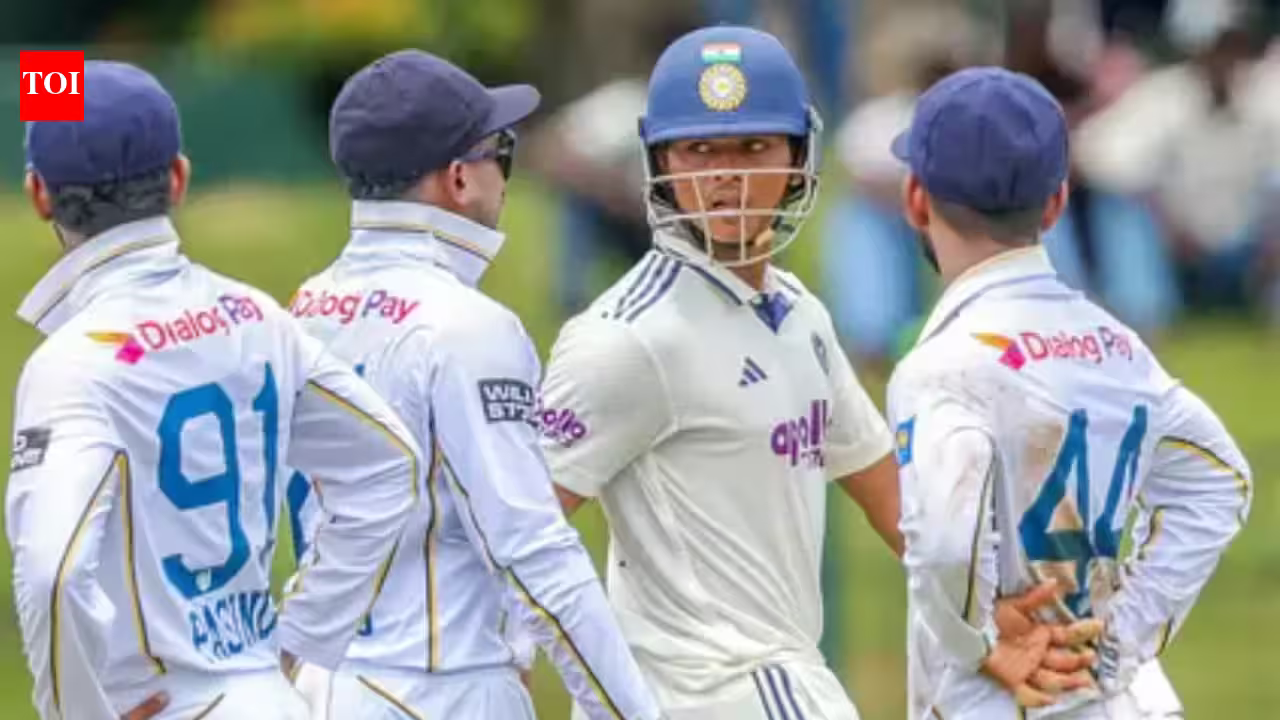
Tensions that simmered beneath the surface during India’s tour of Sri Lanka have finally reached a boiling point in the public discourse, as details emerge surrounding the fiery clash between India’s explosive opener Yashasvi Jaiswal and Sri Lankan pacer Asitha Fernando. Nearly a month after the incident occurred during the second Test in Colombo, the curtain has been pulled back on what truly transpired in the heat of the moment, courtesy of Indian wicketkeeper-batter Dhruv Jurel.
The encounter, which occurred during the opening session of Day 1, remains one of the most discussed incidents of the series. Jaiswal, who had been timing the ball with menacing precision, was cruising on 45, having dismantled Fernando for three consecutive boundaries in the 17th over. However, the momentum shifted on the final delivery of that over when Fernando cleaned up the Indian star. What followed was a volatile departure that required the intervention of both the Sri Lankan captain and fellow teammates to prevent a full-scale physical altercation.
The Flashpoint: Verbal Abuse Behind the Send-off
For weeks, cricket fans and pundits were left to speculate about the exact nature of the exchange. While televised replays clearly showed Jaiswal stopping in his tracks and heading back to confront Fernando, the audio remained obscured by the roar of the crowd. Speaking on a podcast with former Indian opener Aakash Chopra, Dhruv Jurel, who shares a close bond with Jaiswal through their shared ties at the Rajasthan Royals, provided a definitive account of the provocation.
According to Jurel, the narrative that Jaiswal simply reacted to a spirited celebration is inaccurate. “When he got out, he was quietly walking back to the dressing room,” Jurel explained. “He didn’t say anything. If you look at the footage, Jaiswal immediately turned around. The Sri Lankan pacer was abusing him. Jaiswal told me that he was abusing him nonstop.”
Jurel’s testimony clarifies that Jaiswal, often viewed as a composed and focused athlete, was not taking issue with the standard displays of professional aggression inherent in Test cricket. Instead, the young opener drew a firm line at the personal nature of the verbal barrage. “Jaiswal told him, ‘It’s okay. You took my wicket, you can show normal aggression, but you can’t abuse me,’” Jurel added, detailing the confrontation that forced umpires and players to mediate.
The Character of the Combatant
The incident has sparked a broader conversation about Jaiswal’s temperament on the international stage. As a young player who has risen through the ranks with immense pressure on his shoulders, Jaiswal has cultivated a reputation for being an unflappable force at the crease. Jurel, however, is quick to point out that this outward calm is a result of intense concentration, not a lack of competitive spirit.
When asked by Chopra if Jaiswal is essentially a “feisty” competitor who refuses to be bullied, Jurel did not mince his words. “100 per cent,” Jurel confirmed. “He will never start it; I have never seen him do that. He is always in the zone; he is always thinking about his batting. But if you provoke us, we will also return it.”
This insight into the Indian dressing room culture suggests that while the current generation of Indian players is committed to professional standards, they are no longer willing to serve as passive targets for opposition sledging. Jaiswal, in particular, has become the archetype of the modern Indian cricketer: technically refined, aggressive in his stroke play, and fiercely protective of his dignity when faced with hostility.
ICC Sanctions and the Aftermath
The immediate fallout of the clash saw the International Cricket Council (ICC) step in. Both Jaiswal and Fernando were handed sanctions for breaches of the ICC Code of Conduct. While the match officials were quick to restore order, the incident served as a stark reminder of the underlying intensity that characterizes the modern rivalry between India and Sri Lanka.
For Fernando, the incident became a black mark on an otherwise standout spell of bowling. For Jaiswal, it was a baptism by fire in the unforgiving arena of Test cricket, proving that he is not just capable of handling the leather, but also the ego-clashes that come with elite-level sport.
As both teams look toward future series, the events in Colombo serve as a cautionary tale for bowlers testing the temper of the next generation of Indian batters. Jaiswal may be the man who stays in his lane, but as Jurel’s revelations confirm, he is clearly a man who refuses to be pushed off the road. The cricket world will undoubtedly be watching closely the next time these two face off, waiting to see if the lessons learned in Colombo have truly been digested by both parties.
Disclaimer: This content is auto-generated for informational purposes only.
Source: Read Original News