








The Ghost of Controversies Past: Why ‘Sandiyar’ is Igniting Old Fires in Tamil Cinema
The landscape of Tamil cinema has always been a battleground where art, caste politics, and regional sentiment collide. Few figures are as familiar with this turbulent terrain as Kamal Haasan. Yet, even for an industry veteran who has weathered decades of protests and ideological pushback, the resurgence of the “Sandiyar” title controversy feels like a journey back in time—a glitch in the cinematic matrix that refuses to stay buried.
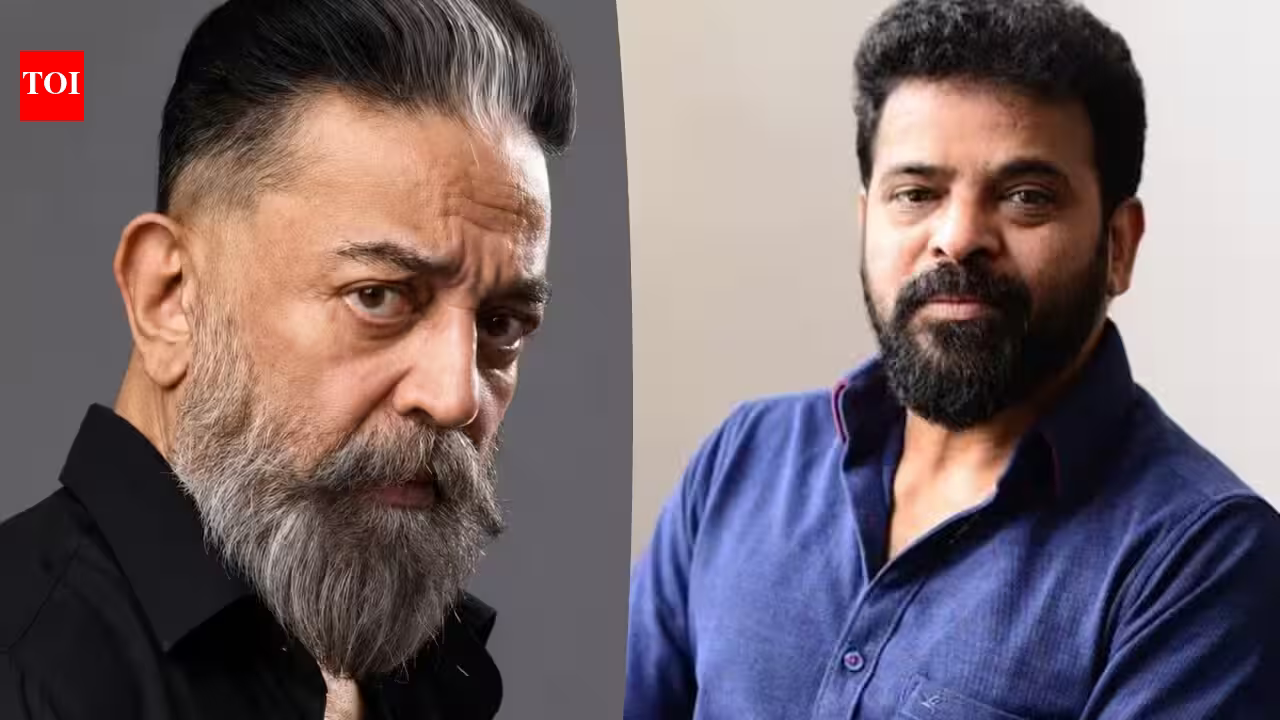
With the announcement that Kamal Haasan’s latest production venture—helmed by the visionary SU Arun Kumar—will carry the title Sandiyar, the ghosts of 2004 have been summoned back to the forefront of public discourse. Leading the charge against the title once again is New Tamil Nadu (Puthiya Tamilagam) leader Dr. Krishnasamy, whose vehement opposition has prompted a sharp, unfiltered rebuke from none other than director and producer Ameer.
A Legacy of Tension and the Return of a Scorned Title
To understand the weight of this current standoff, one must look back twenty-two years. In the early 2000s, Kamal Haasan’s Virumaandi was originally conceptualized under the name Sandiyar. The title, which roughly translates to a local “tough guy” or a neighborhood rogue, became an immediate lightning rod for criticism. Dr. Krishnasamy, citing potential for caste-based unrest and social disharmony, led a fierce campaign against the nomenclature.
Ultimately, bowing to the pressure and, perhaps, recognizing the futility of an artistic battle fought on political ground, Haasan conceded. The film was renamed Virumaandi. It went on to become a masterpiece of Tamil cinema, a gritty, nonlinear exploration of crime and punishment that secured its place in the pantheon of classics. But while the film survived, the original title remained a point of contention—a name that, until now, seemed consigned to the annals of “what could have been.” By reviving the title, Haasan has effectively poked a sleeping bear, forcing the industry to reckon with the same societal sensitivities that crippled the project’s original vision over two decades ago.
Director Ameer Breaks the Silence: “Stop This Politics”
The latest escalation hasn’t gone unchallenged. Director Ameer, known for his own brand of stark, realistic filmmaking, has emerged as a vocal defender of creative liberty. His reaction to Dr. Krishnasamy’s recent threats—which included warnings that the shooting would be physically obstructed and that the film would incite riots in the southern districts—was nothing short of scathing.
Ameer’s message was a clarion call for the end of a weary tradition. “Why is Dr. Krishnasamy trying to threaten people?” Ameer questioned in a social media outburst that has since gone viral. “How many more years are you going to continue this kind of politics? Enough. Please stop it.”
For Ameer, the issue is not just about a title; it is about the recurring pattern of using film sets as political leverage. By threatening to halt production, critics are essentially weaponizing fear to dictate creative choices. Ameer’s intervention shifts the narrative from one of “caste sensitivity” to one of “creative freedom,” highlighting the exhaustion many in the industry feel when faced with the constant demand to sanitize titles to appease political agendas.
The Collision of Artistic Vision and Social Vigilance
At the heart of this storm is the question of whether a title is a mere sequence of words or an inherent threat to peace. Proponents of the title argue that Sandiyar is a colloquialism for a rugged rural character, devoid of any specific caste allegiance, and that the audience’s intelligence is underestimated when such tags are labeled as incendiary. Conversely, political leaders like Dr. Krishnasamy argue that certain regions of Tamil Nadu are perpetually on a knife’s edge, and that popular media shouldn’t be permitted to stir the pot, even inadvertently.
This cycle of censorship creates a chilling effect on filmmakers. When a veteran filmmaker like Kamal Haasan—who commands immense respect and carries a massive box-office draw—is forced to justify a title, it sends a message to younger directors that the cost of creative expression is high. The industry finds itself trapped: continue to accommodate the whims of political gatekeepers, or stand firm and risk a law-and-order crisis that could derail millions of dollars in production costs.
Behind the Lens: The Hype for the SU Arun Kumar Project
Beyond the noise of the protests lies a film that, by all accounts, promises to be a powerhouse of craft. The collaboration between Kamal Haasan and director SU Arun Kumar is one of the most anticipated pairings in recent memory. Kumar, having cemented his reputation for gripping, grounded storytelling with films like Sethupathi, Chithha, and Veera Dheera Sooran, is seen as the perfect steward for a film that demands both intensity and nuance.
The technical pedigree of the project is equally impressive. With the musical genius of Anirudh Ravichander attached to the project and the pulse-pounding stunt choreography of the Anbariv brothers, the film is poised to be an visceral experience.
However, as the production progresses, the question looms: will the title remain? Raaj Kamal Films International has kept its cards close to its chest, opting for silence over public sparring. In the world of high-stakes cinema, this is a calculated risk. A title change would satisfy critics but might be seen as a retreat; holding the line invites a potential public relations nightmare.
The Uncertain Horizon for Tamil Cinema
As the industry watches, the Sandiyar row serves as a reminder that in Tamil Nadu, a film is never just a film. It is a social document, a political lightning rod, and a symbol of power. While the makers continue to film, the industry remains in a state of suspense.
Will this version of Sandiyar face the same fate as its predecessor, or will it signal a turning point where cinema finally asserts its independence from regional political pressures? For now, the audience is caught in the middle, waiting for a release date that feels as far away as ever. The cameras are rolling, but the shadow of 2004 still looms large, proving that in the world of Tamil cinema, the past is never truly dead—in fact, it’s often in the title.
Disclaimer: This content is auto-generated for informational purposes only.
Source: Read Original News