







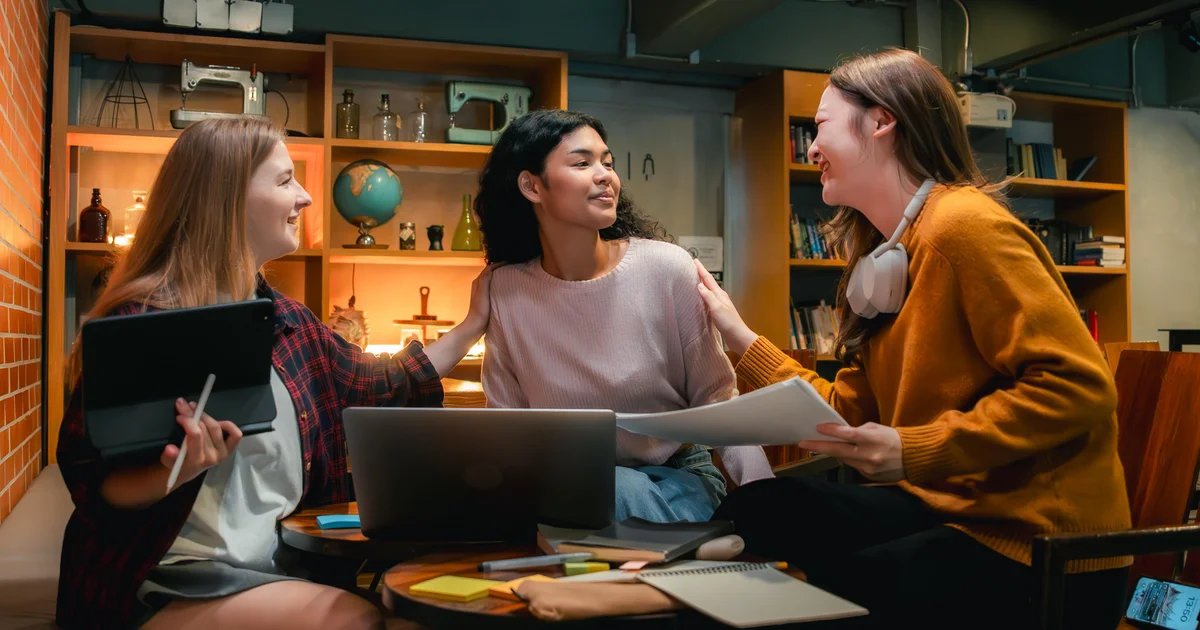
The landscape of American entrepreneurship is undergoing a profound transformation as Generation Z looks beyond traditional corporate career paths. A wave of collegiate founders is leveraging artificial intelligence to launch businesses directly from their dorm rooms, tackling real-world problems ranging from agricultural efficiency to life-saving medical diagnostics. This surge in innovation is being accelerated by “America’s Startup,” a high-profile competition held under the banner of the America250 commission.
## Gen Z and the AI-Native Advantage
Rosie Rios, the chair of America250 and a former U.S. Treasury Secretary, believes we are witnessing a pivotal shift in how the next generation enters the workforce. As the first cohort of “AI-native” workers, these young entrepreneurs are bypassing the technical barriers that once hindered startups. According to Rios, AI serves as an equalizer, allowing founders to manage complex business functions like content creation, bookkeeping, and operational analysis as “solopreneurs.”
Recent data from the Bank of America Institute supports this observation, noting that Gen Z has recently surpassed all other age groups in the growth of new business applications. For these students, technology is not merely a tool for productivity; it is an foundational element of their business models, enabling them to operate with minimal overhead and high agility.
## Tech-Driven Solutions for Global Challenges
The diversity of startups participating in the America’s Startup competition highlights the practical applications of AI in specialized sectors. For instance, Kayan Shah, a college sophomore and co-founder of Graft Systems, is using machine learning to revolutionize viticulture. By analyzing environmental variables such as sunlight and local climate patterns against high-resolution imagery, his platform helps wine growers predict crop yields with greater accuracy. This technology comes at a crucial time for the industry, which is currently grappling with shifting market trends and a historic decline in alcohol consumption.
In the healthcare sector, innovators are similarly utilizing machine learning to address critical public health concerns. Kristina Schiffman, founder of UV Sense, has developed a platform that allows users to monitor skin health by analyzing images of moles and skin irregularities. By providing an accessible way to track changes in shape, size, and color, the app empowers users to seek professional dermatological consultations sooner, potentially leading to earlier cancer detection. Other participants are moving toward sustainable materials, such as a team developing seaweed-based fire suppressants designed to replace harmful “forever chemicals” (PFAS).
## Bridging the Gap Between Campus and Commerce
The America’s Startup competition is more than just a contest; it serves as a bridge between academic ideation and real-world investment. The initiative offers a total of $1 million in prizes, with individual teams eligible for up to $50,000. Perhaps more valuable than the capital is the mentorship and networking opportunities provided by an elite investor council, which includes heavyweights such as Apple co-founder Steve Wozniak and Sarah Friar of OpenAI.
By providing a platform for these “idea machines,” America250 is highlighting how AI is lowering the barrier to entry for the next generation of founders. As these students transition from dorm rooms to the professional market, they are proving that they are not intimidated by the rapid pace of technological change. Instead, they are integrating AI into the very fabric of their businesses, ensuring that the next 250 years of American innovation will be defined by digital fluency and proactive problem-solving. For aspiring entrepreneurs, the path to building the next major tech success story is becoming more accessible, with the application window for the current competition remaining open through early October.
Disclaimer: This content is auto-generated for informational purposes only.
Source: Read Original News