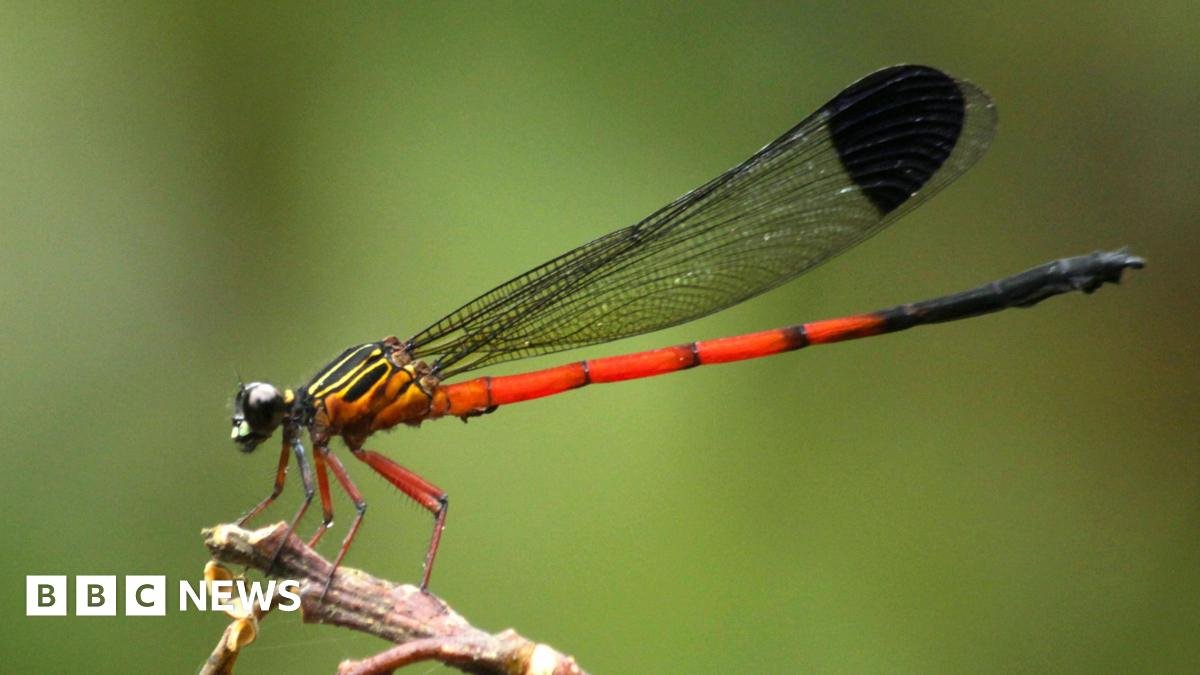
“Dragonflies and damselflies are good indicators of the health of a region. Consequently, when their numbers drop, it could signal the potential degradation of an ecosystem,” Koparde says.
The Western Ghats – a Unesco World Heritage Site – is a 1,600km-long mountain range that stretches along India’s western coast. It is one of India’s most important wetlands and home to at least 325 globally-threatened species, external and more than 30% of India’s plant and animal species.
It is also especially rich in endemic or local species. These species have a unique evolutionary journey and play important roles in their habitats. For example, they might help regulate the climate of an area or maintain biodiversity through pollination.
Unfortunately, the Western Ghats is also under threat. In its 2025 report, the International Union for Conservation of Nature (IUCN) rated the region as being of “significant concern”, external.
“Urbanisation together with agricultural expansion, livestock grazing, infrastructure development (such as windmills and dams), invasive species and mining continue to pose serious threats [to the region],” the report noted.
An alarming study published in 2025, external found that a population of rare galaxy frogs disappeared from the Western Ghats after photographers trampled over their delicate forest floor habitat.
A 2024 study, external found that farming practices in the Western Ghats were threatening frog species in the area while a 2023 survey, external of birds in the region noted a 75% decline in 12 bird species that were endemic to the Western Ghats.