









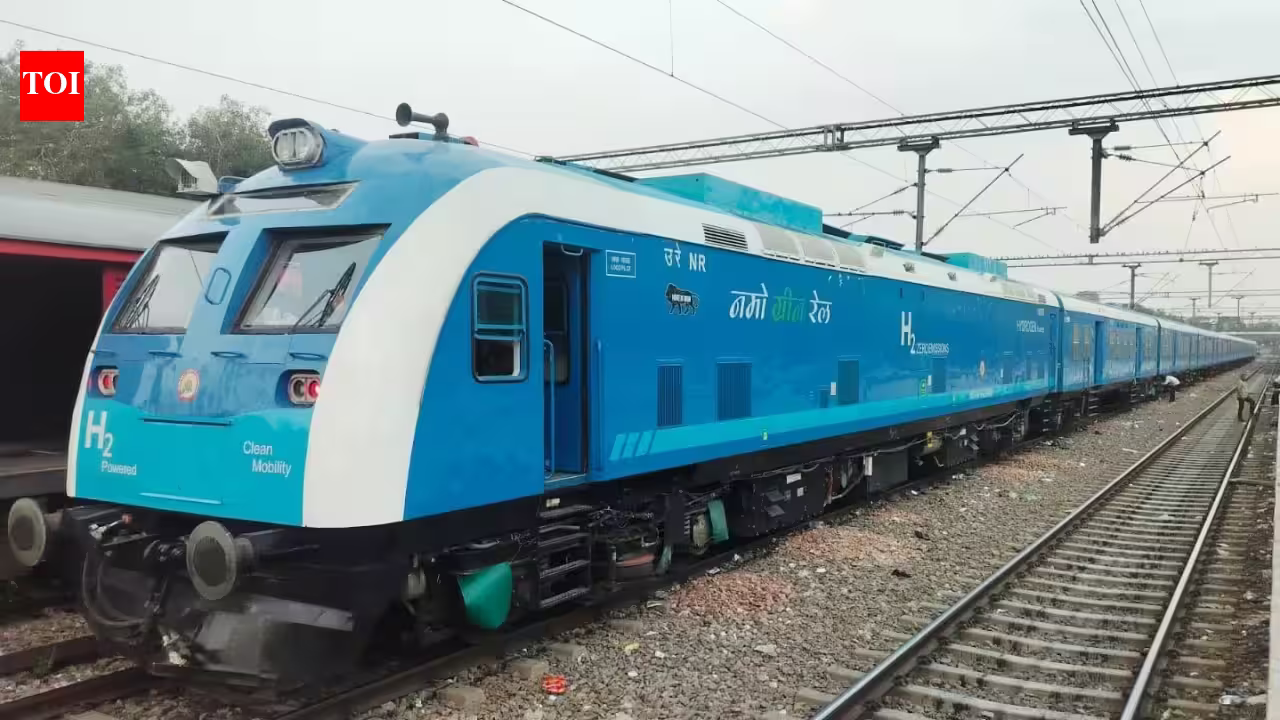
India’s Hydrogen-Powered Train Marks New Milestone in Sustainable Rail Travel
India has officially stepped into a new era of sustainable transportation with the successful deployment of its first hydrogen-powered train. Since its inauguration by Prime Minister Narendra Modi last month, the train has already covered over 6,000 kilometers, marking a significant achievement for the nation’s green energy goals.
According to reports from Indian Railways, the train is currently operating on the Jind-Sonipat route in Haryana. Boasting a robust 3,200 HP propulsion system, it stands as one of the most powerful hydrogen-powered trainsets globally.
A Leader in Green Engineering
While other nations like Germany and China have already experimented with hydrogen technology, India’s project distinguishes itself through sheer scale. Most hydrogen trains worldwide are limited to two or three coaches; in contrast, India’s version features a 10-coach configuration capable of accommodating 2,600 passengers.
The project is a testament to the “Make in India” initiative, with its design, engineering, and integration carried out entirely by domestic teams. The Research Designs and Standards Organisation (RDSO), the Integral Coach Factory (ICF), and Medha Servo Drives collaborated to bring the project to fruition.
Environmental Impact and Performance
The primary advantage of this technology is its environmental footprint. By using hydrogen fuel cells that combine hydrogen with oxygen, the train generates electricity for traction, with water vapour and heat as the only by-products.
The shift from traditional diesel-powered DEMU trains to hydrogen has already yielded measurable environmental benefits. Estimates indicate that the train has prevented the emission of approximately 36,444 kg (nearly 36 tonnes) of CO2 equivalent, based on the calculation that a conventional DEMU produces roughly 6.074 kg of emissions per kilometer.
Operating at a maximum speed of 75 kmph (with a design capability of 110 kmph), the train offers a clean, quiet, and efficient alternative to diesel engines.
Future Potential for Remote Routes
While 99% of India’s railway network is already electrified, hydrogen trains serve as a critical solution for non-electrified, remote, or heritage routes where overhead infrastructure is difficult to install. The success on the Jind-Sonipat line suggests that these trains could eventually be deployed on scenic or challenging terrains, such as the Kalka-Shimla railway, serving as a sustainable mobility alternative without compromising on heritage.
Accessible Green Technology
Despite the advanced nature of the technology, Indian Railways has prioritized accessibility. Fares for the hydrogen-powered service remain in line with ordinary DEMU tickets, costing between Rs 10 and Rs 25. This ensures that the transition to green energy does not place an additional financial burden on daily commuters.
Supported by an indigenously developed hydrogen storage and refuelling facility at Jind, this project is a pivotal step in India’s broader mission to achieve net-zero carbon emissions by 2030, proving that modern engineering can effectively balance industrial growth with environmental stewardship.