








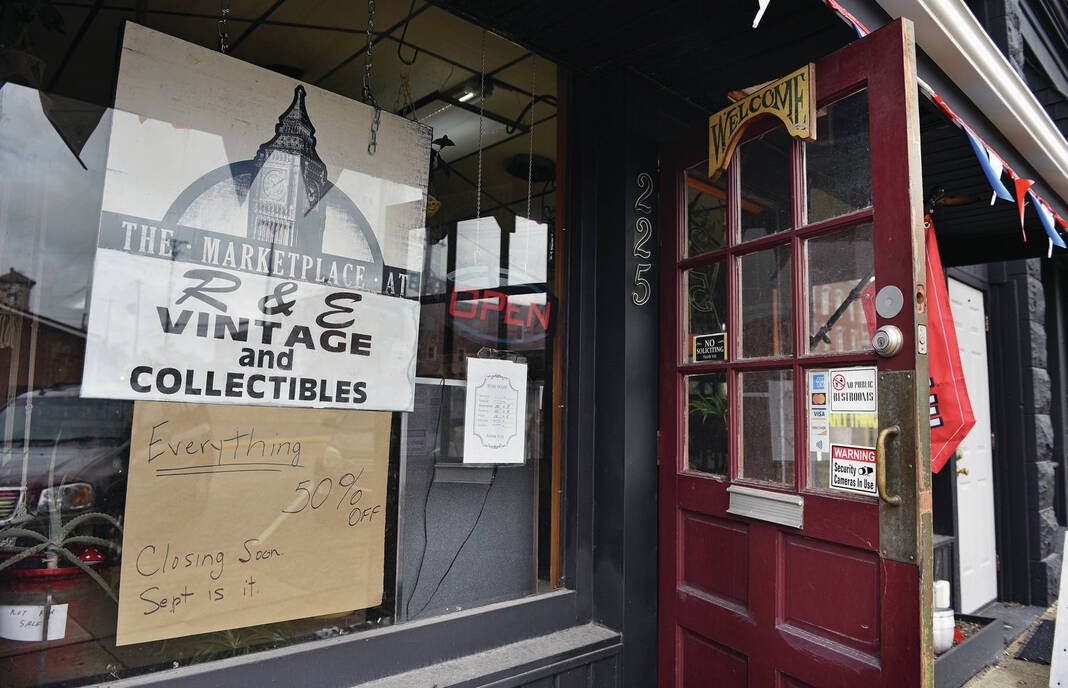
The downtown Sidney retail landscape is undergoing a notable shift as R&E Vintage and Collectables, a longtime fixture located at 225 E. Court St., prepares to permanently close its doors. As the business enters its final month of operations, the storefront has become adorned with signage signaling a “going out of business” event, with deep discounts of 50% off storewide. The message to the local community is clear: “September is it.”
This closure serves as a poignant reminder of the broader challenges currently facing small, brick-and-mortar retailers in an era increasingly dominated by rapid digital transformation and artificial intelligence-driven marketplaces.
The Digital Shift and the Retail Landscape
For independent vintage shops, the struggle to compete with global e-commerce giants has intensified as platforms like Google Shopping integrate advanced AI to streamline the consumer experience. Today, a collector searching for rare items is no longer limited to local inventories; they are served by sophisticated algorithms that instantly aggregate listings from across the globe.
Google’s recent updates to its search experience, including the integration of Generative AI (SGE), have fundamentally changed how consumers discover products. When a user searches for specific collectibles, Google’s AI now synthesizes information, compares prices, and highlights verified sellers, making it significantly harder for local boutiques to gain visibility without a robust digital footprint. As foot traffic in small-town corridors fluctuates, businesses that rely solely on physical storefronts often find themselves at a disadvantage against the logistical dominance of tech-enabled retail ecosystems.
AI’s Growing Influence on Small Business Discovery
The decline of traditional storefronts like R&E Vintage is often linked to the “discovery gap.” In the past, shoppers relied on walking through downtown districts to see what was new. Today, discovery is largely filtered through Google Maps and Google Business Profile updates.
Tech industry experts note that the retailers most likely to survive this transition are those leveraging Google’s merchant tools to bridge the gap between physical and digital. By utilizing AI-powered inventory management systems and Google’s “See What’s In Store” features, some smaller shops have managed to remain relevant. However, for many vintage and collectibles businesses, the labor-intensive nature of digitizing thousands of unique, one-off items remains a significant barrier to entry, leaving them vulnerable to market shifts.
Adapting to a Post-Storefront Future
As R&E Vintage and Collectables clears its inventory, the local community is left reflecting on the value of specialized retail spaces. While the digital economy offers convenience, the loss of a physical shop removes the tactile experience of browsing unique, historical items—an experience that AI has yet to fully replicate.
Moving forward, the retail industry is expected to continue its lean toward “phygital” models, where physical locations act more as showrooms for digital catalogs. Companies like Google are doubling down on this trend, constantly refining their local search algorithms to keep pace with the decline of legacy businesses. For the residents of Sidney, the closing of this Court Street location marks the end of an era, highlighting the ongoing tension between historic community shopping habits and the relentless pace of technological advancement. Whether the space will be filled by a business that bridges this divide remains to be seen, but the message from R&E Vintage is a sobering indicator of how the winds of digital change are reshaping the American downtown.
Disclaimer: This content is auto-generated for informational purposes only.
Source: Read Original News