







- Indonesia’s largest environmental group, Walhi, has officially intervened in an environmental lawsuit filed by the government against major pulpwood producer PT Toba Pulp Lestari.
- Walhi says the lawsuit overlooks key ecological impacts, such as critical orangutan and tiger habitats, that should also be addressed through court-ordered restoration.
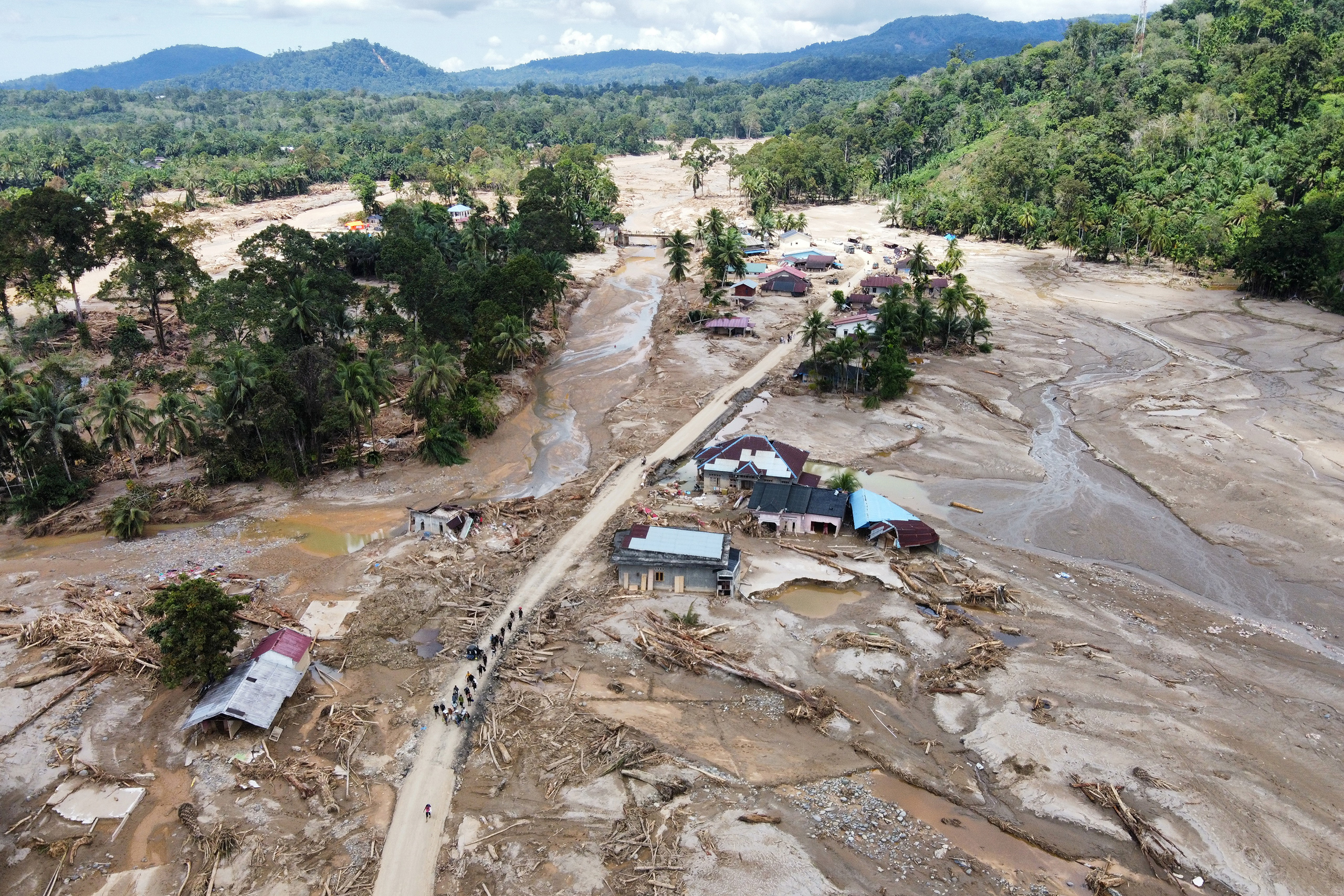
- TPL is one of dozens of companies whose forest-use licenses were revoked after their forest-clearing activities were blamed for exacerbating floods and landslides during torrential rains in late November 2025.
- Walhi is asking that any funds recovered from the lawsuit be directed toward environmental restoration activities on the ground.
JAKARTA — Indonesia’s oldest and largest environmental group, Walhi, has formally intervened in an environmental lawsuit filed by the government against a major logging company, arguing the government’s case fails to account for the full extent of ecological damage allegedly caused by the company’s operations.
Walhi filed the intervention on May 20, 2026, in the Medan District Court, where the environment ministry is seeking 3.89 trillion rupiah ($214 million) in damages and environmental restoration measures against pulpwood plantation operator PT Toba Pulp Lestari (TPL).
The environmental group is not arguing that the ministry’s damages claim is too small. Instead, it says the lawsuit overlooks key ecological impacts, such as critical orangutan and tiger habitats, that should also be addressed through court-ordered restoration.
In January 2026, the environment ministry filed lawsuits against six companies over alleged damage to watersheds in North Sumatra province, which the government says contributed to the floods and landslides that struck the region in late November 2025 following cyclone-driven storms across Sumatra.
The government also announced the revocation of the permits for TPL and 27 other companies in January 2026.
TPL later disclosed to investors that it had received a forestry ministry decree dated Jan. 26 formally revoking its forest-use license, and that it had subsequently ceased forest-use activities within its concession.
The floods and landslides struck three provinces on the island of Sumatra, including North Sumatra, and claimed the lives of more than 1,200 people.
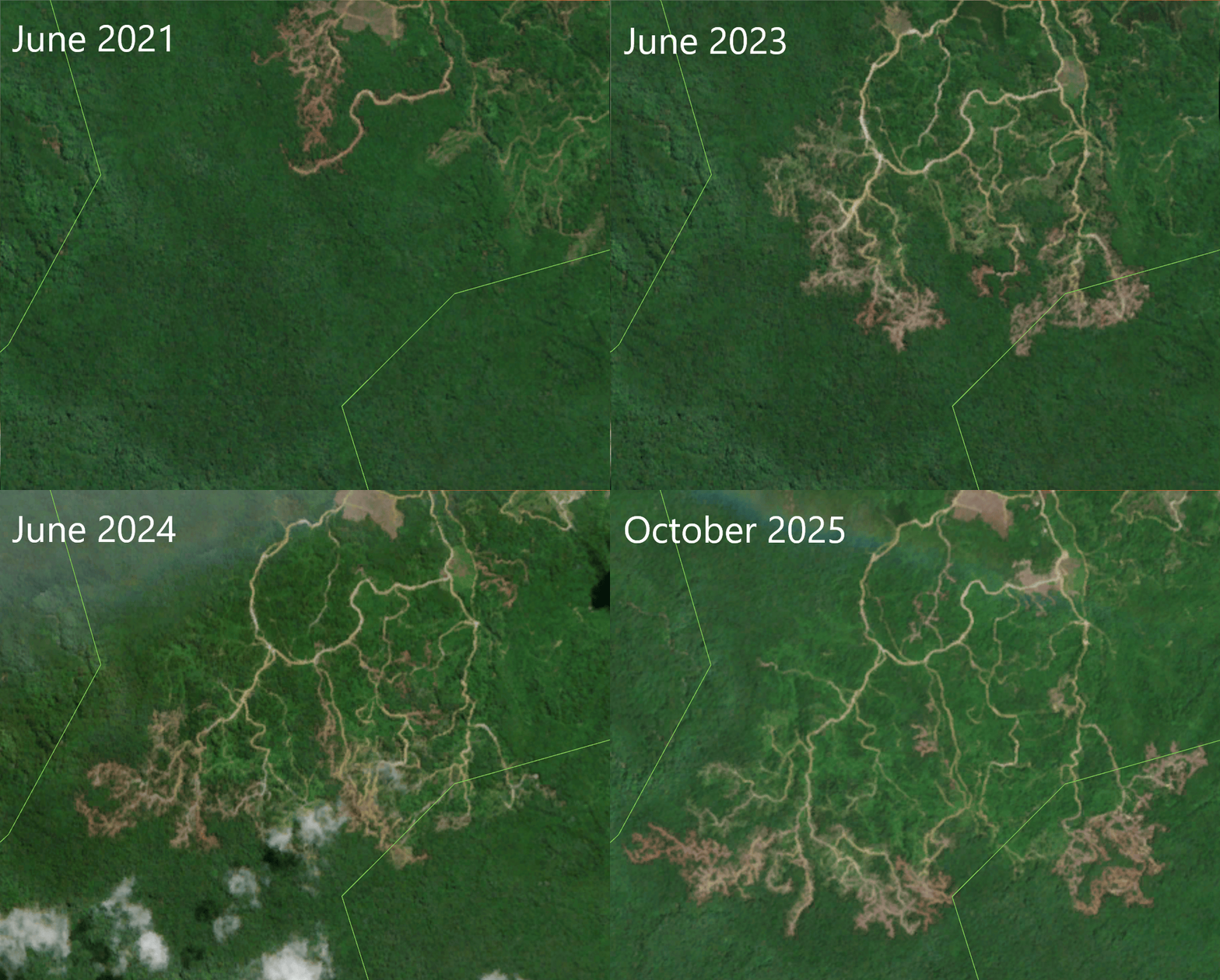
In its lawsuit against TPL, the environment ministry identified 1,261.5 hectares (3,117 acres) of open land within the company’s former concession area in North Sumatra. The ministry argues the site required restoration of both abiotic ecosystem components, such as soil and water functions, and biotic components, including vegetation, fauna and microorganisms.
The ministry is seeking the 3.89 trillion rupiah in material damages and asking the court to order the company to restore the site.
The requested restoration measures include the construction of cross-drainage systems, retention ponds and infiltration wells to reduce runoff and erosion, along with soil rehabilitation measures such as fertilizer and compost application.
The ministry also seeks the recovery of vegetation through ground-cover planting, mulching and tree planting. Tree planting is specifically required in protected areas, along riverbanks, and on slopes with a gradient steeper than 40%.

Under the ministry’s proposal, TPL would be required to submit a restoration plan and complete the work within three years of its approval.
The ministry is pursuing the case under the principle of strict liability, a legal doctrine that can hold a party responsible for environmental damage regardless of intent or negligence. Under this approach, the ministry does not need to prove negligence or malicious intent. Instead, it must establish that environmental damage occurred and that the damage is linked to TPL’s activities.
TPL is a publicly listed Indonesian company originally founded by Sukanto Tanoto, the billionaire founder of agribusiness conglomerate Royal Golden Eagle (RGE), and is now majority-owned by a Hong Kong-based investment firm.
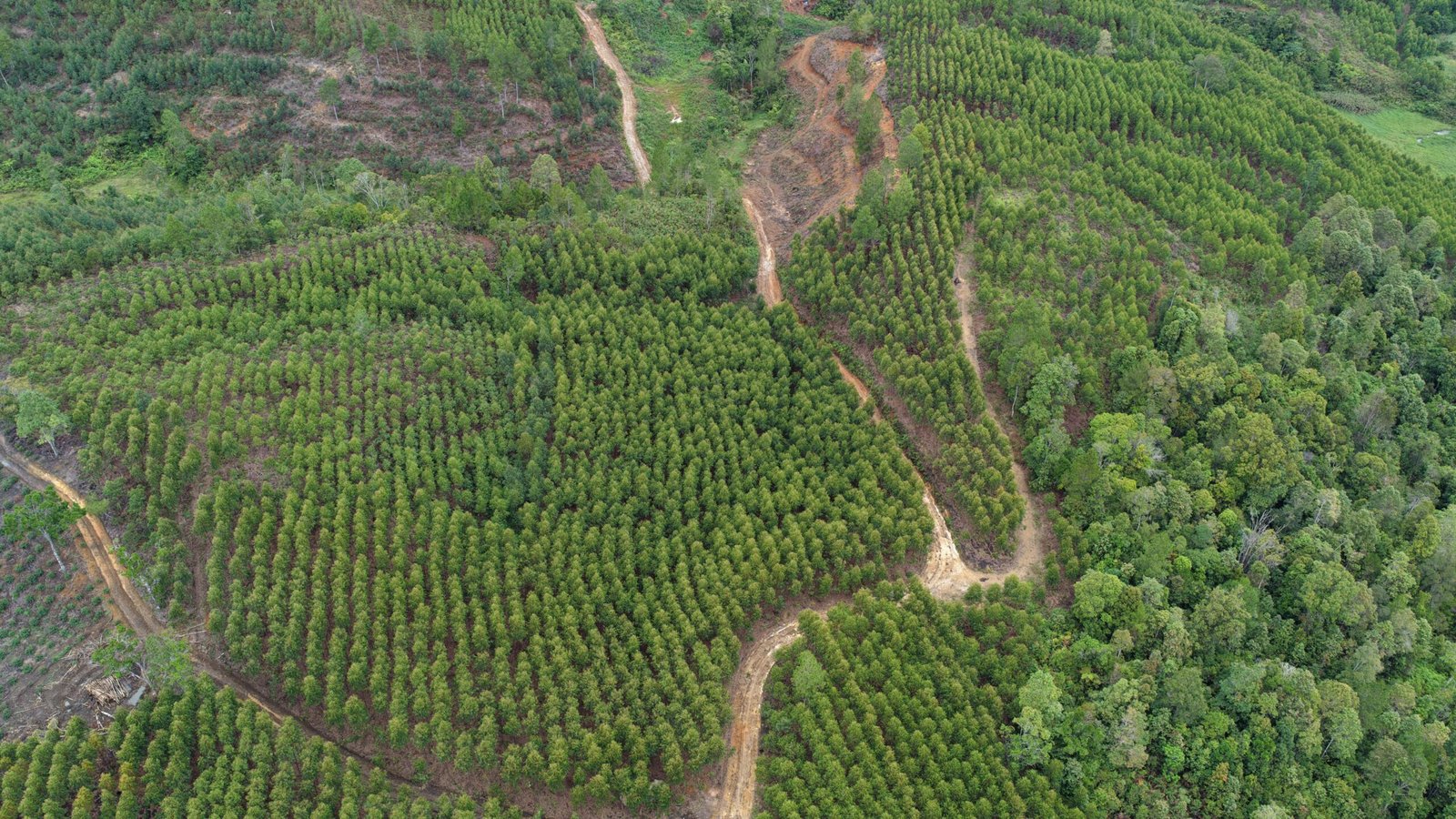
For decades, TPL has been at the center of controversy over deforestation, land-use change, and conflicts with Indigenous and local communities, who have long accused the company of encroaching on customary lands and contributing to environmental degradation linked to plantation expansion and logging.
Mongabay has reached out to TPL for comment but the company hasn’t responded as of the publication of this story.
Company’s environmental damage is expansive, lawsuit says
While the lawsuit is among the larger environmental damage claims brought by Indonesian authorities in recent years, Walhi argues that key ecological impacts have been left out of the case.
The organization says TPL’s impacts extend beyond the 1,261.5 hectares that it says are located in the upper Batang Toru watershed.
According to Walhi, the company’s activities have also contributed to downstream ecological damage, wildlife habitat loss, and degradation in other watersheds not covered by the ministry’s lawsuit.
Walhi identified 1,607 hectares (3,971 acres) of open land in TPL’s former concession overlapping with the Sibundong watershed that it says had been left exposed for around 10 months before the November 2025 disaster.
The group estimates that restoring the 1,607-hectare area would cost 142.36 billion rupiah ($7.8 million).
Walhi also argues the ministry’s lawsuit fails to include restoration of habitat used by critically endangered species affected by TPL’s operations, including the Tapanuli orangutan and the Sumatran tiger.
Damage impacts habitats for orangutans and tigers
The Batang Toru watershed and surrounding ecosystem are a biodiversity stronghold that hosts one of the three known populations of the Tapanuli orangutan (Pongo tapanuliensis), along with other rare species including the Sumatran tiger (Panthera tigris sumatrae) and Malayan tapir (Tapirus indicus).
When the Tapanuli orangutan was first described by scientists in 2017, it was already considered the world’s most threatened great ape. With its frizzy, cinnamon-colored hair and broad face, the species represents the oldest surviving orangutan lineage, descended from the first ancestral apes believed to have reached Sumatra more than 3 million years ago.
Over the last three generations, its population has declined by an estimated 83%, driven by habitat loss, hunting, and human-wildlife conflict. Today, only an estimated 577 to 760 individuals remain in fragmented forests in North Sumatra, with Batang Toru hosting the largest remaining population of the apes. It’s listed as critically endangered by the IUCN, the global wildlife conservation authority.
During the disasters in late November 2025, landslides struck the western side of the Batang Toru ecosystem. Experts estimated that 58 Tapanuli orangutans died as a result — about 11% of the total living in this region, or 7% of the estimated overall population remaining in the wild.
A group of scientists described the disaster as an “extinction-level disturbance” for the species, warning that even small losses can have severe consequences because female orangutans reproduce only once every six to nine years.
Walhi estimates that restoring Tapanuli orangutan habitat would cost 1.396 trillion rupiah ($76.8 million), while restoring Sumatran tiger corridors would require another 1.085 trillion rupiah ($59.7 million).
“We believe the ministry’s lawsuit is insufficient to restore the ecosystem, especially considering that these two major watersheds [Batang Toru and Sibundong] pass through critical ecosystems that serve as orangutan habitat in Batang Toru,” said Rianda Purba, director of Walhi’s North Sumatra chapter. “The Batang Toru River, which functions as a corridor for orangutans and Sumatran tigers, has been devastated.”

Walhi aims to strengthen the lawsuit
Walhi’s national executive director, Boy Jerry Even Sembiring, said the ministry should not view the intervention as an attempt to undermine its case.
Instead, he said, the intervention is intended to strengthen the lawsuit by seeking restoration of additional areas that Walhi says were omitted, including orangutan habitat, tiger corridors, and parts of the Sibundong watershed.
Walhi is also seeking the seizure of TPL’s assets as collateral.
Boy said such a measure is necessary to ensure that court-ordered payments are ultimately collected. He said environmental judgments in Indonesia often go unenforced, with around 19 trillion rupiah ($1 billion) in environmental penalties and compensation remaining uncollected.
Boy said any asset seizure should not be limited to TPL alone, saying the company has been publicly presented as an affiliate of the RGE group, specifically part of the conglomerate’s pulpwood arm, APRIL.
TPL underwent a change in ownership last year. However, it remains within the scope of the Forest Stewardship Council’s definition of APRIL’s corporate group.
“Whoever the beneficial owners of PT TPL are, they deserve to bear restoration costs,” Boy said.
Walhi is also asking the environmental restoration funds not be deposited into the state treasury, as requested by the ministry in its lawsuit. Instead, Boy said, any funds recovered should be directed toward environmental restoration activities on the ground.
By holding companies accountable for environmental damage, Walhi hopes the case will set an example, according to Puspa Dewy, head of Walhi’s Center for Knowledge Resource Development and Management.
“If corporations are held responsible and required to pay ecosystem restoration costs, it will serve as a warning to other companies,” she said.
Banner image: A baby Tapanuli orangutan looking for food in the Batang Toru forest, North Sumatra, Indonesia, in September 2018. Image courtesy of Prayugo Utomo/Wikimedia Commons.
FEEDBACK: Use this form to send a message to the author of this post. If you want to post a public comment, you can do that at the bottom of the page.