








ANTALYA, Turkey — At the U.N. climate summit, COP31, the discourse shifted sharply from carbon emissions to the ecological toll of armed conflict as Turkish President Recep Tayyip Erdogan accused Israel of perpetrating “ecocide” in the Gaza Strip.
Addressing a gathering of world leaders and environmental envoys on Wednesday, Erdogan argued that the environmental degradation in Gaza is a critical, yet overlooked, dimension of the ongoing war. “What has taken place in Gaza is not only a genocide, but it is also an ecocide,” Erdogan stated to applause from the audience.
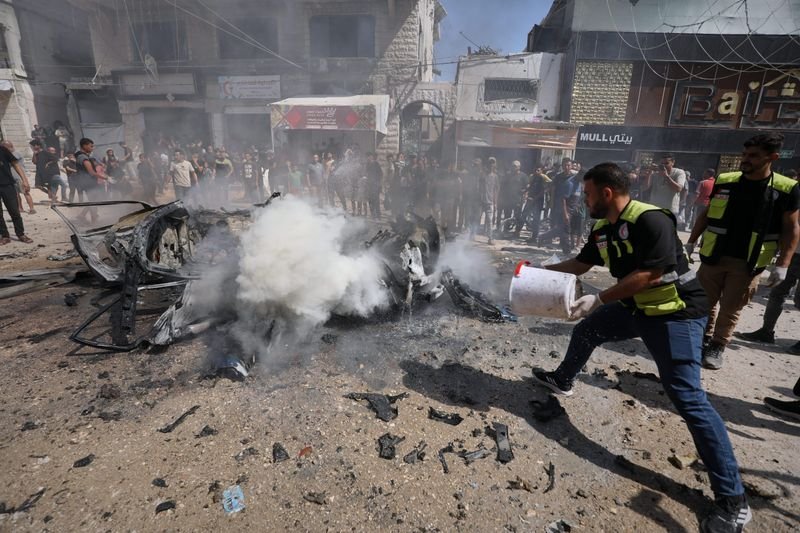
The Turkish leader pointed to the systematic destruction of natural resources and infrastructure, noting that the environmental fallout is compounding the humanitarian crisis. “Centuries-old olive trees have been cut down. The soil and water have been polluted in Gaza, and cities have been turned into enormous piles of rubble,” he said. Erdogan highlighted that this destroyed infrastructure has left displaced populations particularly vulnerable to recent extreme weather, with torrential rain and flooding inundating the makeshift tents and shelters where hundreds of thousands are currently living.
Israel’s Foreign Ministry quickly dismissed the comments, accusing Erdogan of using the international climate forum to promote an “anti-Israel campaign of lies” and reiterating its stance that the conflict is a result of Hamas’s actions. Israel was not represented at the summit.
The environmental assessment provided by international bodies paints a grim picture of the territory’s landscape. A 2025 report from the U.N. Environment Program (UNEP) details the near-total collapse of Gaza’s agricultural and ecological systems. According to the data, remote sensing assessments indicate that by May 2025, over 97% of tree crops, 82% of annual crops, and 95% of shrubland had been damaged or destroyed.
Mohammed Usrof, co-founder of the Palestinian Institute for Climate Strategy, emphasized the long-term implications of these losses. “As of now, our families only have 3% of cropland to use,” Usrof said, warning that failing to address these environmental impacts undermines the future food security and livelihoods of the more than 2 million Palestinians in the territory.
The destruction extends beyond land. The collapse of sewage treatment, waste management, and water distribution systems has created an immediate public health emergency. Marine ecosystems, which historically supported Gaza’s fishing industry, have been contaminated by sewage, solid waste, and munitions.
Ghiwa Nakat, executive director at Greenpeace MENA, underscored that the environmental damage will persist long after the cessation of hostilities. “The environmental damage will not end when the war ends,” Nakat told the Associated Press. She explained that contaminated soil and groundwater, combined with the total collapse of essential infrastructure, threaten to undermine public health and economic recovery for generations.
These disclosures served as a somber backdrop to the formal COP31 talks, where leaders are tasked with establishing concrete frameworks to mitigate the effects of global warming. While the summit aims to address climate-related disasters such as heat waves and floods, the testimony regarding Gaza highlighted the often-ignored intersection between war and environmental catastrophe. As the conflict enters its third year, observers warn that the lasting damage to the land may render parts of the territory uninhabitable, creating a permanent environmental legacy of the war.
Disclaimer: This content is auto-generated for informational purposes only.
Source: Read Original News