






The next phase of the EU Emissions Trading System will determine whether Europe can decarbonise its industry while keeping it in Europe and competitive. As the review of the ETS and the Market Stability Reserve approaches, the real question is not about ambition but about whether the system reflects industrial reality and provides meaningful incentives for transformation.
European aluminium producers are already the most carbon-efficient in the world. Emissions reductions have come from sustained efficiency gains and incremental technological improvements. Today, further progress is constrained not by a lack of effort but by the absence of commercially viable decarbonisation technologies at scale.
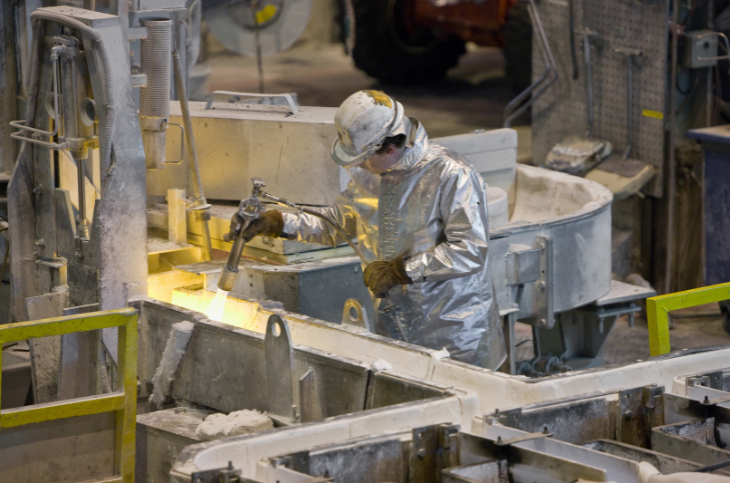
Aluminium production depends on large volumes of electricity or heat generated from fuels. In primary aluminium, most emissions are indirect and linked to electricity, which accounts for around 30-40 per cent of production costs in Europe. In alumina refining, transformation and recycling, emissions are linked to heat generation, where processes rely on natural gas and alternatives are not yet technically or economically viable at scale in the short to mid- term. The ETS has driven industrial decarbonisation but has also burdened European industry with costs our competitors do not bear, leading to aluminium plants shutting down.
Aluminium producers compete and are price takers on global markets. They cannot pass on carbon costs to customers without losing market shares, and do not yet have viable options to significantly reduce emissions beyond current levels. The carbon price, therefore, increases operating costs across the value chain without triggering additional abatement.
Carbon leakage protection is thus essential. Free allocation must be maintained because the CBAM does not provide adequate protection for globally priced, complex commodities like aluminium. Its design leaves significant loopholes – especially regarding the treatment of scrap and the expected increase in raw material costs that European producers will face, while third-country producers will be able to avoid the charge at the border. The phase-out of free allowances for CBAM sectors should not proceed unless CBAM can demonstrably protect against carbon leakage, and, at least in the very short term, a single default-value approach accounting for both pre- and post-consumer aluminium scrap should be applied for the highest-risk countries.
Competitiveness is also shaped by indirect ETS carbon costs embedded in electricity prices. Indirect cost compensation should be extended beyond 2030 and applied more consistently across Member States to avoid distortions within the Single Market.
The pace of emissions reductions set by the Linear Reduction Factor determines how fast the industry is expected to reduce emissions. The current trajectory is based on unrealistic assumptions about the availability of breakthrough technologies that are not materialising. Maintaining the existing trajectory will not accelerate industrial decarbonisation. It will accelerate production cuts. Europe has already lost around half of its primary aluminium capacity over the past two decades. Global production has expanded elsewhere, often with higher emissions intensity. The ETS therefore needs to reflect how industrial transformation actually happens. This requires recalibrating the LRF beyond 2030 to keep the transition to 2050 achievable.
A credible investment case for decarbonisation will depend not only on the ETS price signal, but also on access to affordable low-carbon energy, effective carbon leakage protection, and – especially for aluminium – support for capital-intensive transformation. Timing is critical. Many of the technologies for decarbonisation are still maturing. Companies are facing rising carbon costs now, while we don’t even have any certainty if the means to reduce emissions will become available in the next 10-15 years.
The Industrial Decarbonisation Bank seems promising, but it needs to be designed in a way that truly supports investments in those technologies and the consumption of decarbonised power by electrified industries like aluminium.
Another issue is how ETS benchmarks are defined. These determine how many free allowances installations receive. Today, aluminium recycling and alumina refining are assessed using generic fallback benchmarks based on sectors with very different production conditions, including lower-temperature processes that can rely on biomass. This does not reflect the reality of these processes, which require extremely high and constant heat that cannot be met with biomass or other available low-carbon technologies. As a result, benchmarks are based on technologies that are not technically feasible for the sector, increasing costs without reflecting performance. That is why several EU governments are calling for pausing the planned reduction of the fallback benchmarks between 2026 and 2030 for our industry.
Looking ahead, the ETS revision should fix the data shortcomings of the ETS registry and design dedicated product benchmarks for aluminium recycling and alumina refining after 2030. This exercise must be aligned with Europe’s resilience and strategic autonomy objectives: without alumina and recycling there will be no energy transition or strategic autonomy in Europe.
The Market Stability Reserve is equally unfit for purpose because the system is now moving towards structural scarcity. The MSR risks tightening supply further and amplifying price volatility when the industry needs predictability. Volumes resulting from genuine emissions reductions can be withdrawn from the market alongside those arising from other factors. This weakens the link between the carbon signal and real abatement. The MSR needs to be reworked so that allowances are not removed in a way that undermines industrial investment. The recent proposal to cancel the invalidation clause is a positive step, but these allowances should be reinserted into the market to enable companies to use them for compliance and to stimulate growth.
Finally, given that no viable technology will be available for residual emissions, permanent EU-based carbon removals should be integrated into the EU ETS as a compliance instrument by 2028, alongside international credits. This should be done, however, only if certified with the same robust methodology we have in Europe.
The ETS review is an opportunity to correct course. Decarbonisation will not happen if industrial capacity disappears before the technologies needed to deliver it are available. If production moves outside Europe, global emissions will rise rather than fall. We need now a carbon market in Europe that supports both decarbonisation and industrial resilience.
Emanuele Manigrassi is Director Climate & Energy at European Aluminium