








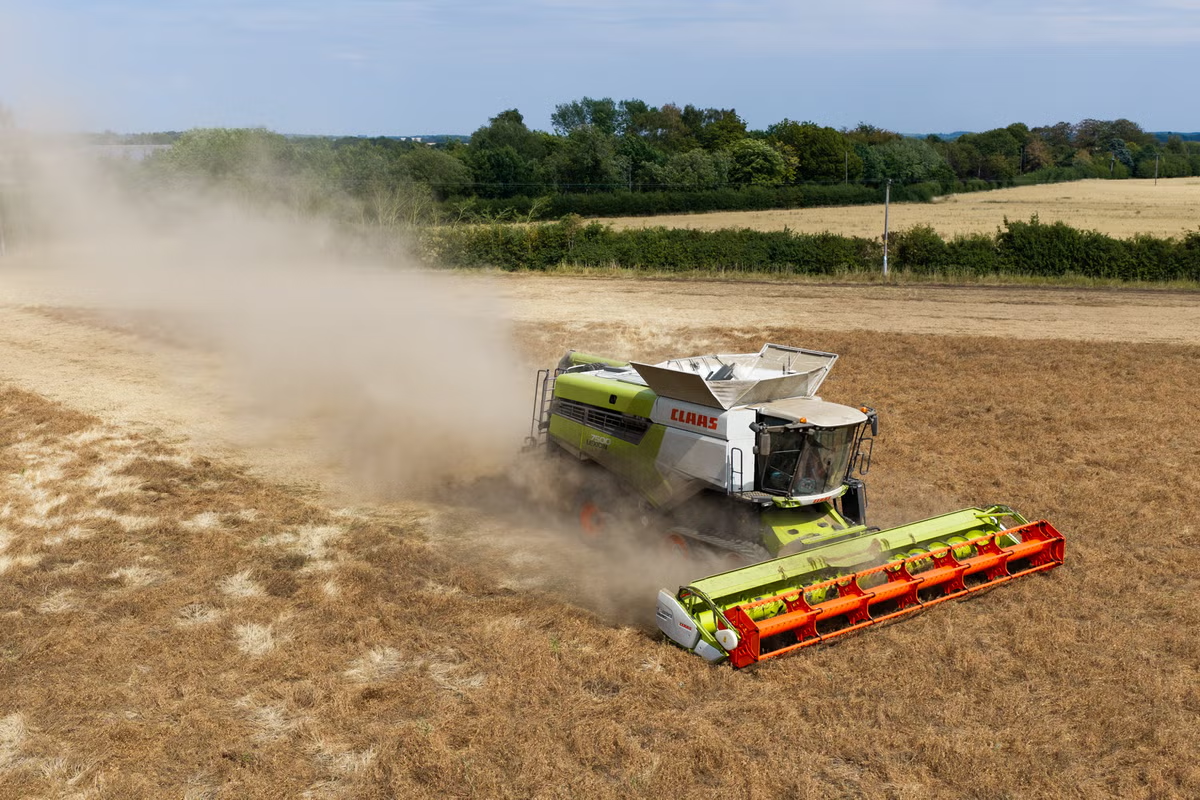
The agricultural sector across the nation is grappling with unprecedented challenges as a summer marked by record-breaking heatwaves and prolonged drought pushes farmers to their absolute limit. The dual impact on crops and livestock threatens not only livelihoods but also the very fabric of the country’s food security. The compounding pressures of escalating fuel and fertiliser costs, coupled with the real and present danger of wildfires and severe water shortages, have plunged many farming enterprises into dire financial straits, leading to urgent pleas for immediate governmental emergency cash support.
A significant hurdle for farmers seeking relief has been the government’s Sustainable Farming Incentive, a program designed to bolster the agricultural sector after the cessation of EU subsidies post-Brexit. This initiative, which offers payments for environmentally sustainable land management, faced an abrupt closure in 2025 due to overwhelming demand. While it was partially reopened in June, its scope was limited to smaller farms under 50 hectares, leaving many larger operations without crucial support.
Calls are growing louder for policy makers, including prominent figures like Andy Burnham, to streamline the bureaucratic processes hindering farmers. Specifically, there’s an urgent need to "cut the red tape" that impedes the construction of essential reservoirs, which would allow for better irrigation of crops and offer a vital defence against the increasing risk of wildfires. Farming organisations have voiced strong criticism, accusing the government of years of "diminishing direct financial support" for the sector, leaving it vulnerable to the current climate crisis.
Martin Lines, an experienced arable farmer in Cambridgeshire and CEO of the Nature Friendly Farming Network, paints a bleak picture of the future. He warns that the profitability outlook for farming over the next five years is "terrible," with smaller family-run businesses struggling intensely to remain viable. Lines revealed to The Independent that the past five years have seen a relentless succession of weather events severely impacting cash flow and crop yields. He emphasized the alarming reality that "climate change is coming quicker and harder than anyone else ever told us."
Lines, who manages his 165-hectare farm with his son, explained the immense mental strain of these challenges. They have been forced to make difficult strategic decisions about land management for the upcoming year, noting that crop cultivation has not been profitable for several years. The core struggle, he highlights, is coping with the sheer unpredictability of weather patterns and the resulting volatility in crop yields.
Farmers describe the recent high temperatures as creating a "hairdryer" effect, rapidly evaporating moisture and causing significant heat stress to animals. This phenomenon is severely impacting the growth of root vegetables and raising concerns about impending fruit and potato shortages. Furthermore, poor grain harvests are driving up the cost of animal feed, a factor that is predicted to translate into higher meat prices as farmers are compelled to reduce their herd sizes to manage costs.
The Agriculture and Horticulture Development Board (ADHB) has also issued a stark warning regarding milk production. Extreme hot weather has already reduced yields, primarily due to heat-stressed cows and poor grazing conditions. James McCulloch, head of feed at the Agricultural Industries Confederation (AIC), noted that while farmers enjoyed a decent silage season during the wet spring, the situation has dramatically worsened over the last six weeks. Many are now critically dependent on their winter feed supplies, or face the difficult and expensive choice of purchasing supplementary feeds or keeping livestock indoors.
McCulloch advocates for a more supportive planning application system, one that simplifies and accelerates the process for farmers to build on-farm reservoirs and construct glasshouses to shield crops from the elements. He underscored the industry’s inherent resilience but expressed anxiety about the systemic barriers preventing farmers from implementing necessary solutions. "We all know we need to conserve water, we’ve got the capability of building reservoirs on farms but are we allowed to and is there support for that?" he questioned.
Following an emergency Cobra committee meeting led by Mr. Burnham, climate advisers have urged the government to proactively prepare the UK for increasingly severe weather extremes. A key recommendation is to facilitate easier reservoir construction for farmers. Gavin Lane, president of the Country Land and Business Association, stressed the fundamental need for farmers to protect their soil and crops to ensure intergenerational business continuity. He highlighted the prohibitive costs and time involved in securing water abstraction rights and planning permission for on-farm reservoirs. This bureaucratic inertia means farmers are unable to collect abundant winter water, only to watch their crops wither and die in the summer, leading inevitably to less British food on shelves and higher consumer prices.
Lane called for immediate governmental action, starting with reducing red tape for farm reservoirs, equipping land managers with tools to mitigate wildfire risks, and providing adequate funding through the Sustainable Farming Incentive to encourage soil and water protection. While acknowledging farmers’ resilience, he warned that "resilience cannot mean absorbing year after year of losses. Eventually something will give."
Baroness Brown, who chairs the independent advisory Climate Change Committee’s adaptation work, reinforced these concerns, pointing to widespread warnings from farmers about reduced milk yields and harvests, and the broader European impact on food production that will drive up prices. "The evidence is screaming at us that we have to do something," she asserted.
Martin Lines also urged major retailers to critically assess the resilience of their supply chains. He called on the government to commit to long-term funding strategies, which would instil the confidence farmers need to invest in their businesses and adapt to the evolving demands brought about by climate change. He passionately refuted claims that climate change is simply "natural warming" beyond human control. "The reality is that we can do something about it and we must do something about it," he declared, adding that "the cost to the nation in the future is far more than investing in it now."
Ashely Fox, a Conservative spokesman, criticized what he termed "Labour’s record farm closures and this year’s extreme heat" for pushing British farming to the brink. He urged the Secretary of State to provide tangible support during the drought and take decisive action against the bluetongue virus, which is spreading rapidly due to increased midge activity. He concluded that the government must deliver immediate assistance, starting with the abolition of proposed "Family Farm, Family Business, and Fertiliser taxes."
In response, a Defra spokesperson acknowledged the immense difficulties faced by farmers this summer. They stated that the department is actively collaborating with farmers, the Environment Agency, and the water sector to identify additional support mechanisms during this exceptionally dry period. The spokesperson highlighted ongoing efforts to simplify the process for farmers to build on-site irrigation reservoirs and to enhance the sector’s resilience to climate shocks through new farming schemes, the Farming Roadmap, and initiatives with the National Drought Group.