






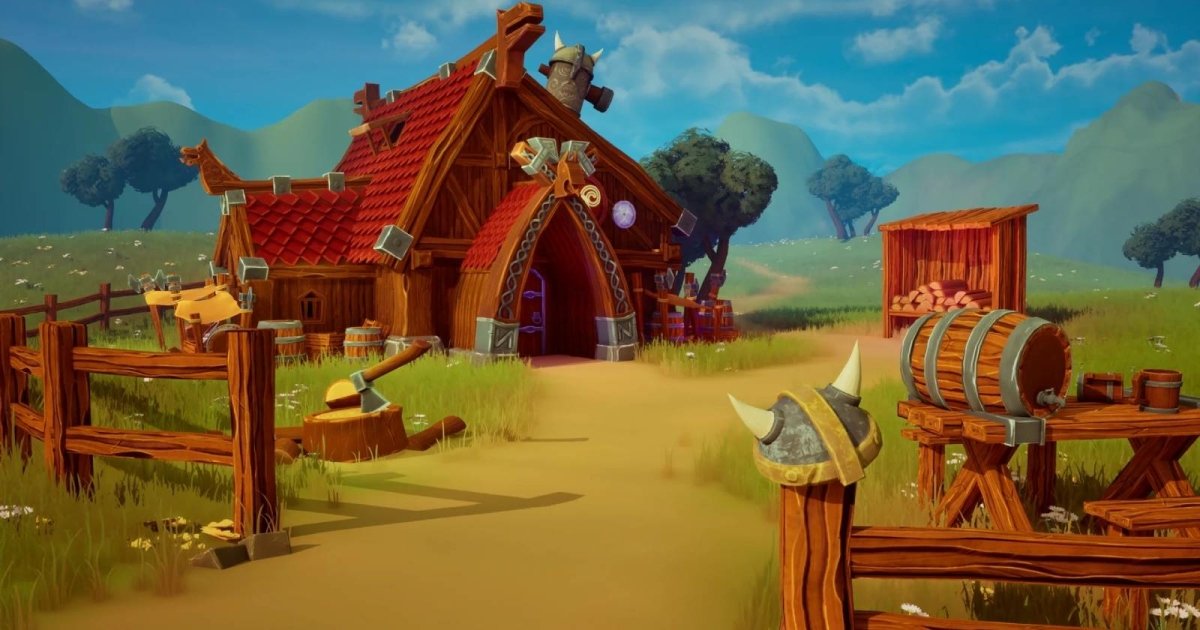
The creation of digital environments is an exercise in both technical precision and artistic patience. For 3D artist Tulika Roy, the development of her latest project, Outstead, served as both a technical milestone and a masterclass in professional workflow management. Over a two-and-a-half-month development cycle, Roy navigated the complexities of Unreal Engine to produce a scene that highlights the importance of strategic lighting, foliage integration, and iterative design.
A central challenge in contemporary environment art is avoiding the trap of uniform lighting, which often leads to flat, lifeless compositions. Roy opted for a more nuanced approach in Outstead, utilizing the Ultra Dynamic Sky plugin to establish an atmospheric baseline. Rather than striving for an even distribution of light across the entire scene, Roy prioritized the perspective of the main camera. By focusing the light intensity to guide the viewer’s eye toward intended focal points, she achieved a cinematic depth that distinguishes the project from her earlier work.
The project was not without its hurdles. Balancing production with academic responsibilities and part-time employment, Roy faced an unforeseen disruption that created a significant setback in the development timeline. The resulting loss of momentum led to a period of creative stagnation, highlighting a common, yet rarely discussed, aspect of the digital arts: the psychological barrier of re-engaging with a stalled project.
“I realized that I didn’t need to make something perfect straight away,” Roy noted during an interview with Amber Rutherford. “I just needed to make something exist first, and then I could slowly build on it and make it better.” This philosophy of iterative growth proved essential, allowing her to rebuild her creative confidence through incremental progress rather than demanding immediate perfection.
Technical growth was another cornerstone of the Outstead production. Roy pushed her boundaries by incorporating workflows she had previously avoided, most notably in the creation of foliage. Despite initial apprehension, this became one of the most rewarding phases of development. The process of transitioning from unfamiliarity to seeing custom-created foliage breathe life into a static scene served as a potent validation of her evolving skill set.
Beyond the specific assets, the project provided a platform for Roy to refine her foundational practices. Her experience with Outstead underscored the necessity of rigorous pre-production. She emphasized that the heavy lifting occurred in the early stages—utilizing detailed references, establishing a solid blockout, and finalizing a strong composition. This disciplined preparation simplified the later stages of production, allowing her to allocate her time efficiently. By prioritizing the most impactful elements of the environment rather than spending excessive hours on minor assets, Roy maintained a balance between visual quality and production velocity.
The project also served as a proving ground for new techniques, including the use of trim sheets and hand-painted texturing. These methods, while demanding, fostered a new level of autonomy in her decision-making process. Looking back, the comparison between Outstead and her previous works is stark, illustrating a clear trajectory in her technical competency and artistic vision.
As Roy looks toward the future, her experience with Outstead has provided a clearer roadmap for her career. By identifying which aspects of environment art—such as texture painting and material creation—require further refinement, she has established a focused path for continued professional development. For the broader 3D community, Outstead stands as a reminder that environment art is as much about the ability to overcome creative plateaus and plan strategically as it is about the final render. Through patience and methodical iteration, Roy has successfully translated complex technical challenges into a cohesive, professional-grade portfolio piece.
Disclaimer: This content is auto-generated for informational purposes only.
Source: Read Original News