







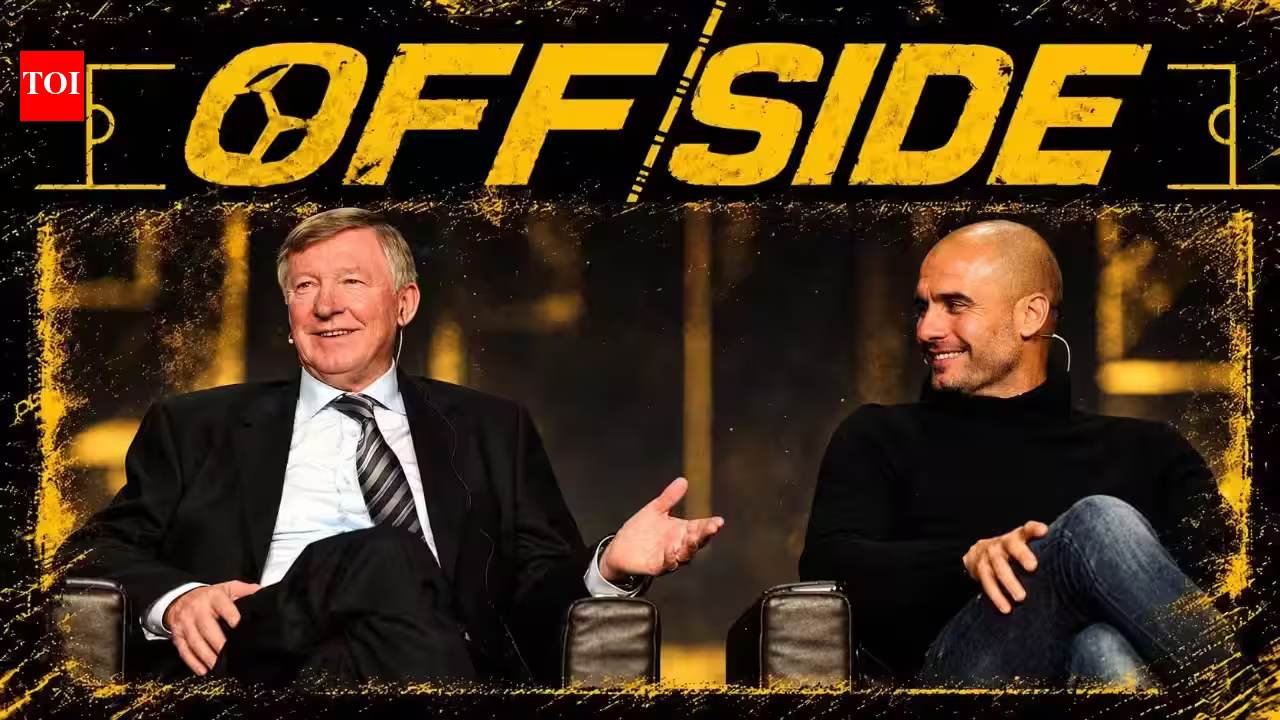
Discussions surrounding the “greatest of all time” in football management often devolve into the kind of asinine comparisons that plague modern discourse—much like debating the superiority of regional cuisines or comparing athletes across vastly different eras. Yet, recently, the debate has shifted toward a more provocative premise: the suggestion that Pep Guardiola has surpassed Sir Alex Ferguson. When stripped of recency bias and emotional rhetoric, however, the comparison collapses under the weight of historical context and the stark realities of modern football’s financial landscape.
The Architecture of a Legacy
To compare Pep Guardiola to Sir Alex Ferguson is to ignore the fundamental disparity in their managerial foundations. Ferguson’s career began in the trenches. He took Aberdeen—a club operating in the shadow of the “Old Firm”—and shattered that hegemony, ultimately guiding them to a Cup Winners’ Cup triumph over a juggernaut like Real Madrid. His tenure at Manchester United was a masterclass in building and rebuilding; he constructed multiple championship-winning dynasties, often with squads that relied as much on his indomitable force of personality as they did on tactical ingenuity.
Guardiola, by contrast, is a tactical visionary who has spent his career managing the footballing equivalent of the world’s most powerful economies. From Barcelona to Bayern Munich and now Manchester City, Guardiola has exclusively operated at clubs with bottomless transfer budgets and squads already teeming with world-class talent. While his understanding of football’s geometry is unparalleled, one must ask: Could Guardiola replicate his success without the financial backing that allows him to spend on fullbacks what mid-table clubs spend on an entire roster?
The Shadow of Financial Irregularity
The debate has arguably been settled by the findings of the Premier League’s independent commission, which uncovered systemic financial distortions at Manchester City. The revelation that City concealed costs and inflated revenues by nearly £900 million between 2009 and 2018 places a significant asterisk next to the club’s trophy cabinet.
Contrast this with Ferguson’s final years at Manchester United. Under the constraints of the Glazer takeover, United’s resources were drained by massive interest payments, forcing Ferguson to compete at the highest level with limited net spend. During his final eight seasons, Ferguson managed to secure five Premier League titles while the club’s coffers were being bled dry. The juxtaposition is jarring: Ferguson built a dynasty despite institutional financial limitations, while Guardiola’s recent era is defined by an unchecked accumulation of talent that now sits under a cloud of regulatory scrutiny.
The “What If” of Management
The core difference between a “coach” and a “manager” lies in the ability to influence more than just the tactical board. Ferguson was a former trade-union shop steward whose leadership style was rooted in human connection. He famously used the image of Lunch atop a Skyscraper to teach his players that fear was a luxury they could not afford on the pitch. His players didn’t just follow his instructions; they would have walked through fire for him.
Meanwhile, history provides a bitter irony regarding Guardiola. His mentor, Johan Cruyff, once told Ferguson, “You’ll never win the European Cup because you don’t cheat and you don’t buy referees.” While Guardiola is not accused of direct participation in the Negreira affair or City’s financial breaches, the fact that these controversies encompass his most successful years creates a narrative burden that his legacy may never fully shake.
Beyond the Touchline
The current state of English football management, featuring figures like Andy Burnham—the Prime Minister whose proximity to Manchester City’s ownership has raised questions regarding his impartiality—further complicates the atmosphere surrounding Guardiola’s accomplishments. As the Financial Times and Daily Mail have highlighted, the diplomatic immunity held by City chairman Khaldoon al-Mubarak and the political influence exerted by ownership suggest that this debate is no longer just about football; it is about institutional power.
Ultimately, looking at a sheet of paper that counts trophies is a shallow way to judge greatness. Ferguson’s 27-year tenure, his ability to win with squads built on grit, and his singular influence on the sport define him as an outlier in history. Guardiola remains a tactical genius of the highest order, but his achievements are irrevocably tied to the era of hyper-capitalism and the controversies that accompany it. As the dust settles on these investigations, the realization remains: there was never truly a debate. Sir Alex Ferguson stands alone, and the comparison, frankly, is beneath the stature of his achievements.
Disclaimer: This content is auto-generated for informational purposes only.
Source: Read Original News