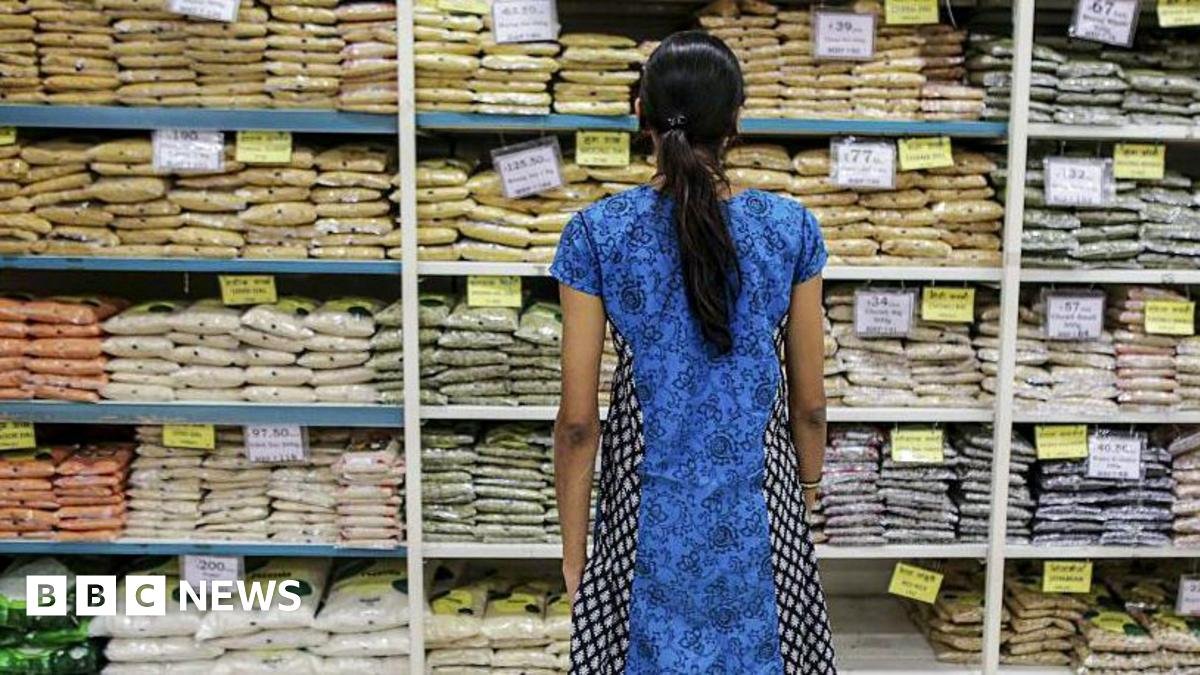
India does have rules to prevent this. The Food Safety and Standards Authority of India (FSSAI), created under a 2006 law, regulates how food is made, stored, transported and sold, replacing a patchwork of older laws.
Under the rules, everything from large food companies to small eateries must be licensed, while food safety officers are tasked with inspections, sample collection and investigating complaints.
“It is among the most modern food safety laws in the world,” says Pawan Agarwal, former FSSAI chief. “It sets clear standards for how food should and should not be sold.”
But in practice, much of it kicks in only after something goes wrong.
“Bigger companies are expected to test products before they go to market – but most of the food economy does not work that way,” Agarwal said.
“Food products are often tested only after complaints emerge or suspicions are raised.”
By then, adulterated goods may already have moved across cities or states.
He also points to the challenge posed by loose food products – such as oil, flour and spices sold without proper branding or packaging, often in small quantities.
Across India, countless small vendors, unregistered shops and informal factories sell, repackage and distribute such goods with little paperwork, making it nearly impossible to trace where unsafe products originated or ended up, experts say.
Meanwhile, the food testing system has a structural flaw too, says Saurabh Arora, managing director of food testing lab Auriga Research.
“Businesses are required to send samples only once every six or 12 months. But even that limited testing window is routinely gamed,” he adds.
“They often make sure the tested batch meets standards – even if others may not.”
Experts say weak enforcement capacity is another major hurdle.
In Maharashtra, one of India’s largest states, fewer than 500 food safety officers oversee thousands of registered food businesses alongside countless informal operators, says food safety expert Sanjay Indani, who has worked with the regulator.
“It is nearly impossible to oversee everything. How can such few numbers [of officers] hold people accountable?”
Experts say countries such as Italy and the UK can quickly trace and recall products through tightly documented supply chains. In India, by contrast, tracking a contaminated batch can take weeks – if it happens at all.
The scale of the problem has reached top offices. Last month, India’s National Human Rights Commission held a meeting on food safety, external, with officials warning that contaminated products could spread widely before authorities could identify them, let alone remove them from shelves.
But on the ground, many consumers have arrived at a simpler solution – pay more, worry less.
Tiash De, 29, who lives in Mumbai, says the fear of substandard products has pushed her towards buying pricier alternatives.
“I tend to go for bigger brands, even though they are costly and strain my budget, but in my head I am sure they are not adulterated,” she says.
She also pays nearly 50% above market rates for a farm-to-home milk delivery service – a premium she says is worth the peace of mind.
She is far from alone. Across urban India, more consumers are willing to pay extra for trusted food, with the country’s organic food market, external projected to reach $10.81bn by 2033, according to Dr Meenakshi Singh, chief scientist at the Council of Scientific and Industrial Research (CSIR).