





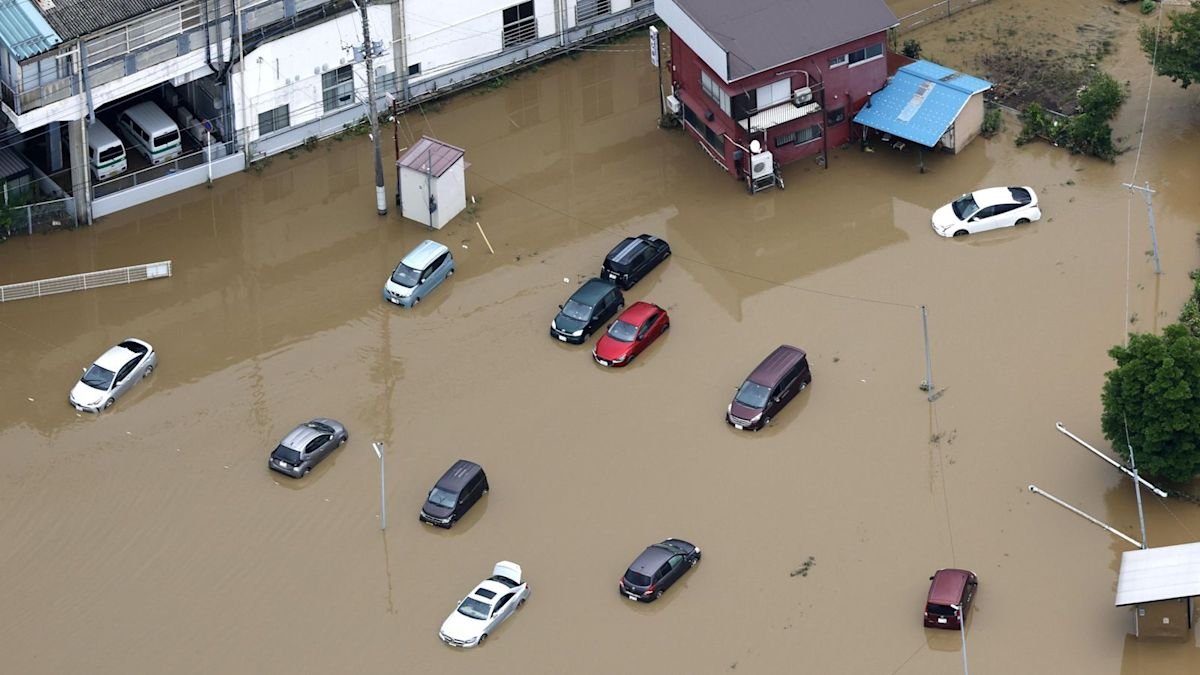
Eastern Tokyo has been gripped by a devastating deluge, as record-breaking rainfall has led to widespread flooding, claiming at least four lives and leaving one individual unaccounted for. The relentless downpour has submerged roads, inundated dozens of homes, and plunged thousands into darkness due to extensive power outages across the region. The severity of the situation is starkly evident, with numerous residents forced to seek overnight refuge in the Chiba prefectural government building.
Chiba prefecture authorities have confirmed the tragic loss of life, including a man discovered on a flooded road in Ichikawa city and a woman who became trapped in her submerged vehicle in Sakura city. Another person was recovered from a flooded car in Kashiwa City, underscoring the perilous conditions brought about by the unprecedented weather event. Officials reported that over 80 homes within the prefecture have been affected by the flooding, prompting advisories for nearly 230,000 residents to evacuate and seek shelter.
Daylight revealed the full extent of the destruction, with striking photographs and television broadcasts showcasing scenes of devastation. Homes, vehicles, and sections of railway tracks were engulfed by murky floodwaters, painting a grim picture of the aftermath. The torrential rains and subsequent flooding also caused significant disruption to power infrastructure. While an earlier peak saw 68,000 homes without electricity, TEPCO Power Grid reported that approximately 23,000 homes remained without power on Friday morning.
The intensity of the rainfall was truly extraordinary, with Chiba City experiencing a staggering 11.5 cm of rain in just one hour, and Sakura recording a further record-breaking 9.7 cm within the same timeframe. Although the Japan Meteorological Agency downgraded its most severe warning for heavy rain in several municipalities across Chiba Prefecture as the rain subsided on Friday morning, forecasts indicate the possibility of further precipitation later in the day, maintaining a sense of unease and caution.
The impact extended to critical transportation hubs. The Ground Self-Defence Force mobilized buses to rescue around 4,000 individuals who had been stranded overnight at Soga train station, a key route connecting to Tokyo Disney. Fortunately, the popular theme park reported no damage. Furthermore, thousands of travelers found themselves stranded overnight at Narita Airport, which serves the greater Tokyo region, as train services out of the area were halted. While services partially resumed with delays on Friday morning, flights in and out of Narita were operating normally, facilitating the return of many individuals at the conclusion of Japan’s Bon Buddhist holiday week. The ongoing situation highlights the vulnerability of urban areas to extreme weather events and the critical need for robust emergency response and infrastructure resilience to mitigate such widespread disruptions.