









From Smoke to Power: Punjab Farmers Turn Crop Waste into Clean Energy
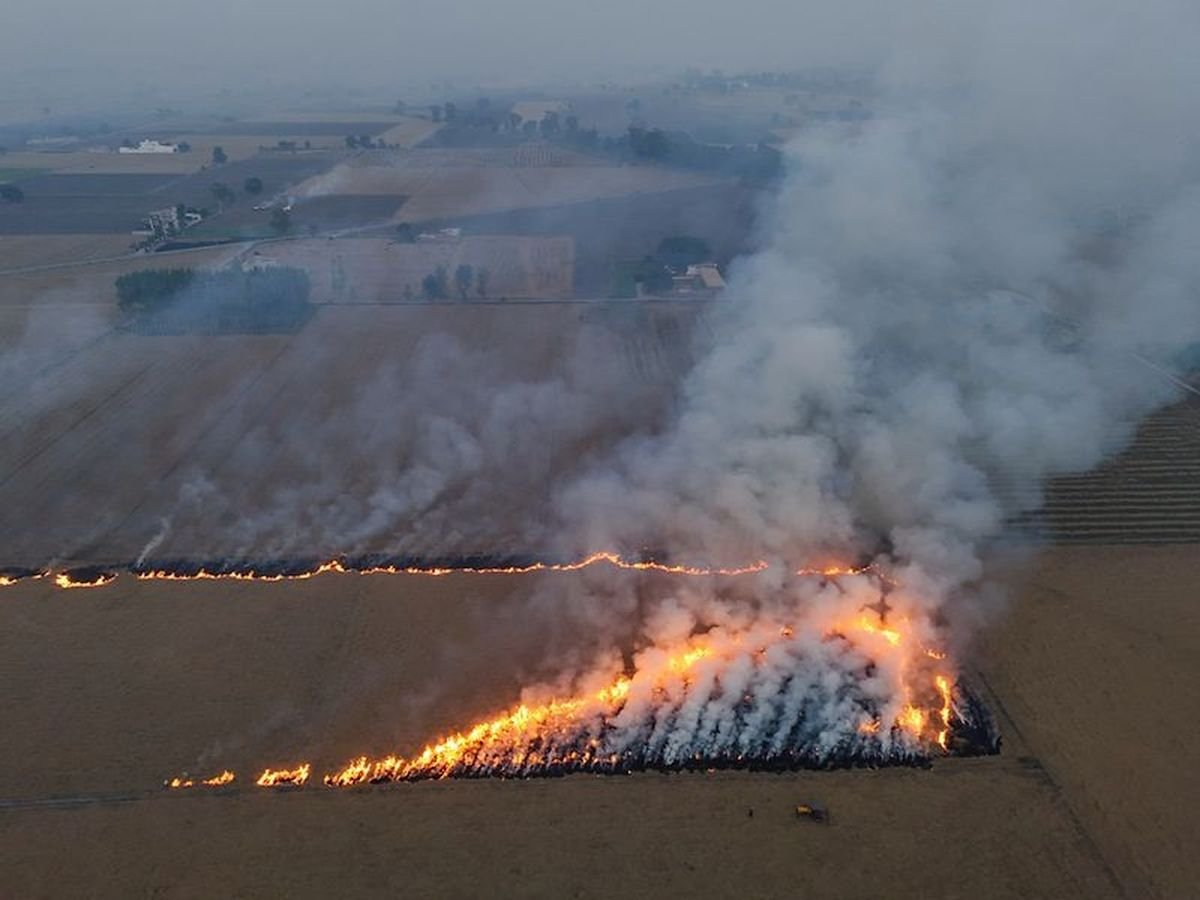
SEDHA SINGH WALA, Punjab – For decades, the ritual was consistent: as autumn arrived, the fields of Punjab would glow with the light of thousands of fires. Farmers like 60-year-old Rajinder Singh would set fire to their paddy stubble to clear land quickly for the next sowing cycle. Today, however, that fire has been replaced by a supply chain. Instead of clouds of acrid smoke, the crop waste is being bundled onto trucks and sent to biomass plants to generate electricity and sustain local livelihoods.
This shift marks a significant pivot in the battle against stubble burning, a long-standing issue that has historically choked northern India and shrouded Delhi in toxic smog. While government crackdowns have struggled for years to curb the practice, the promise of economic gain is finally providing an incentive for change.
A Drastic Decline in Fires
The results on the ground are stark. According to government data, Punjab recorded 5,114 farm fires during the 2025 paddy harvest season. This represents a 53% drop compared to 2024 and an 86% reduction from 2023 figures. For farmers, the decision to pivot has been transformative.
“Our earnings have improved considerably,” says Singh, standing in his fields in Sedha Singh Wala. “Earlier we used to burn the stubble because it was a nuisance. Now, it is a commodity, and many families are finding employment in its collection and processing.”
The Economic Engine of Biomass
In districts like Faridkot, a new circular economy is taking shape. Entrepreneurs such as Amandeep Singh Gill have established processing operations that convert paddy straw into feedstock for power generation. Gill’s enterprise serves as a microcosm of the potential for this sector; he employs tractor operators, drivers, and laborers, supporting approximately 70 families.
The scale of the investment is significant—Gill notes that his operation required a capital outlay of 45 million rupees ($484,340). However, with annual turnovers reaching as high as 80 million rupees, the business model is proving to be a viable alternative to disposal by fire.
Much of this waste is ultimately funneled into large-scale projects like the 18-megawatt biomass plant operated by SAEL Industries Ltd. As the nation’s largest procurer of agricultural residue, SAEL is set to acquire 2 million tonnes of waste this year alone.
The Delhi Challenge
Despite these successes, the transition has yet to clear the skies of the national capital. Delhi continues to grapple with hazardous air quality levels during the winter months, underscoring the complexity of the pollution crisis. Analysts point out that while the biomass industry is growing, it is currently operating at only a fraction of the scale required to mitigate regional pollution.
“Biomass-based projects are financially sound and effective,” explains Pratima Singh, a director at the research firm iFOREST. “But because they are operating at such a limited capacity, their impact is not yet visible in Delhi’s atmosphere.”
Experts argue that to reach the government’s goal of utilizing 10 million tonnes of straw annually, the sector requires more robust structural support. Suggestions include the implementation of a minimum support price (MSP) for paddy straw and the standardization of procurement contracts. While such measures could drastically reduce farm fires across the state, experts caution that a much larger, nationwide expansion is necessary before the residents of northern India can breathe significantly cleaner air.
Disclaimer: This content is auto-generated for informational purposes only.
Source: Read Original News