





The Quiet King of Santa Ynez: Inside Noah Wyle’s 80-Acre Sanctuary
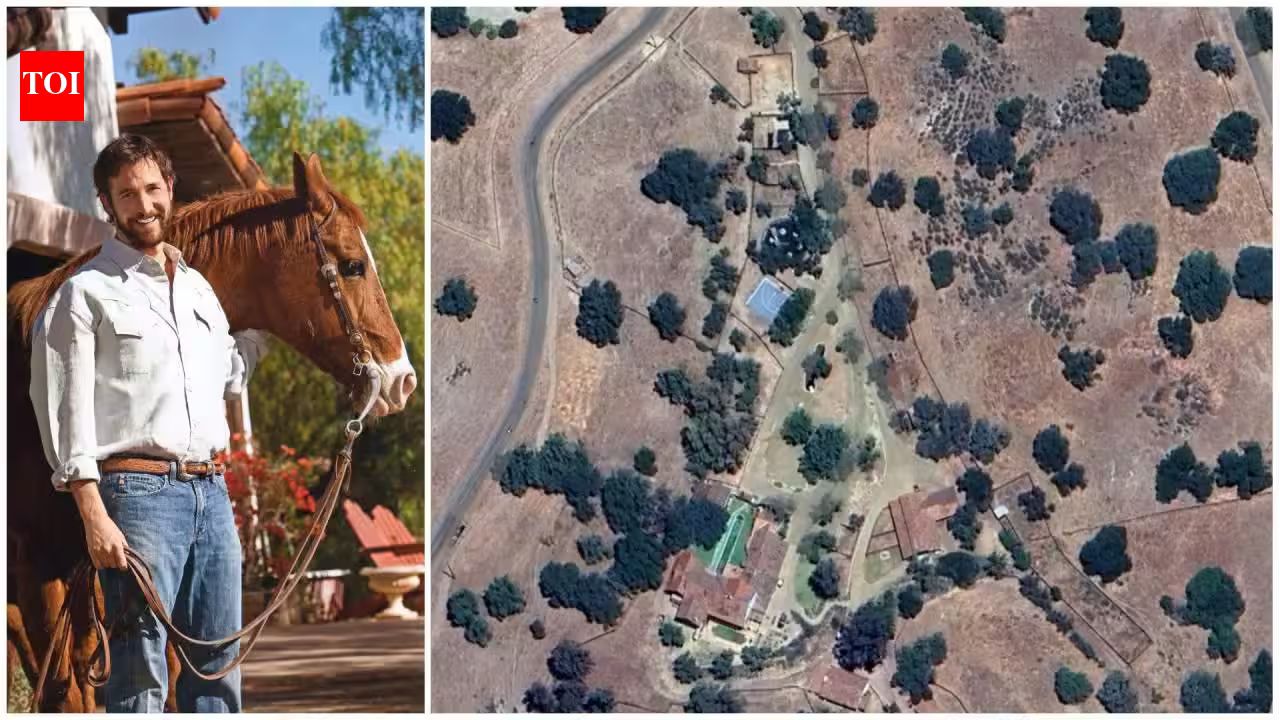
For a man who has spent decades under the harsh, unwavering glow of Hollywood spotlights—from the bustling corridors of ER to his current, grit-fueled turn in The Pitt—Noah Wyle’s true North Star isn’t found in a trophy cabinet. At 55, the newly minted “Sexiest Man Alive” has traded the superficial glitz of Tinseltown for the dust, silence, and rugged beauty of his 80-acre ranch in Santa Ynez, California. It is a place he describes not as a vacation home, but as a “laboratory” and an “oasis,” a private kingdom where the only critics he faces are a pack of dogs and a small menagerie of rescue animals.
The Pursuit of Tuscany in California
When Wyle first put down his stake in the Santa Ynez Valley in 1999, he was arguably at the peak of his commercial visibility. As the beloved Dr. John Carter on ER, he was a household name, yet his internal compass was pointing toward something far more grounded. He wasn’t looking for a sprawling mansion in the Hollywood Hills; he was looking for a retreat—a buffer zone against the frenetic velocity of the entertainment industry.
The search for the perfect plot was driven by a desire for a different upbringing for his children. As a lifelong Angeleno, Wyle understood the city’s pulse, but he feared it would move too fast for his family. His search criteria were simple: it had to be within a two-hour radius of Los Angeles—a distance he could manage after a grueling Friday night shoot without risking sleep at the wheel. When he finally crested the hill on Highway 154 and caught his first glimpse of Lake Cachuma stretching out against the golden hills, he didn’t see Central California. He saw the rolling, romantic landscapes of the Italian countryside.
“It looked just like Tuscany to me,” Wyle reflected in a recent interview. That emotional connection, rooted in the promise of a slower, more deliberate life, cemented the purchase. He bought the land for nearly $2.5 million, a significant investment that would eventually become his lifelong anchor.
Growing Into the Role of a Landowner
Looking back at his younger self, Wyle offers a candid, self-deprecating assessment of his status as a first-time ranch owner. “I was way too young to buy—didn’t have enough money to buy it, and didn’t have any idea how to maintain it,” he admits.
There is an irony in an actor who played a highly competent medical professional for years finding himself completely out of his depth when it came to property management. The reality of 80 acres of raw land requires a set of skills that no acting class can teach: fence repair, water management, and the grueling physical labor of maintaining a rural homestead. Yet, the learning curve became part of the appeal. Unlike a studio set where a team of professionals stands ready to fix every issue, the ranch demanded a different kind of autonomy.
Decades later, that initial inexperience has hardened into a deep-seated pride. Wyle views the ranch not just as an asset, but as the best decision he’s ever made. It serves as the ultimate “recharge station.” For an actor whose professional life demands he inhabit other people’s stories and travel to the far corners of the globe, having a gate he can physically lock behind him is the ultimate luxury. It is the boundary that separates the public figure from the private man.
A Sanctuary for the Soft-Hearted
While the sprawling acres provide Wyle with his own sense of stability, the true heart of the ranch is its inhabitants. The property has evolved into a full-scale menagerie, housing a collection of animals that would make a veterinarian blush. From pigs and chickens to horses and a steady rotation of rescue dogs, the ranch is a chaotic, living testament to Wyle’s softer side.
“If I hear a good hard-luck case or a good sob story about an animal in need, I’m still a soft touch,” Wyle laughs. It is a reputation he wears proudly among those in his inner circle. But caring for this collective of creatures has provided the actor with a more profound life lesson than he ever anticipated: a front-row seat to the cycle of life.
Living in nature, removed from the sanitized environments of urban life, has taught him to accept the inevitable rhythms of existence. “Ranch life is about life cycles,” he says. “You see things get born, you care for them, and then you bury them. It goes over and over again.” This grounded perspective acts as a buffer against the vanity of Hollywood, reminding him that life isn’t about the next project or the latest headline, but about care, responsibility, and the inevitable passage of time.
The Ritual of the Mundane
When the cameras stop rolling and Wyle returns home, his routine is almost aggressively normal—a sharp contrast to the high-stakes drama he portrays on screen. He speaks with palpable gratitude about the simple, repetitive rhythms of his mornings: preparing breakfast for his wife and daughter, tending to the dogs, and engaging in a daily practice of journaling and reflection.
In an age of constant digital noise, Wyle consciously fights the urge to fall into the “scrolling trap.” Instead, he opts for a book and a walk, finding his peace in the quiet expanse of the valley. For a man who has spent the better part of a lifetime being “watched,” there is a distinct, subversive joy in disappearing into a landscape where no one is filming him.
His life at the ranch represents the ultimate success story—not one measured by box office returns or magazine covers, but by the ability to carve out a space that is entirely one’s own. As he continues to thrive in his career, he does so with the comfort of knowing that, at the end of the day, the gate to Santa Ynez is waiting to be locked, and the real work of living can finally begin.
Disclaimer: This content is auto-generated for informational purposes only.
Source: Read Original News