







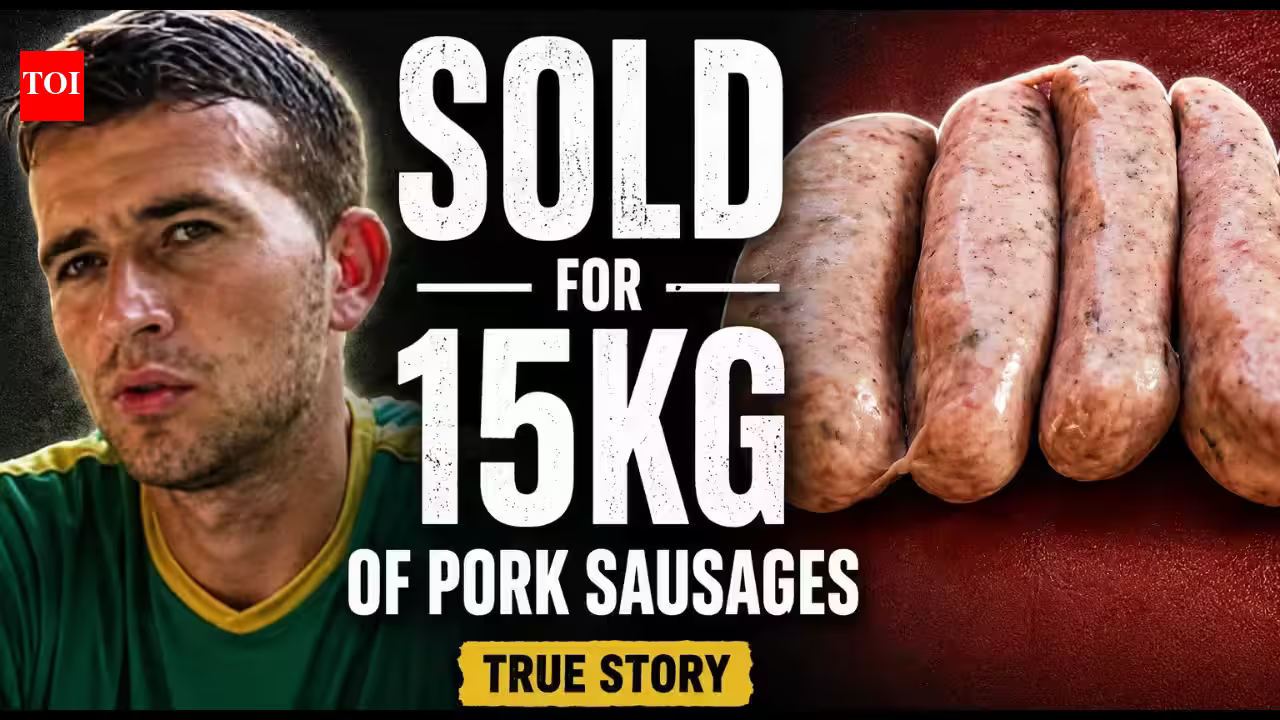
In the modern era of professional football, the transfer market is defined by astronomical figures. Clubs routinely authorize expenditures exceeding 100 million pounds for marquee signings, with scouting networks, agents, and complex amortized contracts forming a multi-billion dollar industry. However, a deep dive into the archives of European football reveals a more whimsical, albeit bizarre, chapter where the value of a player was not measured in euros or pounds, but in the inventory of a local butcher or fishmonger. The most infamous instance of this occurred in 2006, when Romanian defender Marius Cioara was traded from UT Arad to Regal Hornia for a fee that would eventually turn his life upside down: 15 kilograms of pork sausage.
The Sausage Deal That Altered A Career
UT Arad, a historic Romanian club with a proud tradition as the “Old Lady” of the national game, found itself in an unusual position during the 2006 transfer window. While the club has historically prided itself on its six Romanian national titles and two domestic cups, their transaction involving Cioara remains the most curious entry in their ledger. When the defender moved to second-division side Regal Hornia, the lack of monetary compensation raised eyebrows even among local observers.
The aftermath of the move, however, proved more detrimental than the unconventional nature of the transaction itself. Upon arriving at Regal Hornia, Cioara became the immediate subject of intense and relentless locker room ridicule. For a professional athlete, being reduced to a culinary valuation proved to be an insurmountable psychological hurdle. The mockery, centered specifically on the nature of his transfer, rapidly eroded his resolve. The defender famously remarked that the constant barrage of sausage-related taunts felt like a profound insult to his professional dignity. Finding the atmosphere in the dressing room unbearable, Cioara made the abrupt decision to retire from professional football just one day after the transfer was finalized.
A Bizarre Demand for Compensation
The absurdity of the situation did not conclude with Cioara’s exit from the sport. Once the player had effectively quit the team, Regal Hornia—a club that had gained a player, lost him, and seemingly consumed the assets involved—attempted to rectify the balance sheet. In an administrative twist that underscored the lack of professionalism surrounding the deal, Regal Hornia formally requested that UT Arad return the 15 kilograms of sausages.
This post-transfer demand serves as a fascinating case study in amateurism within lower-league football. It highlights how, in the absence of rigorous contracts and established transfer regulations, clubs sometimes resort to bartering systems that resemble neighborhood trades rather than professional athletic acquisitions. The fact that a club would seek to reclaim a perishable commodity after a transfer failure speaks to the peculiar desperation that can sometimes grip smaller sporting entities when resources are limited.
Other Notable Culinary Transfers
While the story of Marius Cioara stands out for its unfortunate personal outcome, he was not the only athlete to be valued by his weight in food. The trend of “food-based transfers” represents a bizarre historical anomaly in European football. Perhaps the most significant parallel is the case of Kenneth Kristiansen, who, during the 2000-01 season, moved from Vindbjart to Flekkeroy in a deal settled by his body weight in shrimp.
In this instance, the transfer was handled with a blend of humor and practical application. Kristiansen, a player in the Norwegian third tier, tipped the scales at 75 kilograms. The agreement reached between the two clubs saw Flekkeroy compensate their counterparts with a quantity of seafood exactly equal to the player’s physical weight. Unlike the Cioara incident, which was treated as a source of degradation, the shrimp deal was handled with a degree of pragmatic amusement by the chairmen involved. Flekkeroy chairman Rolf Guttormsen noted at the time that while there was uncertainty regarding whether the offer was a genuine proposal or a joke, his club was more than happy to facilitate the payment, provided they had the inventory to support it.
Reflecting on a Lost Era of Oddities
The contrast between these historical oddities and the current landscape of the sport is stark. Today, the integrity of a transfer is guarded by legal departments, FIFA regulations, and strict financial fair play rules. There is no room for a scout to propose a trade involving a butcher’s shop or a seafood distributor. However, these stories provide a window into a time when the passion for the game at a local level occasionally prioritized utility and absurdity over formal documentation.
Ultimately, the cautionary tale of Marius Cioara and the lighthearted nature of the Kristiansen deal remind us that football—at its core—has always been deeply connected to its community. Whether that community is defined by high-stakes international contracts or local livestock and fishing yields, the sport thrives on its unpredictability. While it is unlikely that any sporting director in the modern Premier League or Serie A will ever attempt to sign a midfielder in exchange for frozen pizzas, the legacy of these strange transactions remains a staple of footballing folklore, documenting a time when players were sometimes seen as worth exactly what they weighed in local delicacies.
Disclaimer: This content is auto-generated for informational purposes only.
Source: Read Original News