





India’s Nuclear Power Expansion: Major Milestones at Rajasthan and Kaiga
India’s nuclear energy sector has reached a significant turning point this week with two major developments that underscore the nation’s growing capacity for indigenous power generation. While the Rajasthan Atomic Power Project (RAPP) gears up for its latest expansion, the Kaiga Atomic Power Station has successfully returned a veteran unit to service after a record-shattering refurbishment project.
Regulatory Green Light for RAPP Unit 8
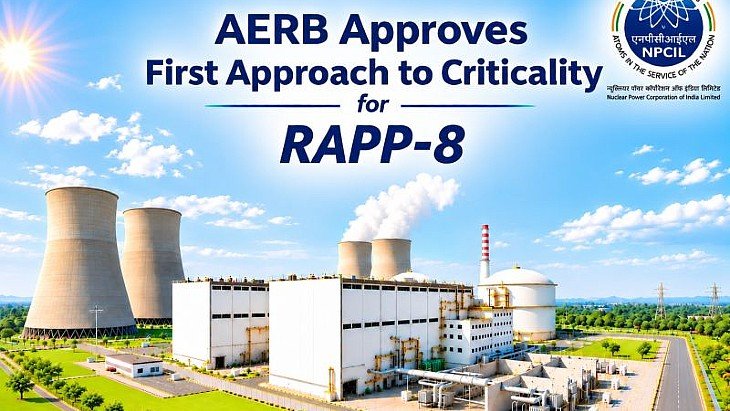
The Atomic Energy Regulatory Board (AERB) has officially granted the Nuclear Power Corporation of India Limited (NPCIL) permission to proceed with the “First Approach to Criticality” for unit 8 of the Rajasthan Atomic Power Project. This major milestone, sanctioned on November 19, follows an exhaustive evaluation of the facility’s design, construction integrity, and operational readiness.
RAPP unit 8 is a 700 MWe Pressurised Heavy Water Reactor (PHWR), representing the second of a twin-unit project at the Rajasthan site. It is part of a larger, ambitious national roadmap that seeks to install sixteen such indigenously designed reactors across the country. The reactor’s progression follows the successful integration of its sibling, RAPP unit 7, which reached full power earlier this year after connecting to the national grid in March 2025.
With the regulatory “First Approach to Criticality” now in place, the facility is transitioning toward the final phases of testing. Once these technical benchmarks are met, the unit will move toward commercial electricity generation, providing a crucial boost to the regional power supply in northern India.
Kaiga Unit 1 Returns After Record Refurbishment
In another landmark achievement for India’s nuclear fleet, Kaiga unit 1 has officially resumed operations. The 200 MWe unit, which first began supplying electricity in 2000, successfully attained criticality on the morning of November 22, 2026, following an intensive 600-day maintenance program.
The project, which began in April 2025, involved complex engineering feats, including the complete replacement of coolant channels and feeders. The scope of the work was substantial, requiring the defuelling of the reactor, the removal and replacement of core components, and rigorous safety testing including hot conditioning and hydrotesting.
By completing this major refurbishment in under two years, the team at Kaiga has established a new gold standard for nuclear maintenance in India. NPCIL officials have noted that the 600-day turnaround is the fastest the corporation has ever achieved for such a major project, marking a new fleet-wide benchmark.
Strengthening Energy Security
These twin successes highlight India’s dual-track approach to nuclear energy: aggressively expanding capacity through new 700 MWe indigenous reactors while simultaneously extending the operational life of existing plants. By mastering the technology for both new construction and large-scale refurbishment, India is effectively enhancing its base-load power capability.
As RAPP-8 moves toward commercial output and Kaiga-1 resumes its role in the grid, these developments are expected to significantly bolster the country’s mission to achieve energy independence while maintaining the highest international standards of safety and regulatory compliance.
Disclaimer: This content is auto-generated for informational purposes only.
Source: Read Original News