Geetanjali Shree: The Maverick Voice Reshaping Global Perceptions of Indian Literature
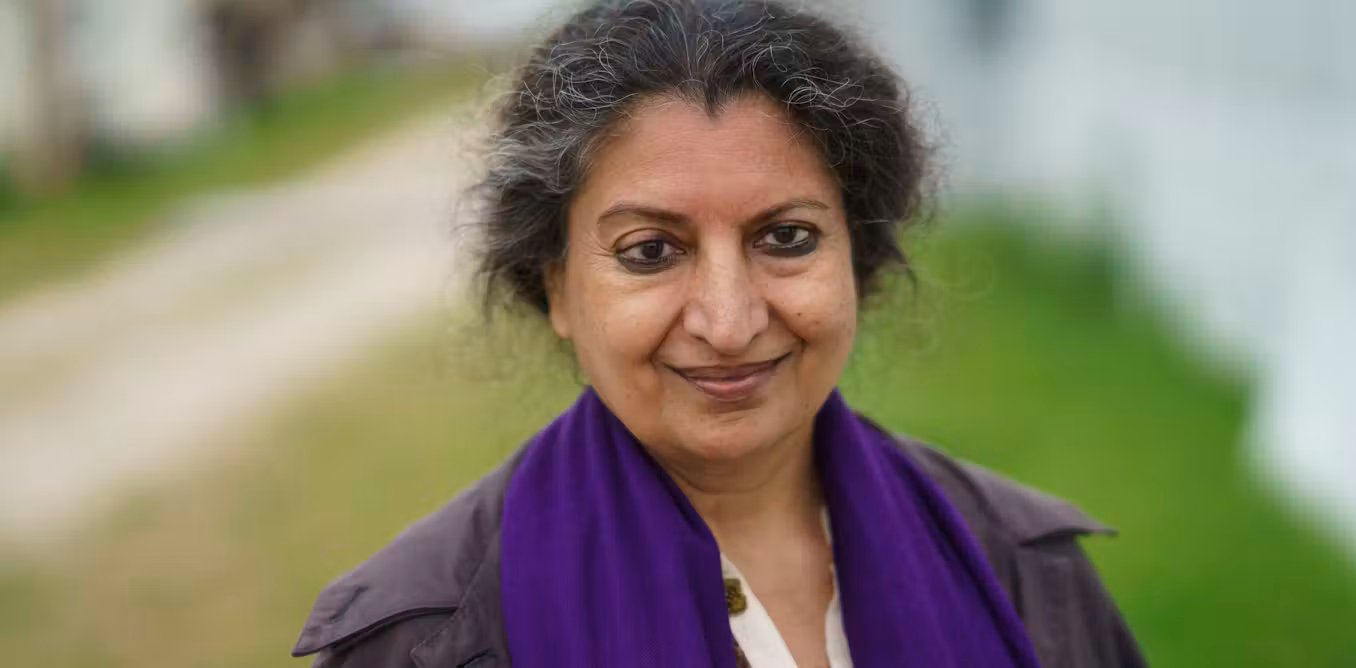
In a groundbreaking achievement that resonated across the literary world, 2022 saw Tomb of Sand, penned by Geetanjali Shree and masterfully translated from Hindi by Daisy Rockwell, become the first work of Indian literature to be awarded the International Booker Prize. This landmark recognition not only cemented Shree’s position as a literary titan but also ignited crucial conversations about language, translation, and the global reach of non-Anglophone narratives.
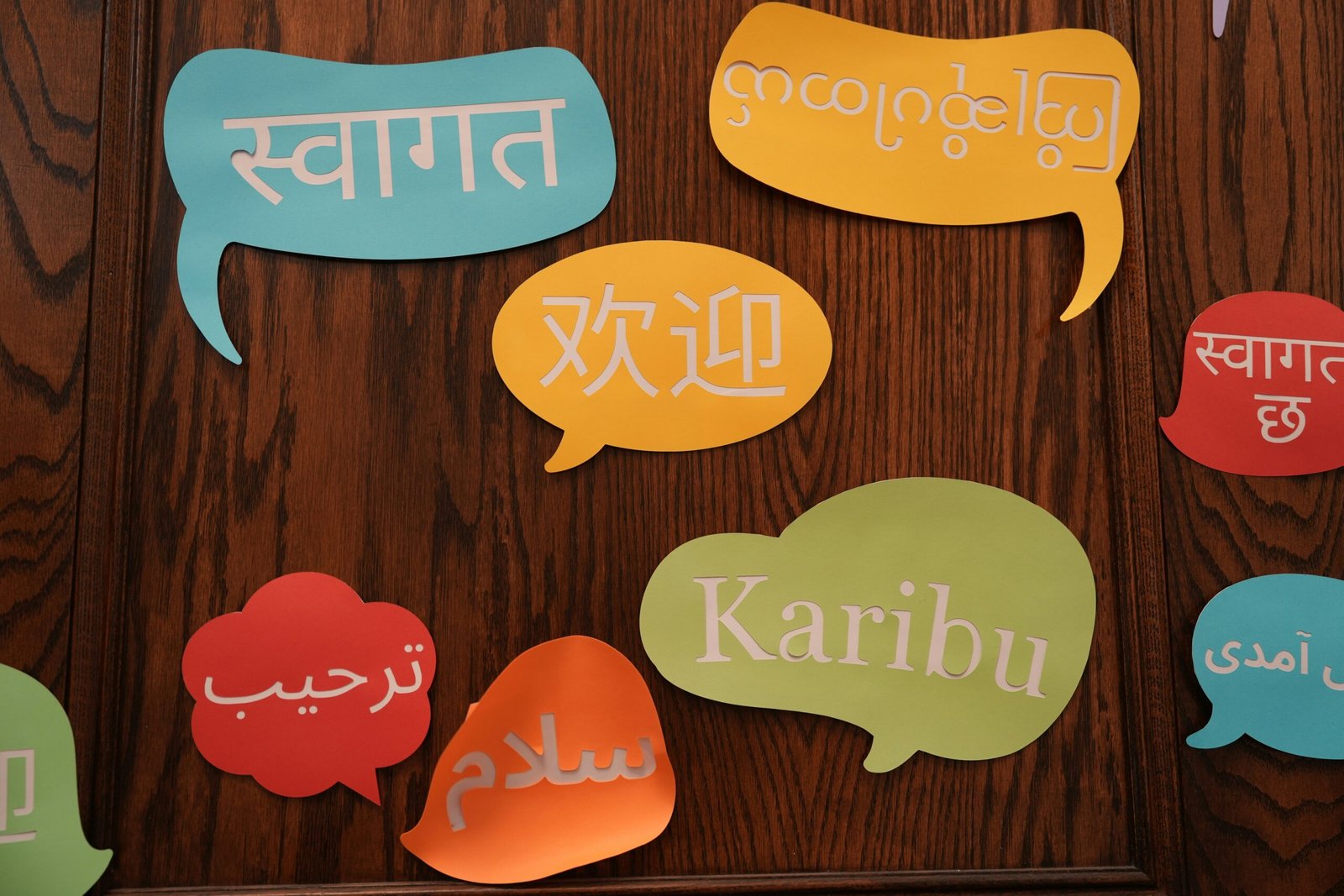
While Indian authors like Salman Rushdie (1981), Arundhati Roy (1997), Kiran Desai (2006), and Aravind Adiga (2008) have previously claimed the Booker Prize (awarded to English-language works), Shree’s victory with a Hindi novel highlighted a significant cultural disparity. English, spoken by an estimated 10% of the Indian populace, holds a contested legacy from two centuries of British rule. In stark contrast, Hindustani (commonly known as Hindi) boasts a staggering 611 million speakers globally, with some estimates reaching 855 million. Yet, literature in Hindi, and indeed in the 22 other officially recognized Indian languages, often struggles for international visibility, constrained by the prevailing Anglophone publishing landscape.
Shree herself has acutely observed this linguistic power dynamic. In her early story, Pilaki Mane Faye, a character striving for success in Hindi publishing laments the profitability of English:
Yeah, it would have made a difference had I been able to write in English. […] The British Empire ended, but did the Empire?
The protagonist’s awe at an English-language writer earning “a rupee for each word” underscores the economic realities faced by authors writing in indigenous languages.
For over four decades, since her debut story Bel Patra appeared in the esteemed Hindi literary magazine Hans, Shree has consistently explored the postcolonial tension between Hindi (and other Indian bhashas) and English. Her five short story collections and five novels showcase a daring defiance of genre, technique, and linguistic conventions. Despite her prolific and influential career, it was arguably the International Booker win that brought her well-deserved global acclaim.
Language as Homeland: Shree’s Radical Linguistic Canvas
Hindustani, a hybrid Indo-Aryan language born between the 7th and 13th centuries under Muslim rule, comprises two mutually intelligible registers: Hindi (rooted in Sanskrit and Prakrit) and Urdu (with Arabic and Persian antecedents). Historically, it has been viewed as a unifying force, capable of transcending religious and social divides.
Shree’s Hindustani is a vibrant tapestry woven with literary Hindi and Khari Boli, the robust rural dialects prevalent across northern India, particularly Bhojpuri. Her childhood, spent moving between small towns in Uttar Pradesh due to her father’s civil service, provided her with an intimate understanding of the language’s diverse nuances. Though educated in English, Shree’s decision to write in Hindi was, as she states, “almost by accident,” driven by the “osmosis of the world around” and the omnipresent “sound of Hindi” that transcended the “veneer and sophistication of English.”
For Shree, language is far more than a narrative tool. Her writing seamlessly navigates different grammatical registers and regional inflections, often within a single paragraph. Her stylistic choices and figures of speech are marked by irreverent experimentation. In an interview, she articulated her profound connection:
is in itself an entity and has its own personality and must not be used just utilitarianly. My language is my homeland, motherland, my memory, and my protest too. I have inherited it, but I also reconstruct it.
Shree’s work subtly critiques English dominance while acknowledging the social mobility it offers. Her brilliance lies in her masterful command of her chosen tongue and her ability to anchor her imagination in the vernacular, creating a truly unique literary experience.
Contesting Narratives: The Re-release of The Roof Beneath Their Feet
To coincide with Shree’s growing international profile, her novel The Roof Beneath Their Feet, translated by Rahul Soni and originally published in 2013, has been re-released in an international edition.
Set in Laburnum House, described as:
which wasn’t one house, but a neighbourhood of a hundred or so houses that existed in one huge building, stretching far and wide, that lay drowning for centuries under the rolling, sea-like roof that was high in some places and in some places low.
The novel is a compelling exploration of memory and female relationships.

The narrative unfolds through two distinct voices. The first half is narrated by a young man grieving Chachcho (auntie), his presumed mother, and resenting Lalna, Chachcho’s close companion. The second half belongs to the irrepressible Lalna, who fiercely asserts her ownership over Chachcho’s memory, possessions, and even her laughter. Addressing the young man as Bitva (“little boy”), Lalna triumphantly declares:
That’s a laugh you can never laugh, Bitva. To laugh like that you need to be a girl. A girl who is always naked. So naked that she has to wear heaps of clothes, layer on layer — and then cover it all up with a burqa. Only when that naked girl laughs can you hear that beautiful sound.
This interplay of narratives highlights a fierce debate over who truly owns the past. Lalna’s vibrant joie de vivre stands in vivid contrast to Bitva’s self-pity and resentment, creating a dynamic exploration of memory and maternal love. Lalna, in particular, redefines female identity, emphasizing the profound power of friendship:
If you ask me, I will tell you that love isn’t what you all think it is — man and woman and woman and man and bodies, bodies, bodies! Love affair, love affair! […] when the darkness begins to sway with the gusts of wind, and when the sky starts turning around the axis of the roof, then no one can stop two friends, nothing can erase them.
The novel concludes with a powerful image of Lalna, triumphant, poised “in the middle of it all, as if about to light somebody’s funeral pyre – or perhaps her own.”

Shane Anthony Sinclair/Getty Images
Canonical Subversion and the Power of Memory
Shree’s writing consistently subverts the paternalistic Hindi literary canon through her nuanced exploration of maternal figures. In Tomb of Sand and her debut novel Mai (translated as Mai: Silently Mother), she moves beyond conventional feminist narratives of rage and rescue, instead capturing “fugitive instants and observations” that resist romanticizing or deifying the often-silenced female experience. Similarly, stories like March, Maa aur Sakura offer a refreshing perspective on motherhood.
The Hindi title of The Roof Beneath Their Feet, Tirohit, meaning “disappeared” or “vanished,” perfectly encapsulates the novel’s portrayal of repressed female voices. Chachcho and Lalna, one married and visible, the other abandoned and invisible, find solace and connection on their shared community terrace, exchanging dreams, nightmares, and playfully competing for Bitva’s affection. Soni’s translation masterfully conveys the “colour and tone” of Shree’s prose, making this radical work accessible to a wider audience.
As novelist Anjum Hasan observes in an incisive essay, understanding Shree’s work necessitates an appreciation of its rich Hindi literary lineage. Shree herself traces her artistic roots to Krishna Sobti, a grand dame of Hindi literature whose works intricately depict the familial, internal, and social lives of women, exposing the fault lines of patriarchy. Unlike male predecessors favoring sweeping realist narratives, Shree embraces intimacy, focusing on how memory dismantles narrative certainties. Her style is characterized by “suggestiveness and subterfuge,” a tapestry of “fragmentary moments that make sense haphazardly and in hindsight.”
Poet Shashibhushan Dwivedi refers to this as Shree’s “signature tune” of “taartamya,” a complex term reminiscent of Jacques Derrida’s notion of différance. Shree’s narratives frequently allude to the ephemeral nature of presence, the inevitability of belatedness, and the inherent limitations of language in fully capturing truth.
Mridula Nath Chakraborty will engage in conversation with Geetanjali Shree at the Wheeler Centre, Melbourne, on August 12, 2026, and at the Bob Hawke Prime Ministerial Centre, Adelaide, on August 27, 2026. Shree is also slated to be a distinguished guest at the Sydney Writers’ Festival.