









The Macroeconomic Forces Shaping Gold Prices
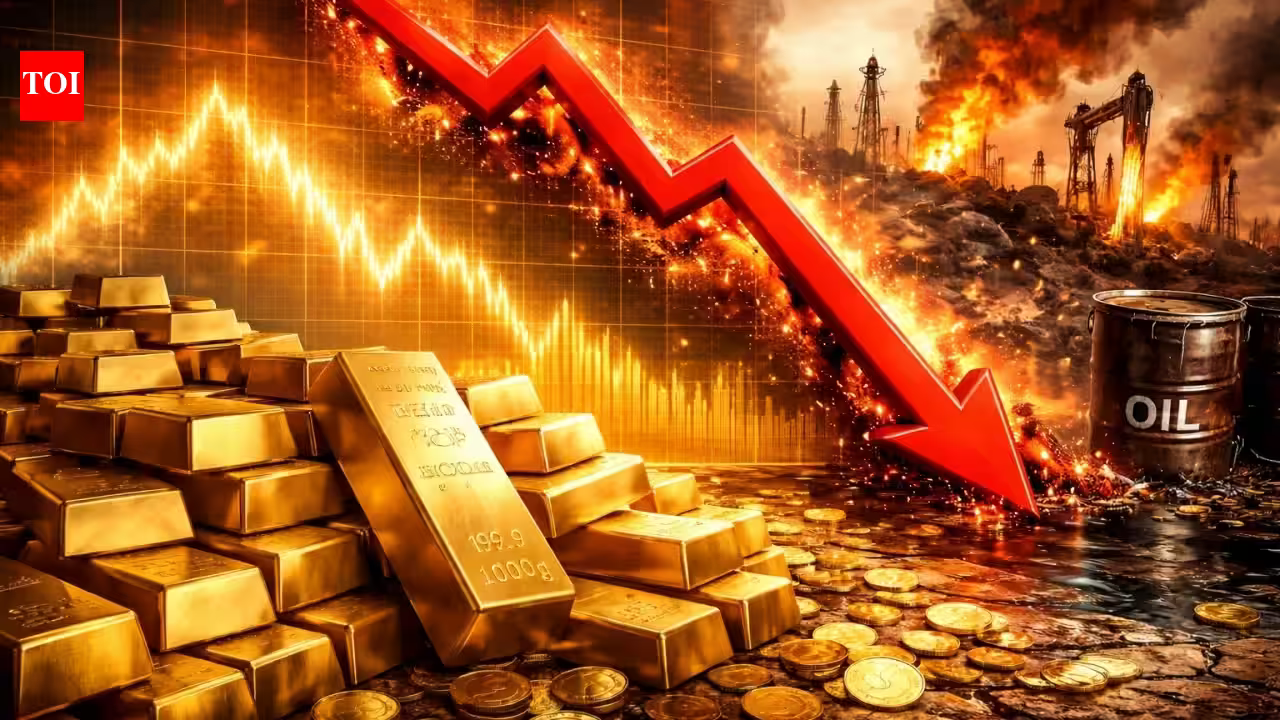
The global gold market is currently navigating a complex environment characterized by elevated inflation expectations and aggressive monetary policy shifts. Recent market data indicates that bullion prices are under significant pressure, largely influenced by rising oil costs and the subsequent reaction of global central banks. As Brent crude oil prices climb toward record levels due to supply chain disruptions in the Middle East, the global economy faces a renewed inflation scare. This development has triggered a hawkish pivot from central banks, most notably the United States Federal Reserve, which is widely expected to implement further interest rate hikes.
For gold, which is a non-yielding asset, this macroeconomic climate creates a distinct disadvantage. When interest rates rise, the opportunity cost of holding gold increases, as investors find more attractive returns in yield-bearing assets such as US Treasury bonds. The recent breach of the 10-year US Treasury yield past the 5% threshold—a psychological and technical milestone—has acted as a catalyst for a broader sell-off in precious metals. As institutional investors realign their portfolios to capture higher yields in fixed income, gold has seen a steady contraction in its spot valuation, drifting downward from the highs recorded in August.
Understanding the Impact of Fed Policy on Precious Metals
The primary driver for gold’s near-term performance remains the monetary trajectory established by the Federal Reserve. Financial markets are currently pricing in a high probability of a 25-basis-point hike, an expectation supported by major global investment banks. However, the market impact is less about the hike itself, which is already accounted for in current price levels, and more about the forward-looking guidance provided by leadership.
The distinction between a singular tactical rate increase and the commencement of a sustained, long-term tightening cycle is critical. If the Fed signals a commitment to aggressive, persistent hikes to combat inflation, gold is likely to face sustained downward pressure. Conversely, if the central bank characterizes these moves as temporary insurance against exogenous shocks like oil price volatility, market participants may view the dip as an entry point for defensive positioning. The interplay between the Federal Reserve’s messaging and the resilience of the US dollar index remains the most significant variable for gold price fluctuations in the current trading quarter.
The Indian Context: Navigating the MCX Market
In India, the price of gold is governed not only by global spot market dynamics but also by currency fluctuations, specifically the USD-INR exchange rate. As the dollar strengthens, domestic gold prices on the Multi Commodity Exchange (MCX) tend to reflect these international pressures, though they are often mitigated by local demand cycles. For Indian investors and jewelers, the current MCX range of Rs 1,46,800 to Rs 1,55,500 per 10 grams serves as a critical zone for assessing market sentiment.
The Indian market is particularly sensitive to these shifts because gold is traditionally viewed as a hedge against currency depreciation and domestic inflation. While global trends currently lean toward a bearish outlook, institutional buying by central banks and long-term concerns regarding fiscal health in major economies prevent a total collapse in gold sentiment. Indian traders are closely watching technical pivot points to identify support levels where long-term accumulation may resume. The local market’s reaction to global volatility serves as a reflection of India’s unique position as one of the world’s largest consumers of physical bullion, where price corrections often stimulate retail interest.
Geopolitical Risks and Market Volatility
Geopolitical instability, particularly in energy-producing regions, continues to introduce significant volatility into the financial markets. The disruption of critical oil infrastructure and the resulting impact on global supply chains has created a correlation between energy prices and monetary policy. When supply-side shocks drive inflation, central banks are forced to adopt more restrictive measures, which paradoxically hurts non-yielding assets like gold.
However, historical patterns suggest that in periods of extreme geopolitical uncertainty, gold eventually regains its status as a safe-haven asset. While the immediate reaction to current tensions has been a sell-off due to rising yields, any sign of escalation or sustained global economic friction could trigger a shift in capital allocation back toward gold. Investors are maintaining a cautious stance, monitoring vessel traffic in key shipping corridors and diplomatic signals as indicators of future price stability. The current bearish trend is essentially a battle between the deflationary impact of high interest rates and the inflationary impact of geopolitical supply chain bottlenecks.
Technical Outlook and Investment Strategies
From a technical analysis perspective, gold is currently testing crucial support levels that will define the trajectory for the coming weeks. For spot gold, the pivot around the $4,300 per ounce mark is significant. A sustained movement below this support level would likely invite further selling, potentially targeting the $4,250 and $4,190 ranges. On the upside, a rebound would need to decisively break through resistance levels near $4,440 to confirm a shift in market momentum.
For participants in the Indian market, the support levels on the MCX are similarly vital. With major support currently identified at Rs 1,49,000 and Rs 1,46,800, traders are looking for signs of stabilization before increasing exposure. Technical indicators suggest that while the near-term outlook is cautious, the broader medium-term drivers—including persistent fiscal concerns and the theme of currency debasement—remain supportive of gold’s role as a store of value. Investors are advised to focus on risk management, given the high level of volatility introduced by the upcoming Fed announcements. Diversification and careful monitoring of yield curves remain the most prudent strategies for those currently holding or considering positions in precious metals.
Ultimately, the market for gold is caught in a tug-of-war between the short-term reality of rising interest rates and the structural reality of global economic uncertainty. While the bears have the upper hand due to the strength of the dollar and the hawkish stance of global central banks, the fundamental appeal of gold as a hedge against long-term fiscal volatility remains intact. Market participants must remain adaptable, prioritizing macroeconomic data points over short-term price movements to navigate this complex landscape effectively.
Disclaimer: This content is auto-generated for informational purposes only.
Source: Read Original News