






This article was published as part of a partnership with the Institute for Energy Strategy.
Transformative change is necessary to safeguard planetary and human health and well-being, and to address deepening inequalities stemming from the uneven consequences of global environmental crises, which primarily affect the world’s most vulnerable populations. Achieving the environmental, social, and economic goals needed to ensure a sustainable and just future for all requires a transformation of the interconnected economic and financial systems, as well as energy, food, material resources, and ecosystem management.
The Global Environment Outlook 7 (GEO-7) outlines an actionable roadmap for enabling such transformations. The report provides a comprehensive assessment of the latest information on the current state of the global environment and expected future trends, and shows decision-makers and all citizens worldwide that achieving sustainability and transformative change in a timely and equitable manner is both necessary and feasible.
A looming crisis
The United Nations Environment Programme (UNEP), the UN agency responsible for global environmental protection, was established in 1972. Since 1995 it has published seven Global Environment Outlook (GEO) reports on the trajectory of the global natural environment. These comprehensive environmental, social, and economic assessments provide recommendations for governments and local stakeholders. They serve as key references, presenting the changing global interactions between the natural environment and societies, including human interventions.
Humanity and all life on Earth face an unprecedented threat driven by the convergence of human-induced environmental crises: climate change, biodiversity loss, land degradation and desertification, and pollution and waste. These issues are interlinked and reinforce each other, pushing planetary systems toward a state in which several tipping points may be irreversibly crossed.
Despite numerous political commitments and repeated calls for action, the world is still not on track to meet internationally agreed objectives for responding to these crises. Previous reports, including Global Environment Outlook 6, clearly show that global environmental crises continue at an accelerating rate; as they worsen, the cost of inaction increases rapidly. Meanwhile, the window for effective and timely action is closing. These urgency is reinforced by the United Nations’ 2030 Agenda for Sustainable Development and its 17 SDGs, as well as by several multilateral environmental agreements, including the Convention on Biological Diversity’s Kunming-Montréal Global Biodiversity Framework.
GEO-7
Global Environment Outlook 7, subtitled A Future We Choose – Why investing in Earth now can lead to a trillion-dollar benefit for all, was developed by 287 multidisciplinary scientists from 82 countries. It is the most comprehensive scientific assessment of the global environment to date. The report calls on all actors to acknowledge the urgency of the global environmental crises, build on progress made in recent decades, and collaborate to design and implement integrated policies, strategies, and actions to deliver a better future for all.
According to the report, current development pathways will bring catastrophic climate change, devastation to nature and biodiversity, debilitating land degradation and desertification, and persistent harmful pollution – all with a vast cost to human welfare, ecosystems, and economies. Conversely, investing in a stable climate, healthy ecosystems and land, and a pollution-free environment can increase global GDP by trillions of dollars annually, prevent millions of deaths, and lift hundreds of millions out of hunger and poverty in the coming decades.
The better path involves whole-of-society and whole-of-government approaches to transform economic and financial systems, material use and waste management, and approaches to the energy, food, and environment systems. Behavioural, social, and cultural shifts, including respect for Indigenous and local knowledge, are also essential to this transformation.
While there are up-front costs, the losses caused by inaction are much greater, and the long-term returns on investing in transformation are clear. Global macroeconomic benefits are expected to emerge around 2050, grow to USD 20 trillion per year by 2070, and continue to rise thereafter.
A solution-focused approach for sustainability transformations
Instead of focusing primarily on describing environmental problems, trends, and risks, GEO-7 adopts a solution-focused approach, in contrast to earlier GEO reports. The report deliberately emphasises what can be done to achieve sustainability transformation, rather than merely highlighting the severity of the crises.
The methodological and philosophical foundation for GEO-7 is outlined in Chapter 1.2. It sets the tone for the entire report, which does not stop at identifying problems but explores transformative actions, the barriers to implementation, and the enabling conditions – policies, finance, technology, governance, behavioural change – that can accelerate positive change. This solution-focused lens is applied throughout subsequent chapters, including the assessment of environmental state and trends, the exploration of future scenarios, and the policy options. The central takeaway of the chapter is that sustainability is achievable through deliberate, systemic transformations. A solution-oriented perspective helps bridge the gap between scientific assessment and real-world action.
Structure of the report
GEO-7 examines trends across five major regions – Africa, Asia and the Pacific, Eastern Europe, Latin America and the Caribbean, Western Europe –, as well as other territories (North America, Oceania, Eastern Mediterranean, etc.). The report is divided into five parts. Each part begins with an introductory section on Indigenous and local knowledge that presents Indigenous Peoples’ perspectives on the respective topics.
Part A provides context and covers the drivers and pressures of environmental change.
Part B describes the state and trends of the environment and the impacts of environmental degradation on human societies. It also analyses these dynamics from a regional and subregional perspective and emphasises the urgent need for change.
Part C presents a methodological approach for developing target-seeking scenarios, using both qualitative and quantitative methods. It then presents an exploratory scenario to assess the likely environmental and socioeconomic implications of continuing current trends, as well as two target-seeking scenarios that show what is needed to achieve internationally agreed goals related to the global environmental crises.
Part D introduces the framework for solution-focused pathways, followed by a detailed overview of five different solution pathways for transformation.
Finally, Part E presents key implications, highlights regional similarities and differences, and concludes the report.
Main messages
Economic and financial systems must evolve through phasing out socially and environmentally harmful practices and subsidies, pricing externalities such as pollution, moving beyond GDP as the sole measure of progress, and redirecting financial flows toward sustainability. Innovations such as the EU’s Sustainable Europe Investment Plan and New Zealand’s well-being budgets demonstrate how fiscal reforms can align economies with environmental goals. In developing regions, international financing can enable leapfrogging to sustainable models, with equity ensured through compensatory mechanisms for vulnerable populations.
The principles of a circular economy emphasise minimising waste and maximising resource efficiency. Urban mining in Japan, which recovers metals from electronics, and Africa’s informal recycling networks showcase scalable practices. The care economies of Indigenous Peoples, grounded in the principle of abundant sufficiency, meeting needs without excess, offer further models of resource stewardship. These efforts reduce the need for raw extraction, support sustainable bio-economies, and create jobs, particularly in resource-scarce areas. Additionally, integrating circularity into energy and food systems amplifies these benefits.
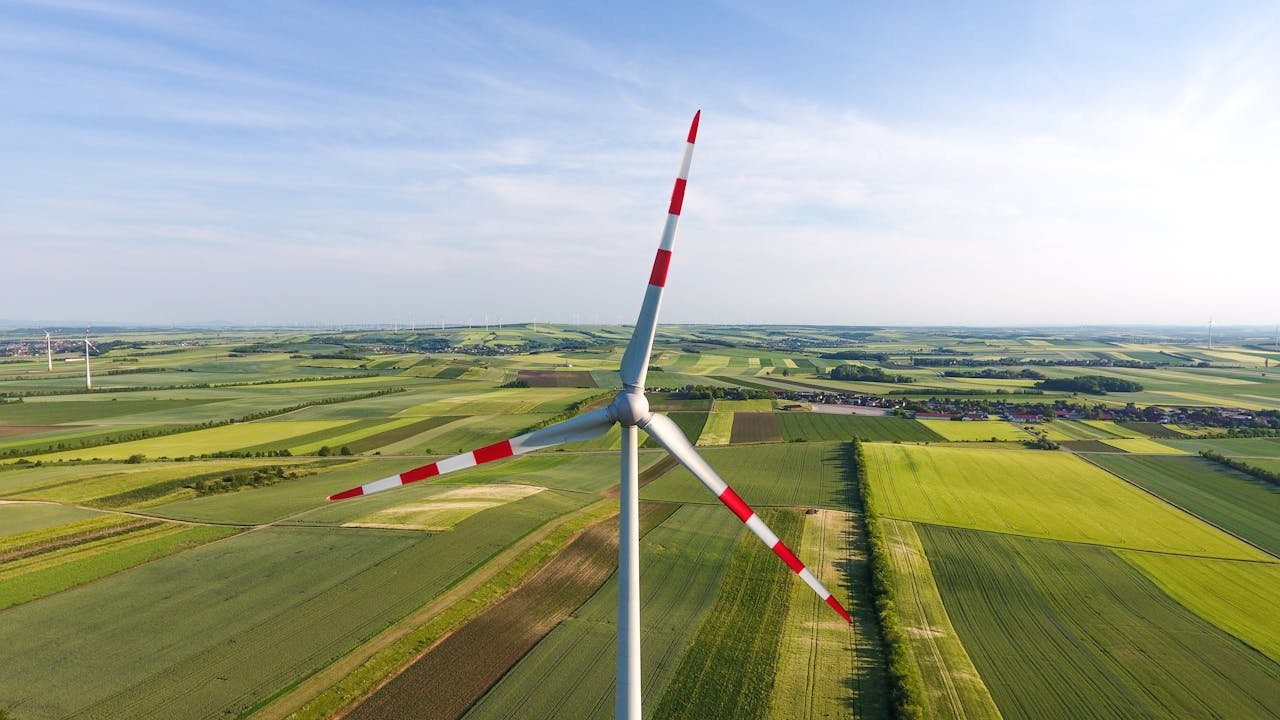
Transforming the energy system hinges on decarbonization, including scaling renewable sources like solar and wind, and improving efficiency. Cost-competitive technologies, advanced energy storage, and smart grids are accelerating this shift. Africa’s abundant solar potential and Europe’s leadership in wind energy highlight regional strengths. The electrification of transport and industry further reduces emissions, demonstrating that innovation delivers both environmental and economic benefits.
Food system transformation calls for shifts toward plant-based options, more efficient production, waste reduction, and alternative proteins like lab-grown meat. Precision farming, regenerative agriculture, and novel proteins can reduce environmental footprints. Asia’s rice-based diets and Latin America’s cattle-heavy regions can adopt tailored sustainable practices, while technologies like digital food waste reduction tools enhance global food security and resilience. Indigenous Peoples’ food systems offer holistic biocultural solutions to sustainability.
Managing environmental systems in ways that enhance ecological sustainability involves implementing nature-friendly solutions and incorporating Indigenous Peoples’ governance and care for living territories. AI-enabled monitoring can improve tracking of ecosystem health.
Regional perspectives emphasise context-specific solutions. Africa excels in solar and circular waste systems, Latin America leverages the Amazon Fund to protect forests, Asia builds green urban hubs, and Europe leads in wind and policy innovation. Equity and justice remain critical. Technology transfers and support for marginalised groups can strengthen inclusive progress, as can respect for human rights, including the rights of Indigenous Peoples.
Accelerating transformation requires urgent action, as noted throughout GEO-7. Policy innovations – including a carbon tax in Sweden, technology scaling through research, and cultural and value shifts via education, as well as the recognition of the agency and rights of non-humans – are key drivers. Strong governance – through whole-of-government and whole-of-society approaches – is essential, as is recognising Indigenous Peoples’ rights to self-determination. Private sector innovation, public-private partnerships, and education build momentum. Barriers such as vested interests and funding gaps may be overcome through blended finance and transparent communication, while remote sensing and citizen science facilitate adaptive management.