






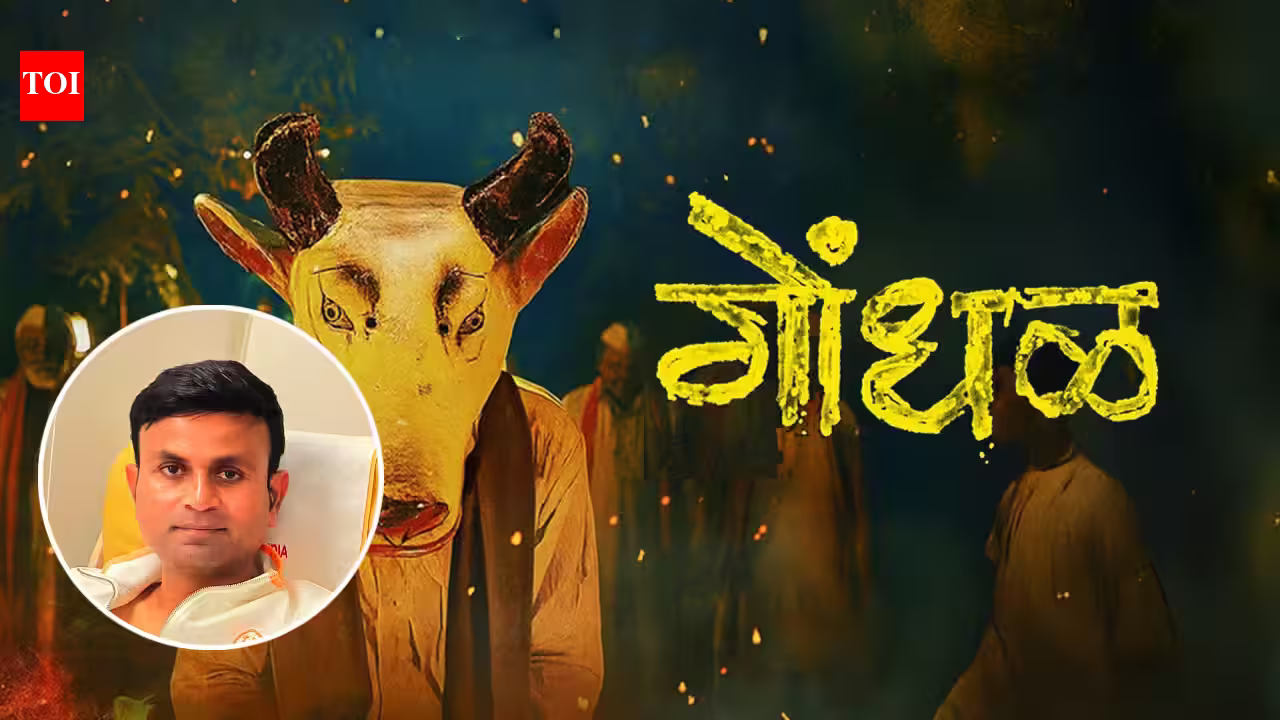
From Maharashtra to the Academy: How ‘Gondhal’ Became India’s Great Oscar Hope
The path to the Academy Awards is notoriously grueling, often described as a marathon that requires as much strategic muscle as it does artistic merit. This year, the Indian film industry has placed its bets on a project that pulses with the raw, rhythmic heart of Maharashtra. Gondhal, directed by Santosh Davakhar, has officially been named India’s entry for the 99th Academy Awards, rising to the top of a staggering list of 33 contenders. In an era where regional cinema has consistently outpaced mainstream Bollywood in terms of critical acclaim and cultural resonance, Gondhal stands as a bold testament to the storytelling power found deep within India’s diverse folk rituals.
A Victory for Regional Identity
For Marathi cinema, the selection of Gondhal is more than just a nod of approval; it is a landmark moment. To secure the nomination, the film had to edge out a crowded field of high-profile projects, including the much-buzzed-about Dhurandhar and a slew of other ambitious titles. The decision by the Film Federation of India (FFI) jury signals a continued pivot toward narratives that are unapologetically rooted in local soil.
At its core, Gondhal explores the traditional folk ritual of the same name—a practice steeped in faith, community, and the complex realities of modern Maharashtrian life. By focusing on a ritual that bridges the gap between the divine and the everyday, the film offers a window into a world that is ancient yet perpetually evolving. For Santosh Davakhar, the goal was never just to create a piece of regional art, but to challenge the narrow lens through which the global stage often views India.
Challenging the Global Perception of India
Davakhar’s philosophy as a filmmaker is heavily influenced by his previous travels through the international festival circuit. His experiences, particularly at Cannes in 2016, left him with a lingering frustration regarding the Western perception of Indian life. He observed that international audiences frequently gravitate toward stories centered solely on systemic struggle, poverty, and historical grievances.
“I understood how international audiences perceive India,” Davakhar explains. “Personally, I feel that we have a really rich culture. India is a diverse country. We have a rich culture and heritage, and we should represent India through good cinema.”
Gondhal is his answer to that imbalance. By centering a narrative around a cultural ritual rather than a socio-political tragedy, Davakhar is making a statement: Indian cinema is capable of showcasing the vibrancy, spirituality, and nuanced folklore of the nation, rather than simply catering to tropes that fit Western narratives of “hardship.”
A Proactive Play for the Golden Statue
Winning an Oscar is rarely about the quality of the film alone; it is about the “campaign.” Aware of the immense logistical mountain ahead, Davakhar and his team took an unconventional route: they didn’t wait for the official FFI announcement to begin their work. Long before the final verdict was delivered, the team was already scouting PR representation and mapping out a strategy for Los Angeles.
“We were convinced that we would take our film to the Oscars this year,” says the director. This level of confidence is refreshing in an industry that often treats international nominations as a stroke of luck rather than the result of deliberate planning. By hiring a veteran Los Angeles-based PR firm—one that boasts a portfolio of 27 nominations over the past two decades—Davakhar has signaled that Gondhal is coming to play at the highest level. Additionally, the inclusion of a Finland-based social media team highlights an intent to build a digital footprint that spans continents, ensuring the film has visibility long before the first Academy voter casts their ballot.
The Weight of the Nation’s Hopes
Representing a country of 1.4 billion people at the Oscars is a heavy mantle to carry. When asked about the pressure, Davakhar remains focused on the marathon ahead. He notes that the official news didn’t come via a celebratory phone call from authorities, but rather through the headlines of the daily news—a humble start for a project that now carries the hopes of an entire nation.
“We understand the responsibility that comes with representing India,” he admits. “Our entire team will put in all our efforts to take the film to the Oscars. Getting there is a big task, and reaching the final stage would be an even bigger achievement. We are fully prepared for it.”
The team is now entering the most critical phase of the journey. With the promotional campaign scheduled to kick off next month, the coming weeks will be a blur of screenings, interviews, and industry networking.
A Competitive Landscape
The road to the Academy Awards was paved with a long, diverse list of contenders. From the ambitious 120 Bahadur and the Dhurandhar franchise to experimental works like Shape of Momo and Gandhi Talks, the FFI had a vast array of genres to choose from. The final choice of Gondhal highlights a distinct preference for films that offer a specific, culturally resonant “voice” over those attempting to mimic global blockbuster structures.
As India prepares to present its official submission, the spotlight now turns to the Academy members. Can a film based on the traditional folk ritual of the Gondhal capture the imagination of Hollywood? If the determination of Santosh Davakhar and his team is any indication, they are not leaving anything to chance. For the Indian film community, all eyes are now fixed on the road to Los Angeles, watching to see if this slice of Marathi culture can find its place on the world’s biggest stage.
Disclaimer: This content is auto-generated for informational purposes only.
Source: Read Original News