









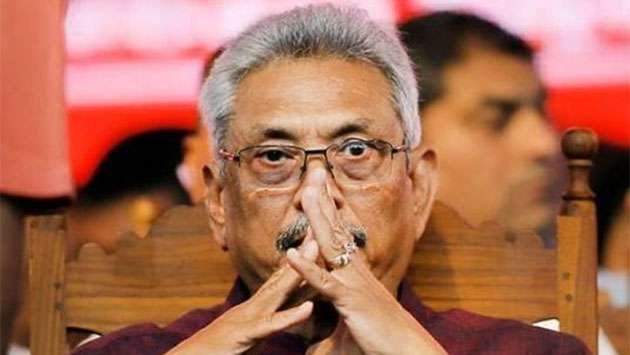
Former President Gotabaya Rajapaksa appeared before the Jaffna Magistrate’s Court today in connection with the ongoing judicial inquiry into the enforced disappearance of human rights activists Lalith Weeraraj and Kugan Murugananthan. The appearance marks a significant development in a long-standing case that has remained a flashpoint in the discourse surrounding human rights and accountability in Sri Lanka.
The disappearance of Lalith and Kugan, who were last seen on December 9, 2011, in Jaffna, has been the subject of extensive litigation and public advocacy for over a decade. The two activists were involved in organizing protests against disappearances when they vanished, leading to allegations of state involvement. As the Secretary of Defense at the time of the incident, Rajapaksa’s testimony has been long sought by petitioners and the families of the victims who have relentlessly pursued justice through the court system.
Security was tightened in and around the court premises as the former President arrived to provide his statement. The proceedings were monitored closely by legal experts, human rights organizations, and the families of the victims, who have expressed hope that the judicial process will finally shed light on the circumstances surrounding the abduction.
For the families of Lalith and Kugan, today’s court appearance represents a critical moment in their protracted struggle for truth. For years, the victims’ relatives have alleged that state authorities were responsible for the activists’ abduction, a claim that has been consistently denied by the security establishment. The case has moved through various stages of investigation, with several military and police officers being questioned over the years, though no convictions have been secured to date.
The legal teams representing the petitioners have argued that the court’s insistence on the appearance of high-ranking former officials is essential to clarifying the chain of command and the security operations active in Jaffna during the height of the post-conflict period. Rajapaksa’s legal team has maintained that his involvement in such operations was strictly administrative and that he has had no knowledge of the specific fate of the two men.
As the hearing progressed, supporters and protesters gathered in the vicinity of the court, reflecting the polarized public opinion surrounding the case. Legal observers noted that the court’s decision to summon a former head of state underscores the judiciary’s attempt to address allegations of systemic impunity.
The magistrate has directed that the inquiry continue, with further proceedings expected to delve deeper into the reports submitted by the intelligence services during the period of the disappearance. As the legal process continues, the case of Lalith and Kugan remains a defining test of the Sri Lankan judicial system’s ability to resolve cases involving enforced disappearances and the accountability of high-ranking state officials.
Disclaimer: This content is auto-generated for informational purposes only.
Source: Read Original News